Best 30 Gallon Air Compressors for Workshops
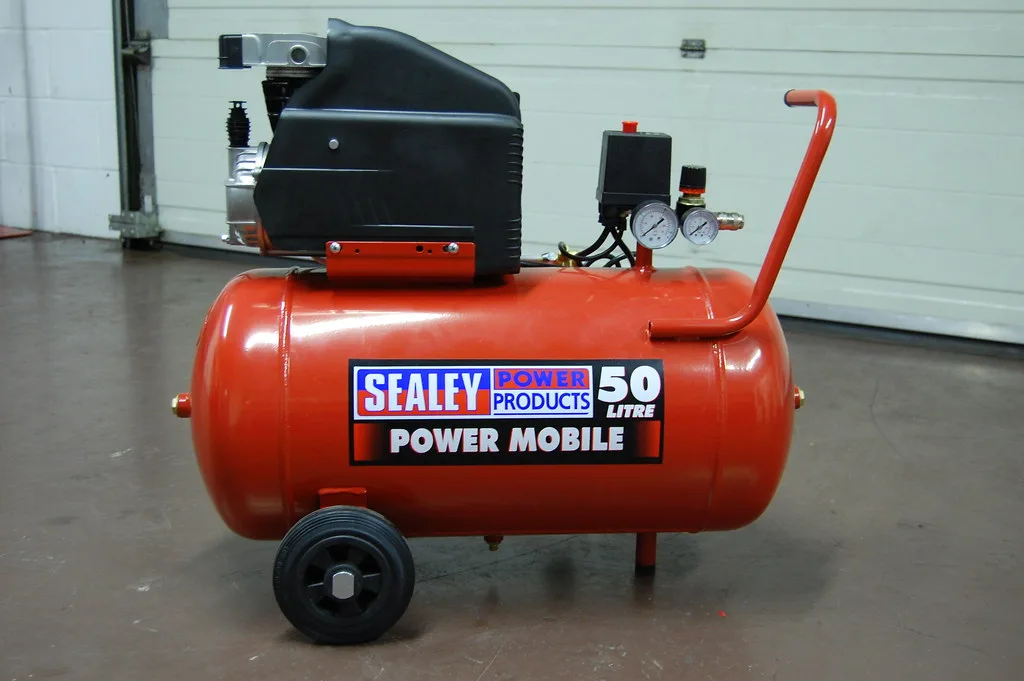
A 30 gallon air compressor is the practical middle ground for a home workshop: enough tank to run most air tools in short bursts, small enough to plug into a standard 120-volt outlet and wheel into a corner. But “30 gallon” only tells you the tank size. What decides whether a unit actually keeps up with your tools is the CFM it delivers at 90 PSI, the max pressure, and whether the pump is built to last. This guide compares the best 30 gallon air compressor options for a workshop and shows you how to match one to the tools you run.
We do not quote prices because they change constantly, and none of the picks below are paid placements. Check the current price at your preferred retailer before you buy.
What matters more than the tank
The tank is just a reservoir. Once you drain it, the pump has to keep up, so these are the numbers that count:
- CFM at 90 PSI. This is the real measure of output. Add up the CFM your busiest tool needs and leave headroom. Most 30 gallon units deliver somewhere between 5 and 7 CFM at 90 PSI, which comfortably runs nailers, ratchets, and a die grinder in bursts, but not a continuous-draw tool like a large sander or sandblaster.
- Max PSI. A higher cut-out pressure (many 30 gallon units hit 155 to 175 PSI) means more usable air stored in the same tank before the motor kicks back in.
- Single-stage pump. Almost every 30 gallon compressor is single-stage, which is fine for this class. What varies is pump quality: oil-lubricated cast-iron pumps last far longer than oil-free ones.
- Power supply. Most run on a standard 120-volt household outlet, though some offer dual-voltage wiring. Check the amp draw against your circuit before you buy.
If you want the full rundown of these numbers, our guide to air compressor specs explained breaks down CFM, PSI and duty cycle in plain terms.
The best 30 gallon air compressors
Craftsman CMXECXM301: the well-rounded workshop pick
The Craftsman CMXECXM301 is a 30 gallon vertical unit with a 2 HP oil-lubricated pump, a 175 PSI maximum and 6.2 SCFM at 90 PSI. That combination of high cut-out pressure and solid CFM makes it a strong all-round choice for a home shop running impact tools, nailers and a spray gun in bursts. The vertical tank keeps its footprint small, and Craftsman rates it around 76 dBA, which is typical for an oil-lubricated single-stage in this size.
Husky C304H: high pressure, good value
The Husky C304H is another 30 gallon single-stage unit, belt-driven with a 2.0 HP motor, 6.2 SCFM at 90 PSI and a 175 PSI max. Belt drive tends to run a little cooler and quieter than direct drive, and the high max pressure gives you plenty of stored air between cycles. It is a sensible pick for a general-purpose workshop that wants durability without stepping up to a professional-grade pump. If you are weighing the drive type, our belt drive vs direct drive guide explains the trade-off.
DeWalt DXCMLA1983054: portable and dual-voltage
The DeWalt DXCMLA1983054 is a 30 gallon portable with a 155 PSI maximum, roughly 5.7 CFM at 90 PSI and 7 CFM at 40 PSI. Its stand-out feature is a dual-voltage motor wired for a standard 120-volt outlet but capable of running on 240 volts, which gives you flexibility if you later move it to a dedicated circuit. The CFM is a touch lower than the Craftsman and Husky, so it suits lighter, intermittent tool use rather than continuous demand.
Ingersoll Rand SS3F2-GM: the durability choice
If you want a pump built to outlast the machine around it, the Ingersoll Rand SS3F2-GM is a 30 gallon horizontal unit with a 2 HP single-stage cast-iron pump and around a 135 PSI maximum. Ingersoll Rand’s reputation in this class is longevity and parts availability rather than headline numbers, so the max pressure is lower than the consumer units above. For a shop that runs its compressor hard and wants a pump it can service for years, that trade is often worth it.
Which one should you buy?
- Best all-rounder: the Craftsman CMXECXM301, for its blend of 175 PSI, 6.2 CFM and a compact vertical footprint.
- Best value with high pressure: the Husky C304H, for belt-drive smoothness at a similar spec.
- Most portable and flexible: the DeWalt DXCMLA1983054, for its dual-voltage motor.
- Longest-lasting pump: the Ingersoll Rand SS3F2-GM, if durability and serviceability matter more than peak PSI.
Whichever you choose, size it around your busiest tool’s CFM demand, not the tank number. A 30 gallon unit is happiest with intermittent-draw tools; if you plan to run a continuous-draw tool like a large sander or a sandblaster, step up to a 60 gallon compressor instead. For manufacturer specifications, the Craftsman product page lists the full ratings.
Frequently asked questions
What can a 30 gallon air compressor run? It comfortably runs intermittent-draw tools such as brad and framing nailers, impact wrenches, air ratchets, blow guns, and a die grinder or spray gun in bursts. It is not sized for continuous-draw tools like large orbital sanders or sandblasters, which drain the tank faster than the pump can refill it.
How much CFM does a good 30 gallon air compressor have? Most quality 30 gallon units deliver between 5 and 7 CFM at 90 PSI. Around 6 CFM, as on the Craftsman CMXECXM301 and Husky C304H, is a good target for general workshop use.
Does a 30 gallon air compressor need 240 volts? Usually no. Most 30 gallon compressors run on a standard 120-volt household outlet. Some, like the DeWalt DXCMLA1983054, offer dual-voltage wiring so you can move to 240 volts later, but it is not required for this size.
Is single-stage enough for a 30 gallon compressor? Yes. Nearly all 30 gallon compressors are single-stage, and that is appropriate for the class. Two-stage pumps only become worthwhile on larger 60 to 80 gallon units aimed at continuous, high-pressure shop work.
Oil-lubricated or oil-free for a 30 gallon compressor? For a workshop unit you will keep for years, oil-lubricated is the better choice. Oil-lubricated cast-iron pumps run cooler, quieter and last far longer than oil-free pumps, at the cost of occasional oil changes. See our air compressor filter guide for related maintenance basics.
What is the difference between a 30 gallon and a 60 gallon compressor? The larger tank stores more air, so the pump cycles less often and can support higher continuous demand. A 30 gallon unit suits intermittent tool use in a home shop; a 60 gallon unit suits heavier or continuous-draw tools and is usually 240-volt.
More from Air Compressor Mag
Best Portable Air Compressors: Picks by Job (2026)
Real portable air compressor picks by job, from tire inflation to framing, with the CFM at 90 PSI, tank size, and noise specs that actually decide it.
CFM Explained: How to Choose a High CFM Air Compressor for Your Tools
How to read CFM ratings and pick a high CFM air compressor: the 90 PSI standard, SCFM, a tool chart, and when you need 10, 20 or 50 CFM.
DeWalt Air Compressors: Best Models Reviewed and Compared
A hands-on comparison of DeWalt air compressors, from the DWFP55126 pancake to cordless and 30 and 60 gallon models, with specs to match one to your work.