CFM Explained: How to Choose a High CFM Air Compressor for Your Tools
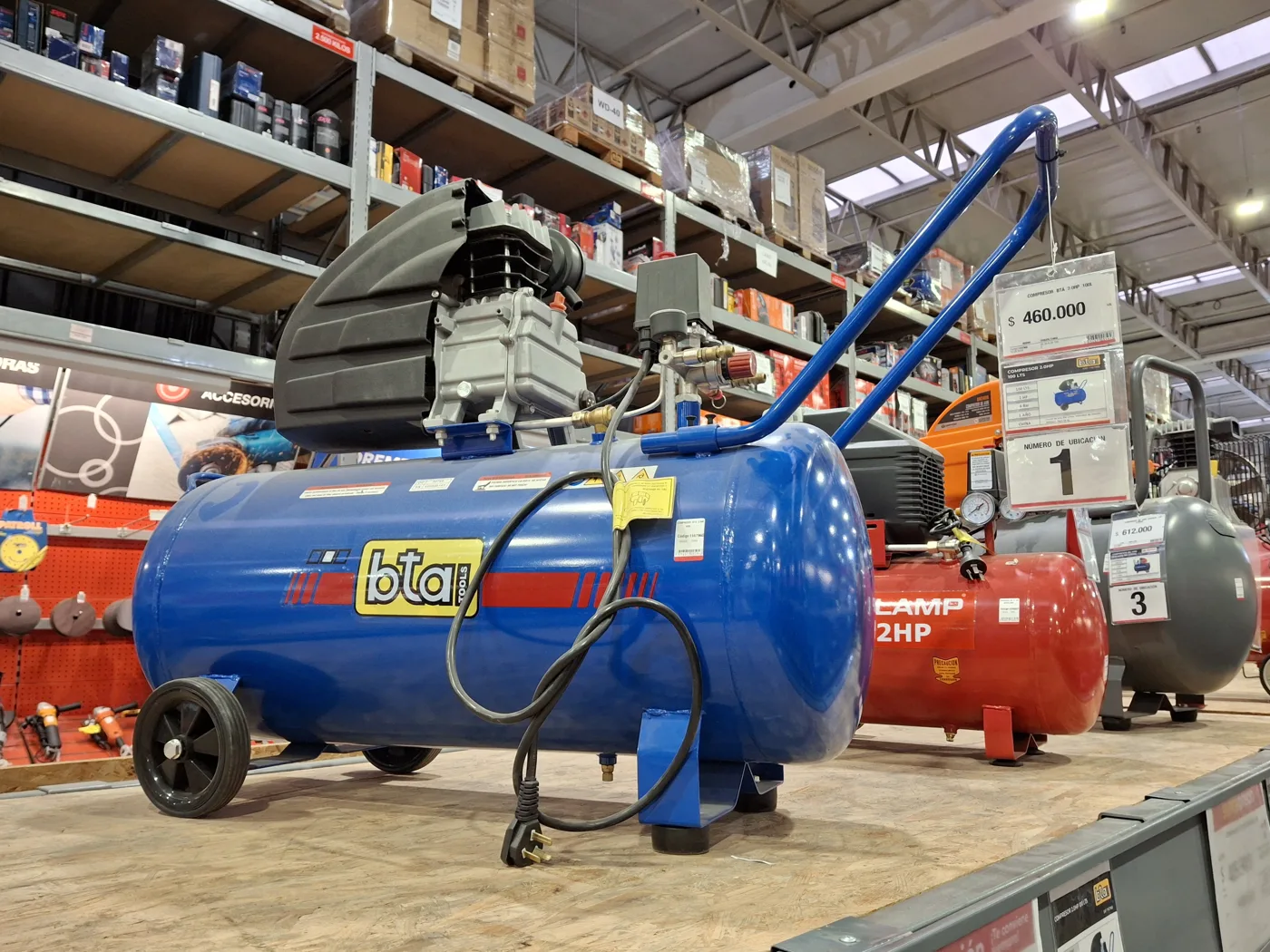
Choosing a high CFM air compressor is really a question of matching air supply to air demand, and CFM is the number that measures both. It is the spec that decides whether your sander runs smoothly or stalls every ten seconds while the pump catches up. Horsepower and tank size get the marketing attention, but CFM is what actually runs your tools. This guide explains what the rating means, why the pressure it is measured at matters just as much as the number, and how to tell whether you need 5, 20, or 50 CFM for the work you do.
What CFM actually measures
CFM stands for cubic feet per minute, the volume of air a compressor can deliver in a minute. Think of it as the flow rate: how much air the machine can push continuously, not how hard it can push. Pressure, measured in PSI, is the “how hard.” A compressor with plenty of PSI but low CFM can pressurize a tank quickly yet still starve a hungry tool, because the tool drains air faster than the pump can replace it.
That is the core idea. Air tools consume a certain volume of air per minute, and your compressor has to supply at least that much or the pressure sags and the tool loses power. High CFM means the machine can feed demanding, continuous-use tools without falling behind.
Why “at 90 PSI” is the most important part of the rating
A CFM number is meaningless without the pressure it was measured at, because flow drops as pressure rises. The industry standard for air tools is CFM at 90 PSI, and that is the figure to compare. Ignore a bare “CFM” claim with no pressure attached, and be especially wary of “displacement CFM,” a theoretical pump figure that is always higher than what the machine actually delivers.
You will also see SCFM, or standard CFM, which is CFM corrected to standard conditions of temperature, humidity, and altitude so that ratings can be compared fairly. For practical purposes, treat SCFM at 90 PSI as the honest number and match your tools against that. Our air compressor specs explained guide breaks down the rest of the badge.
The rule that sizes any compressor
Find the CFM requirement of your most demanding tool at 90 PSI, then multiply by about 1.5 for headroom. That is the minimum delivered CFM you want. For small single-stage units that run on a 50 percent duty cycle and cannot run nonstop, push closer to 2x so the pump keeps up. You can run the numbers on your own setup with our air compressor size calculator.
Here is where common air tools fall, at 90 PSI:
- Brad and finish nailers: roughly 0.5 to 2 CFM. Intermittent, so a small pancake handles them.
- 1/2-inch impact wrench: about 4 to 5 CFM, used in short bursts.
- Air ratchet, cut-off tool: around 4 to 10 CFM.
- Die grinder: roughly 5 to 10 CFM, and it runs continuously.
- Orbital sander: about 6 to 9 CFM; a dual-action sander can want 10 to 15 CFM nonstop.
- HVLP and paint spray guns: commonly 6 to 18 CFM depending on the gun.
- Sandblaster: 10 to 20+ CFM, and it never lets up.
The pattern matters more than any single figure. Intermittent tools (nailers, impact wrenches) are easy to feed. Continuous tools (sanders, grinders, spray guns, sandblasters) are what force you into a high CFM air compressor.
When you actually need high CFM: 10, 20, and 50 CFM machines
For an air compressor for pneumatic tools used one at a time in a home garage, a 20-gallon portable delivering around 5 to 7 CFM covers impact wrenches, ratchets, and nailing. Step up to continuous work and the demands climb fast.
- A 10 CFM air compressor territory (typically a large single-stage or entry two-stage on a 60-gallon tank) runs a DA sander or a small spray setup without gasping.
- A 20 CFM air compressor class, meaning a proper two-stage stationary unit, is what a busy shop or a sandblasting cabinet wants, and it usually needs 240V wiring.
- A 50 CFM air compressor is rotary screw territory, built to run several pneumatic tools at once or feed a production line all day. That is a shop-air-system decision, not a portable one.
- A 185 CFM air compressor is the towable diesel unit contractors use for jackhammers and sandblasting on site, an entirely different category.
If you are supplying a whole pneumatic system rather than one tool, add up the air demand of everything that might run at the same time, apply the same headroom, and choose accordingly. That total, not the biggest single tool, is your real requirement. For continuous-duty machines, see our guide to the best two-stage air compressors and best rotary screw air compressors.
Don’t forget the pipe and hose
A high CFM compressor is wasted if the air cannot get to the tool. Undersized hose and fittings choke flow and cause a pressure drop before the air ever reaches the trigger. Use a hose rated for your CFM, keep it as short as practical, and avoid narrow quick-connects on high-demand tools. You can estimate the loss with our air hose size and pressure drop calculator. For a technical reference on how compressed air systems are sized, the U.S. Department of Energy’s compressed air resources are a solid, vendor-neutral source.
Get the CFM right, give it headroom, and pipe it properly, and your tools run the way they are supposed to.
Frequently asked questions
What does CFM mean on an air compressor? CFM is cubic feet per minute, the volume of air the compressor delivers each minute. It is the flow rate that runs your tools, separate from PSI, which is the pressure. A tool needs a compressor whose CFM at 90 PSI meets or exceeds the tool’s demand.
How much CFM do I need for air tools? Find your most demanding tool’s CFM at 90 PSI and multiply by about 1.5 for headroom, or closer to 2x for small single-stage units. Nailers need only 0.5 to 2 CFM, impact wrenches 4 to 5, and continuous tools like sanders and sandblasters 10 to 20+ CFM.
What is a high CFM air compressor? Broadly, any machine that delivers enough continuous air for demanding tools, generally 10 CFM and up. A 10 CFM unit runs a sander, a 20 CFM two-stage suits a busy shop or sandblasting, and 50 CFM and higher are rotary screw systems for running multiple tools at once.
Is CFM or PSI more important? Both matter, but for running air tools CFM is usually the limiting factor. Most tools need 90 PSI, which nearly every compressor can reach, but they fail when the compressor cannot supply enough CFM, so the flow rate is what you size around.
Why is CFM given at 90 PSI? Because flow drops as pressure rises, so a CFM figure only means something with a pressure attached. Ninety PSI is the standard operating pressure for most air tools, so CFM at 90 PSI lets you compare compressors and tools on the same basis.
More from Air Compressor Mag
Best Portable Air Compressors: Picks by Job (2026)
Real portable air compressor picks by job, from tire inflation to framing, with the CFM at 90 PSI, tank size, and noise specs that actually decide it.
Best 30 Gallon Air Compressors for Workshops
The best 30 gallon air compressor picks for a home workshop, compared on CFM, max PSI, single-stage pumps and 120V wiring so you match the unit to your tools.
DeWalt Air Compressors: Best Models Reviewed and Compared
A hands-on comparison of DeWalt air compressors, from the DWFP55126 pancake to cordless and 30 and 60 gallon models, with specs to match one to your work.