Best Portable Air Compressors: Picks by Job (2026)
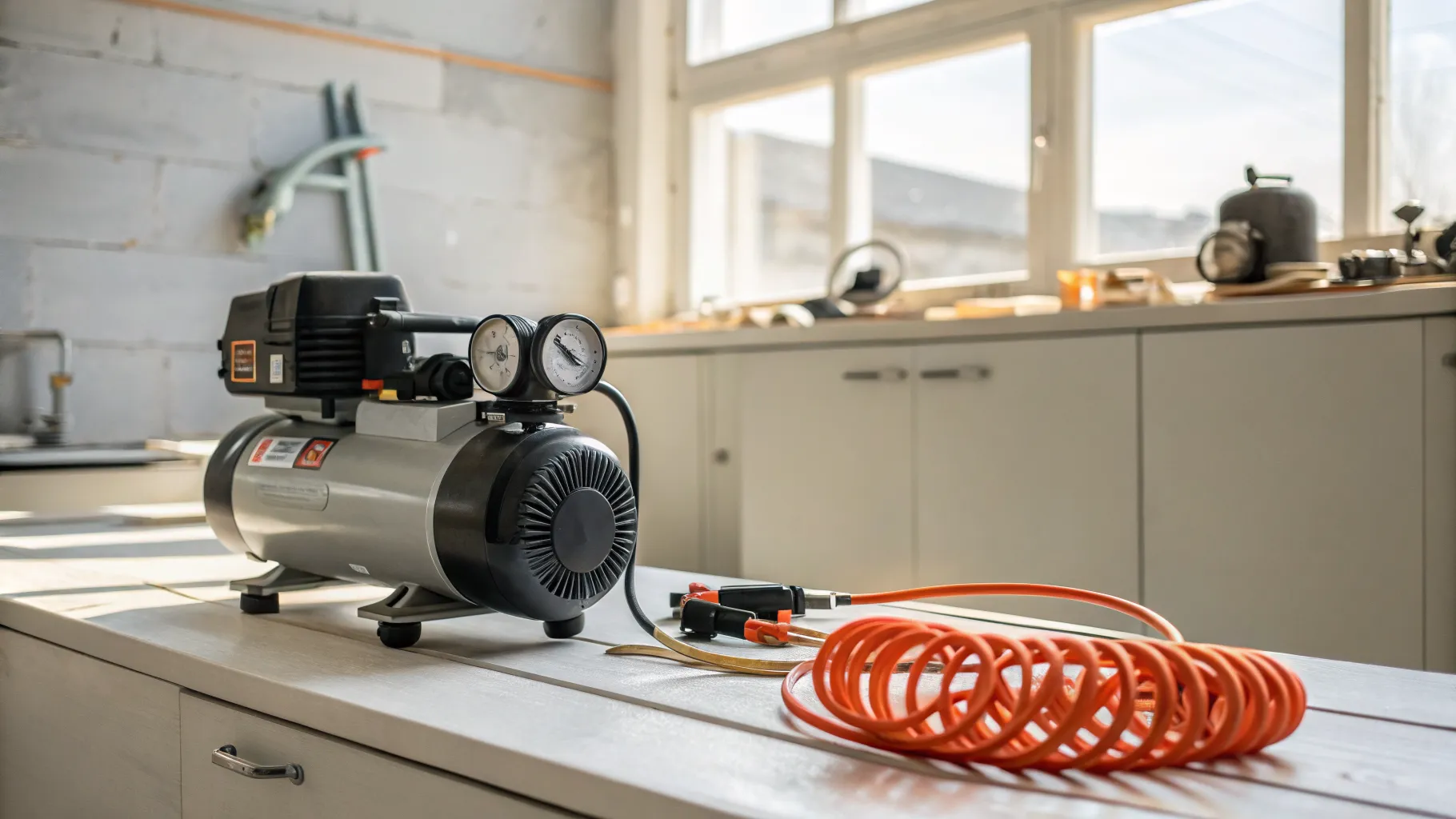
The right portable air compressor is the one that clears the airflow your tool needs, in the lightest, quietest package you can carry. Almost everything else is marketing. Below are real models that sell in the US right now, sorted by the job you actually plan to do, with the two or three specs that decide each pick and one honest limit for each.
How to match a compressor to the job
One number tells you whether a tool will run: CFM at 90 PSI. That is the air the pump delivers continuously at working pressure. Check your tool’s requirement, then add at least 30 percent headroom, ideally 1.5 times the rating, so the pump is not gasping during fast work.
Tank size does not change what a tool can do. A bigger tank only buys you more seconds of stored air before the motor kicks back on. A 6-gallon tank with weak airflow still stalls a hungry tool; it just takes a little longer to get there.
Here is the rough mapping most homeowners and tradespeople need:
| If you mainly do this | Aim for | Why |
|---|---|---|
| Inflate tires, sports gear, mattresses | Cordless inflator or any small pancake | Tiny output is fine; portability and accuracy win |
| Brad, finish, and trim nailing | 0.7 to 2 CFM at 90 PSI, 1 to 6 gal | Short bursts, low air demand |
| Framing nailer, occasional impact bursts | 4 CFM or more at 90 PSI | Sustained airflow matters; a framing nailer spikes hard on sheathing and decking |
| Air sander, grinder, cutoff tool | 10 CFM or more, continuous | No portable sustains this; buy a stationary compressor |
That last row is the honest line most buying guides skip. A DA sander or grinder pulls roughly 10 CFM and never lets up. No pancake and no small twin-stack can feed that, no matter what the box says. For those tools, stop shopping portables.
Best overall portable: Bostitch BTFP02012 or Craftsman CMEC6150
Who it’s for: the homeowner or remodeler who wants one compressor for nailers, blowing off dust, topping tires, and the odd quick task.
The honest truth about 6-gallon pancakes: the big brands are nearly identical. Bostitch, Craftsman, Porter-Cable, Ridgid, and Dewalt all cluster around 2.6 CFM at 90 PSI, 150 PSI max, oil-free, and roughly 29 to 30 pounds. At this tier you are buying brand, warranty, and how much noise you can stand, not performance.
The Bostitch BTFP02012 (2.6 CFM at 90, 150 PSI, 6 gal, about 29 lbs, 78.5 dBA) and the Craftsman CMEC6150 (same airflow and tank, 78.5 dBA, built in Jackson, Tennessee) are the easy default picks. Both run any brad, finish, or roofing nailer with room to spare.
Limit: 2.6 CFM is a nailer number, not a framing-and-air-tools number. It fires a framing nailer for slow work but bogs down on fast sheathing. The Ridgid OF60150HB hits the same specs but runs louder at 84 dBA, so skip it if quiet matters. Dewalt’s version of this class is the DWFP55126, which runs the same 2.6 CFM and 78.5 dBA but tops out at 165 PSI instead of 150, so it packs a little more stored air per fill.
Check current price.
Best for trim and finish nailing: Metabo HPT EC28M or Senco PC1010
Who it’s for: finish carpenters and trim installers working indoors, around customers, or in a quiet house.
These are the lightweight quiet specialists. The Metabo HPT EC28M (1 gal, 0.8 CFM at 90, 125 PSI, 59 dBA, 25 lbs) is about the quietest 1-gallon you can buy, pleasant to run inside a finished room. The Senco PC1010 (1 gal, 0.7 CFM at 90, up to 135 PSI, 68 dBA, just 20 lbs) is the featherweight; you carry it up a ladder in one hand.
Limit: that tiny output is finish-nailer-only. Brad, pin, and finish nailers, fine; anything bigger and they cannot keep up. Do not buy one expecting it to grow with you. If you also want framing capability someday, a 6-gallon pancake covers finish work too, with more reserve.
Check current price.
Best for framing: Makita MAC2400 (Big Bore)
Who it’s for: framers, deck builders, and anyone driving a framing nailer all day.
The Makita MAC2400 twin-stack delivers 4.2 CFM at 90 PSI from a 4.2-gallon tank, 130 PSI max, with an oil-lubricated cast-iron pump. That airflow is real framing capability, and the oil-lubed pump takes daily abuse that an oil-free unit would not survive as long.
Limit: at 77 pounds, “portable” means two hands and a tailgate, not a casual carry. It needs oil checks and changes, and must sit level to run right. Makita lists it at 79 dB, helped by the low 1,730 RPM pump, so it is quieter than a pancake but still loud enough to want hearing protection up close.
For more reserve on sustained framing plus brief impact-wrench use, the Makita MAC5200 steps up to 6.5 CFM at 90 from a 5.2-gallon tank, with wheels and a folding handle. At 88 pounds it is the heavy end of anything called portable, but you roll it rather than carry it.
Check current price.
Best quiet: California Air Tools 8010
Who it’s for: indoor shops, garages attached to the house, apartments, airbrush and trim work where noise is the dealbreaker.
The California Air Tools 8010 proves oil-free does not mean loud. It runs at 60 dBA, about conversation volume, because it uses a low-RPM dual-piston pump (around 1,680 RPM) instead of a screaming high-speed motor. You get an 8-gallon steel tank (the 8010A swaps in aluminum), 2.2 CFM at 90 PSI, 120 PSI max, oil-free, 48 pounds, and wheels.
Limit: 2.2 CFM caps it at trim nailing, inflation, and airbrush duty. It will not frame and will not feed sustained air tools. You are buying quiet and a big tank, not high airflow.
For a more portable quiet option, the California Air Tools 4610AC gives the same 2.2 CFM and 60 dBA from a 4.6-gallon aluminum twin tank at 44 pounds. The Makita MAC210Q Quiet Series (2 gal, 2.0 CFM at 90, 135 PSI, 60 dBA, roll-cage build) is another solid 60 dB pick. If you want quieter than a pancake but more reach than the 60 dB class, the Dewalt DWFP55130 (2.5 gal, 3.0 CFM at 90, 200 PSI max, 71.5 dBA, 36 lbs) is marketed for trim; the high 200 PSI buys longer run time per fill, but at 71.5 dBA it is not truly quiet.
Check current price.
Best ultra-portable for tire inflation: Dewalt 20V MAX cordless inflator
Who it’s for: anyone who mainly fills tires, bike tires, rafts, and air mattresses and does not want to drag out a compressor.
For pure inflation, a cordless inflator beats a real compressor every time. The Dewalt 20V MAX inflator runs off the same batteries as Dewalt’s cordless tools, handles car and full-size truck tires, and stops automatically at your set pressure. No hose to coil, no tank to drain, no cord to find an outlet for. Corded 12V options like AstroAI are the cheapest path and plug into a car socket; accuracy on these is usually within 1 to 2 PSI.
Limit: an inflator is not a compressor for tools. It fills; it does not run a single nailer. If you ever need to drive a nail or blow off a bench, you need one of the units above instead.
Check current price.
Best value: any big-brand 6-gallon pancake
Who it’s for: the buyer who wants the most useful air per dollar and is fine with a workhorse, not a specialist.
Because the 6-gallon pancakes are near clones, the value play is to buy whichever of the Bostitch BTFP02012, Craftsman CMEC6150, or Porter-Cable C2002 is cheapest, then check the noise rating. The Porter-Cable runs about 82 dBA, louder than the Bostitch and Craftsman at 78.5 dBA. All three run nailers all day; the ceiling is the same 2.6 CFM, so it is a nailer, not a framing-plus-air-tools machine.
Check current price.
Comparison table
| Model | CFM at 90 PSI | Tank | Type | Best for |
|---|---|---|---|---|
| Senco PC1010 | 0.7 | 1 gal | Hot dog | Featherweight finish nailing |
| Metabo HPT EC28M | 0.8 | 1 gal | Hot dog | Quietest indoor trim work |
| Makita MAC210Q | 2.0 | 2 gal | Hot dog | Quiet light-duty nailing |
| California Air Tools 8010 | 2.2 | 8 gal | Pancake | Quiet shop and indoor use |
| California Air Tools 4610AC | 2.2 | 4.6 gal | Twin-stack | Portable quiet pick |
| Bostitch BTFP02012 | 2.6 | 6 gal | Pancake | Best all-round DIY |
| Craftsman CMEC6150 | 2.6 | 6 gal | Pancake | Best value all-rounder |
| Dewalt DWFP55130 | 3.0 | 2.5 gal | Hot dog | Quieter trim, long run time |
| Makita MAC2400 | 4.2 | 4.2 gal | Twin-stack | Framing |
| Makita MAC5200 | 6.5 | 5.2 gal | Single tank | Sustained framing, impact bursts |
What actually matters when buying
CFM at 90 PSI, not horsepower. Horsepower on small compressors is a peak, marketing-friendly number that says little about real output. Two units with the same advertised HP can deliver very different airflow. Read the CFM at 90 PSI rating and ignore the rest.
Tank shape is mostly about carry, not capacity. A pancake (round, flat) is light, stable, and the natural first compressor. A hot dog (single cylinder) is slim and easy to grab. A twin-stack (two cylinders) packs more stored air into a portable footprint and suits framing. The shape changes how it carries; the CFM number still decides what it runs.
Oil-free vs lubricated. Oil-free units are lighter, need no maintenance, and can be tipped or stored any way, which is why they dominate the portable class. Lubricated units run quieter and last longer under heavy daily load, but you have to check and change the oil and keep them level. The myth to drop: oil-free is not automatically loud. The California Air Tools and Makita Quiet units are oil-free and run at 60 dBA because of low-RPM pumps, not because of oil.
Noise is a real buying axis. Pancakes run 78 to 84 dBA, loud enough to want hearing protection and to annoy anyone nearby. The 60 dBA quiet class (California Air Tools, Makita Quiet, Metabo HPT) is the difference between running a compressor in a finished basement and not. If you work indoors or around people, treat dB as a primary spec.
Duty and honest limits. A 6-gallon pancake runs nailers and brief impact-wrench bursts. It will not sustain a DA sander, grinder, or cutoff tool; those need 10 CFM or more without stopping and belong on a stationary compressor. And drain your tank after each use: standing water rusts a tank from the inside and eventually fails it.
For setup, oil checks, and keeping any of these running, see our Oil & Maintenance guide and the Repair Guide for when something quits. To size a unit against a specific tool, the calculators in our Tools section do the math for you.
Frequently asked questions
What size compressor do I need for a framing nailer? Aim for 4 to 5 CFM at 90 PSI. A framing nailer draws only about 2 CFM in wall studs but spikes much higher on sheathing and decking where you fire fast. The Makita MAC2400 at 4.2 CFM keeps up; a 2.6 CFM pancake bogs down on fast work.
Can a portable run a 1/2-inch impact wrench? In short bursts on a larger portable, yes; continuously, no. An impact wrench wants around 5 CFM at 90 PSI minimum, ideally 7.5 CFM with headroom. A 4 to 6 CFM unit with a decent tank loosens a few bolts, then needs to catch up. For steady use, go stationary.
Can it run an air sander or grinder? No. Air sanders, grinders, and cutoff tools pull roughly 10 CFM or more continuously, and no portable sustains that. This is a stationary-compressor job. If your main work is bodywork or metal grinding, do not shop the portable shelf.
Is oil-free worth it, and which lasts longer? For portable, intermittent use, oil-free is the right call: lighter, no maintenance, store it any way. Lubricated units run quieter and last longer under heavy daily load, but need oil changes and must stay level. For a homeowner or remodeler, oil-free wins; for a daily framing crew, an oil-lubed pump like the Makita MAC2400 earns its keep.
Which compressor is quiet enough for indoors or an apartment? The 60 dBA class: California Air Tools 8010 and 4610AC, Makita MAC210Q, and the Metabo HPT EC28M at 59 dBA. These run at about conversation volume. Standard pancakes at 78 to 84 dBA are too loud for shared or indoor space without hearing protection.
How big a tank do I actually need? For intermittent DIY and nailing, 6 to 10 gallons is plenty. A bigger tank only helps if you run a tool long enough to drain it, and at that point you are into 30 to 50 gallon stationary territory anyway. Buy tank size for runtime comfort, not as a substitute for airflow.
Cordless inflator or a small compressor for tires? For pure tire and inflation duty, a cordless inflator like the Dewalt 20V MAX wins: faster to deploy, sets a target pressure and shuts off, no outlet needed. Only buy a compressor if you also need to run a nailer or other air tool.
What is the difference between pancake, hot dog, and twin-stack? Pancake means a round, flat tank: light, stable, the usual first compressor. Hot dog means a single cylindrical tank, slim and easy to carry. Twin-stack means two cylinders for more stored air in a portable footprint, a common step up for framing. The shape affects carrying; the CFM at 90 PSI rating still decides what it can power.
More from Air Compressor Mag
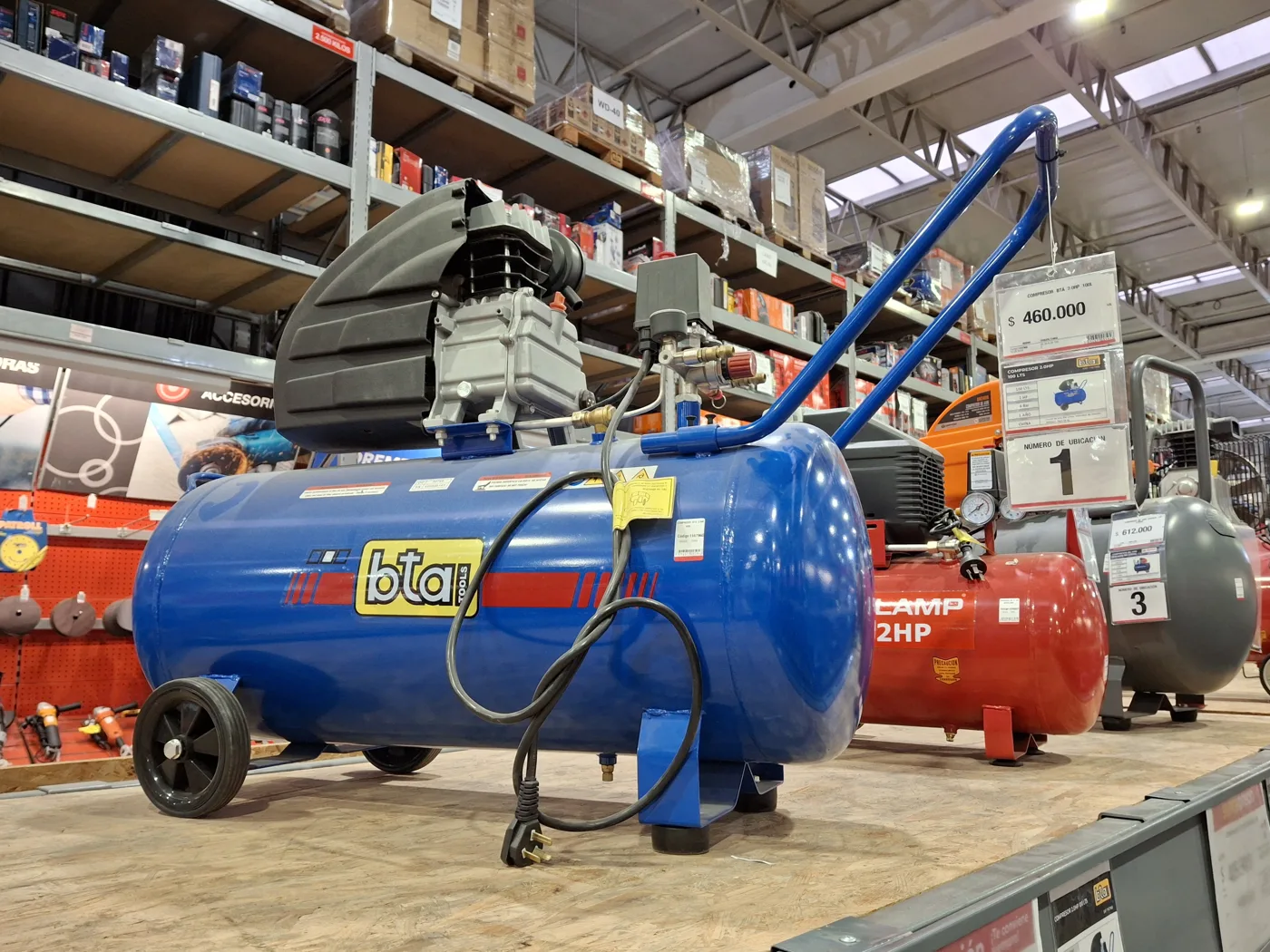
CFM Explained: How to Choose a High CFM Air Compressor for Your Tools
How to read CFM ratings and pick a high CFM air compressor: the 90 PSI standard, SCFM, a tool chart, and when you need 10, 20 or 50 CFM.
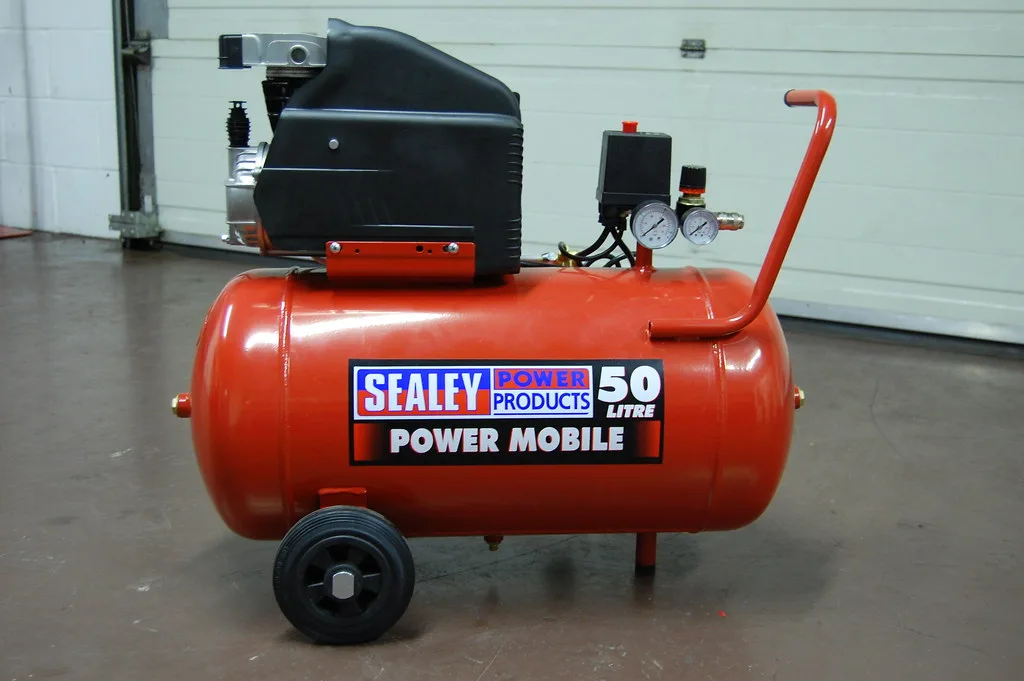
Best 30 Gallon Air Compressors for Workshops
The best 30 gallon air compressor picks for a home workshop, compared on CFM, max PSI, single-stage pumps and 120V wiring so you match the unit to your tools.
DeWalt Air Compressors: Best Models Reviewed and Compared
A hands-on comparison of DeWalt air compressors, from the DWFP55126 pancake to cordless and 30 and 60 gallon models, with specs to match one to your work.