Best 2-Stage Air Compressors for High-Demand Workshop Use
A 2-stage air compressor is the machine you step up to when a single-stage unit can no longer keep up: when you run air tools all day, use more than one tool at once, or need a steady 175 PSI for jobs like sandblasting and automotive work. Instead of compressing air in one stroke, a two-stage pump squeezes it twice with cooling in between, which delivers more usable air (CFM) at higher pressure and runs cooler under continuous load. This guide covers the best two-stage compressors for a high-demand workshop and, just as important, how to size one so you buy the right machine the first time.
None of the links below are affiliate placements for these specific units, and we never quote a price because they move constantly. Check the current price at your preferred retailer before you buy.
How to size a 2-stage compressor
Get the CFM right and everything else follows. The rule that matters: find the highest CFM rating among the tools you will run at the same time, then add roughly 20 to 30 percent so the compressor recovers instead of running flat out. For continuous-draw tools like die grinders and DA sanders, aim for 30+ CFM at 90 PSI.
As a rough guide to matching motor power to a shop:
- 5 HP two-stage units typically deliver in the region of 15 to 18 CFM at 175 PSI on a 60 to 80 gallon tank. That covers most one or two-person shops.
- 7.5 HP two-stage units push roughly 22 to 28 CFM at 175 PSI, which suits multi-bay auto shops, cabinet shops and light manufacturing.
Tank size buffers demand but does not create air: a bigger tank lets you run a high-draw tool longer before the pump catches up, but the pump’s CFM is what sustains continuous use. For the full method, see our guide to what size air compressor you need.
Best overall: Ingersoll Rand 2475N7.5
If you want a workshop compressor that will outlast the shop around it, the Ingersoll Rand 2475N7.5-V is the benchmark. It is a 7.5 HP, 80-gallon vertical machine rated at 24 CFM at 175 PSI, built around Ingersoll Rand’s cast iron Type 30 pump that the company designs for 15,000-plus hours of service. It runs on 230V single-phase, weighs north of 600 pounds, and is genuinely happy running air tools continuously.
This is the pick for a serious two-bay shop or anyone who resents replacing tools. It is a heavy, wired-in machine, not something you move around, so make sure you have the 230V circuit and floor space before you commit. Check current price if you want the last compressor you will buy for a decade.
Best 5 HP value: Quincy QT-54
The Quincy QT-54 (model 2V41C60VC) is a long-time favorite for good reason. It is a 5 HP, 60-gallon vertical two-stage with a four-cylinder cast iron pump rated at 15.2 CFM at 175 PSI and a low-RPM design Quincy rates up to around 30,000 hours. The slow-turning, splash-lubricated pump is quieter and less stressed than budget high-RPM units, which is why it holds up in daily use.
For a one or two-person shop that runs impact wrenches, ratchets, a blast cabinet and the occasional sander, the QT-54 hits the sweet spot between capacity and cost. It needs a 230V single-phase circuit like the others here. Check current price if you want proven longevity in a 5 HP footprint.
Also strong: Ingersoll Rand 2340
Ingersoll Rand’s 5 HP, 60-gallon 2340 series (such as the 2340L5) is the smaller sibling of the 2475 and another cast iron Type 30 workhorse, delivering around 15 CFM at 175 PSI. If you want Ingersoll Rand’s pump reputation but do not need the 7.5 HP machine’s output or the 80-gallon tank, this is the logical step down. It suits the same one to two-user shop as the Quincy, so the choice often comes down to price and availability on the day.
Budget end: Industrial Air and Campbell Hausfeld
If your two-stage needs are real but lighter, or your budget is tight, value-tier 60-gallon two-stage units from brands like Industrial Air and Campbell Hausfeld give you 175 PSI capability at a lower entry cost. They use higher-RPM pumps that are noisier and generally not rated for the same service life as a Quincy or Ingersoll Rand, so treat them as a good fit for intermittent shop use rather than all-day continuous duty. Confirm the specific model’s CFM at 175 PSI against your tool list, and check current price before deciding whether the step up to a Quincy is worth it for how hard you will work it.
Single-stage or two-stage?
Be honest about your usage before spending the extra. A single-stage compressor costs far less, weighs less, and handles the vast majority of garage and light-shop jobs perfectly well at 125 to 150 PSI. Step up to two-stage only if you genuinely run tools continuously, run several at once, or need a reliable 150 to 175 PSI. Our single-stage vs two-stage explainer and the how to choose an air compressor guide walk through the decision. For deeper technical detail, compressor makers like Quincy publish clear comparisons of the two compression cycles.
Frequently asked questions
What is a 2-stage air compressor? A two-stage air compressor compresses air twice. The first cylinder compresses air to an intermediate pressure, an intercooler removes heat, and a second, smaller cylinder compresses it again to a final pressure of around 175 PSI. This makes more usable air at higher pressure and lets the machine run cooler under continuous load than a single-stage unit.
How many CFM do I need for a workshop? Add up the CFM of the tools you will run at the same time, then add 20 to 30 percent for recovery. Most one or two-person shops are well served by a 5 HP two-stage unit delivering 15 to 18 CFM at 175 PSI, while busy multi-bay shops running grinders and sanders continuously want 7.5 HP and 22 to 28 CFM.
Is a 2-stage compressor worth it over single-stage? Only if you work it hard. Two-stage units cost more but deliver more CFM above 120 PSI, reach 175 PSI, and last longer under continuous duty. If you run air tools all day or use several at once, it is worth it. For occasional garage use, a single-stage compressor is cheaper and perfectly adequate.
What size breaker does a 2-stage air compressor need? Most 5 and 7.5 HP two-stage compressors run on 230V single-phase power and need a dedicated circuit sized to the motor’s rated amperage, typically a 30 to 40 amp breaker with appropriately sized wire. Always follow the manufacturer’s electrical specification and have a licensed electrician install the circuit.
How long do two-stage compressors last? Quality cast iron two-stage pumps from brands like Ingersoll Rand and Quincy are designed for 15,000 to 30,000 hours of service, which is many years in a typical shop. Value-tier units with high-RPM pumps generally last less and are better suited to intermittent use. Regular maintenance, especially oil changes and tank draining, makes a big difference either way.
More from Air Compressor Mag
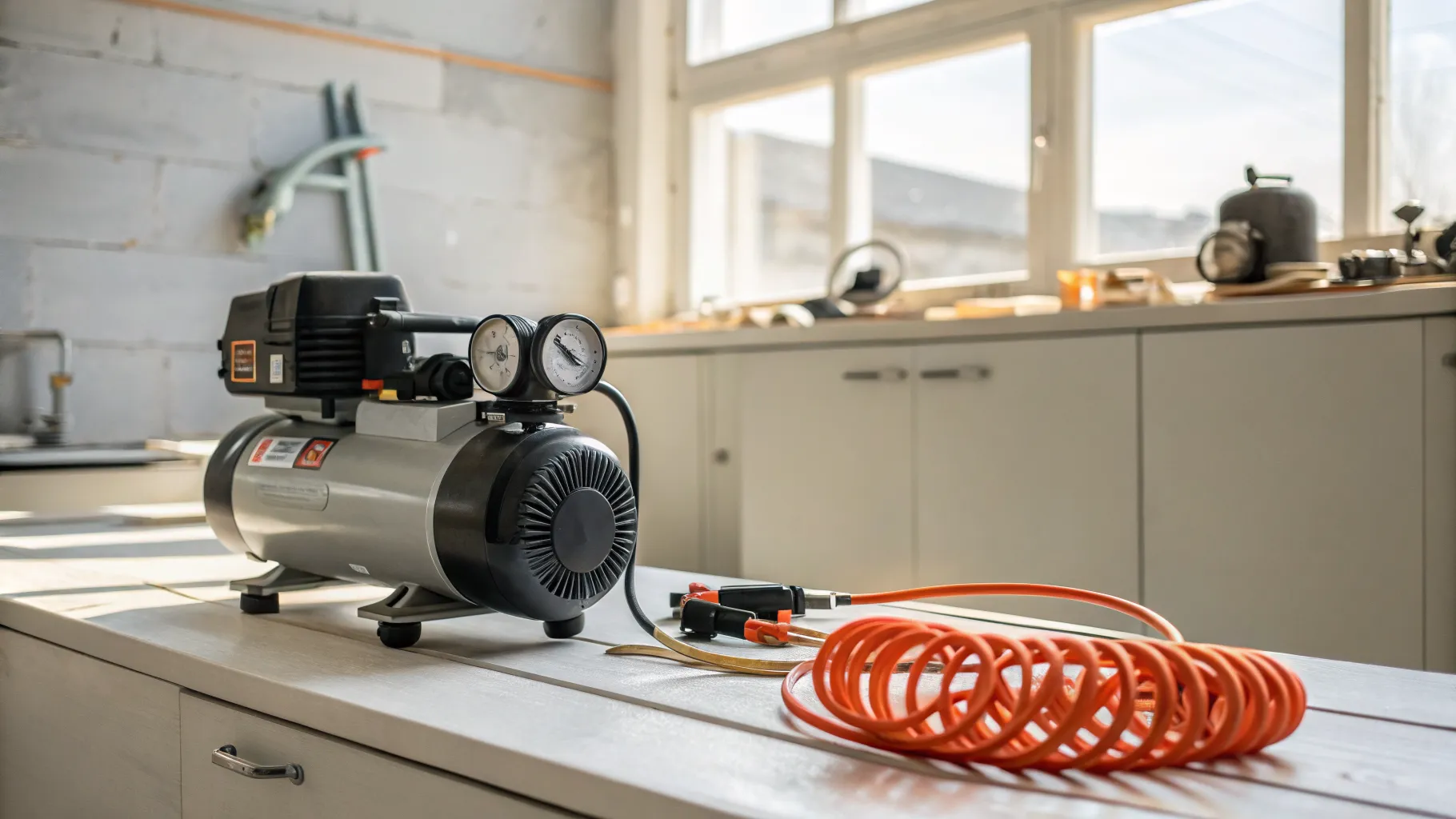
Best Portable Air Compressors: Picks by Job (2026)
Real portable air compressor picks by job, from tire inflation to framing, with the CFM at 90 PSI, tank size, and noise specs that actually decide it.
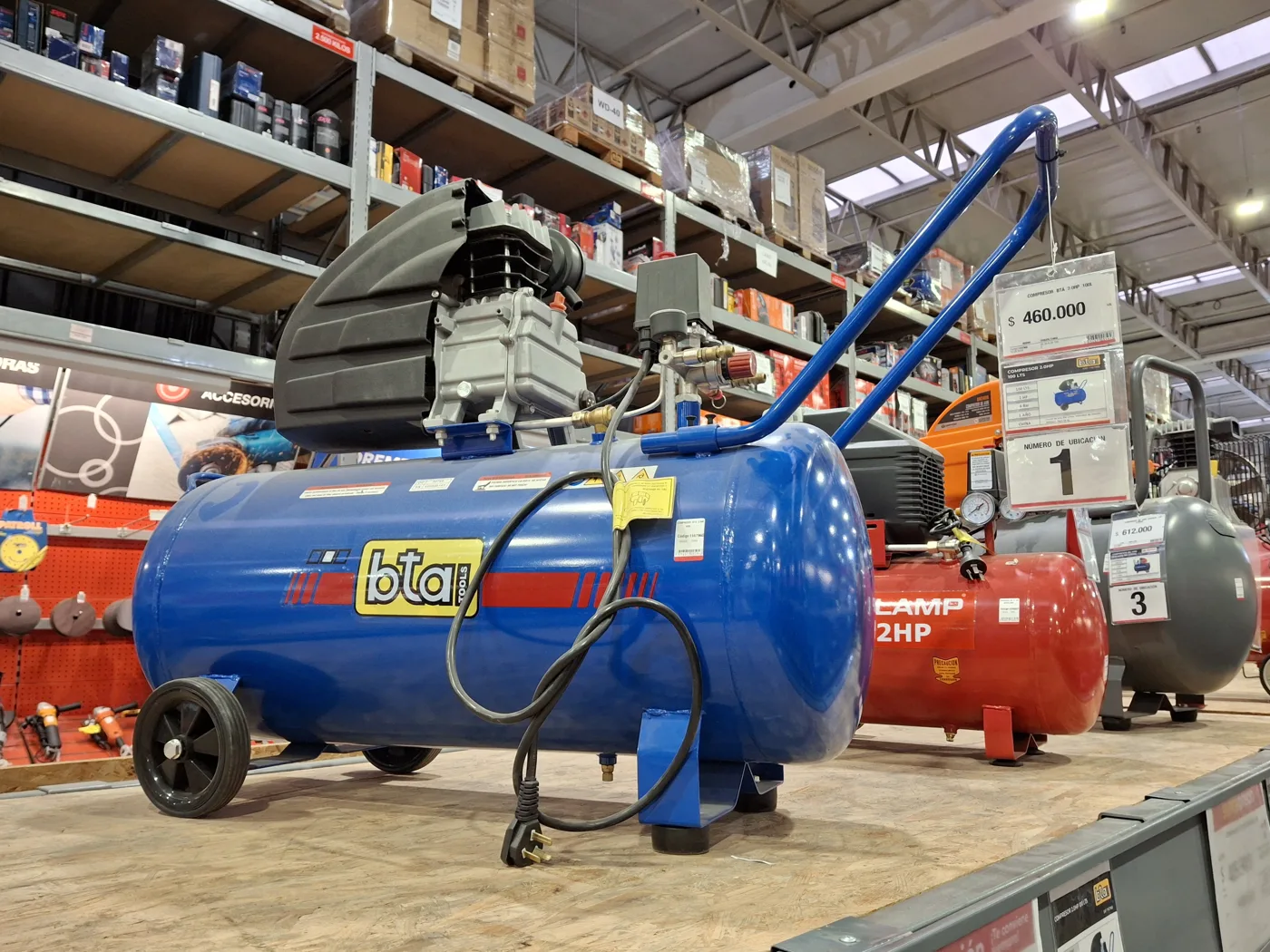
CFM Explained: How to Choose a High CFM Air Compressor for Your Tools
How to read CFM ratings and pick a high CFM air compressor: the 90 PSI standard, SCFM, a tool chart, and when you need 10, 20 or 50 CFM.
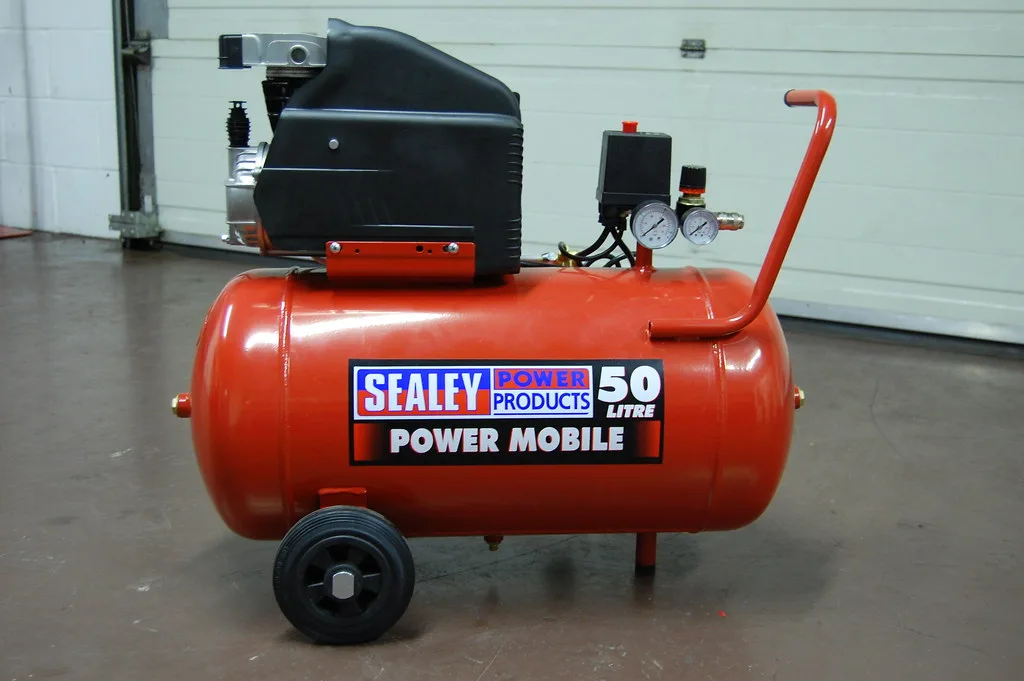
Best 30 Gallon Air Compressors for Workshops
The best 30 gallon air compressor picks for a home workshop, compared on CFM, max PSI, single-stage pumps and 120V wiring so you match the unit to your tools.