What Size Air Compressor Do I Need? A Plain Sizing Guide
Quick answer
Find the CFM rating of your most demanding air tool at 90 PSI, then multiply that number by about 1.5. That gives you the minimum air output your compressor needs to deliver.
- Nailing and fastening only (brad, finish, framing): roughly 2 to 4 CFM. A 6 gallon pancake handles all of it.
- Air tools (impact wrench, ratchet, die grinder): plan on 5 to 10 plus CFM. A 20 gallon portable is the floor.
- Continuous tools (sanders, cut-off tools, paint guns): 8 to 15 CFM nonstop. These need a wired-in stationary unit, not a portable.
One honest caveat up front: 1.5x is the safe rule of thumb, but small single-stage portables run on a 50 percent duty cycle, which means they cannot run nonstop. For those, you really want closer to 2x the tool’s air demand so the pump can keep up.
If you would rather punch in numbers, use our air compressor size calculator and skip the math.
CFM at 90 PSI, not horsepower
Horsepower sells compressors at the store, but it tells you almost nothing about whether a tool will run. What you actually care about is CFM measured at 90 PSI, which is the working pressure of most air tools.
Here is the trap. A compressor advertised at “12 CFM at 40 PSI” might deliver only about 8 CFM once you bring the pressure up to 90 PSI. Air volume always drops as pressure climbs. So you have to compare apples to apples: read the spec at 90 PSI, often printed as SCFM at 90 PSI, and ignore the headline horsepower number.
Same goes for your tools. Match the tool’s CFM at 90 PSI against the compressor’s CFM at 90 PSI. When both are read at the same pressure, the comparison is real.
For a deeper breakdown of how output drops with pressure, VMAC’s air tool CFM chart is a solid manufacturer reference.
Common tools, CFM at 90 PSI, and tank suggestion
These are the air demands for the tools most people actually own. Figures are at 90 PSI.
| Tool | CFM at 90 PSI | Tank suggestion |
|---|---|---|
| Brad nailer (18ga) | 0.5 to 2.0 | 6 gal pancake |
| Finish nailer (15 or 16ga) | 1.0 to 2.5 | 6 gal pancake |
| Framing nailer | 4 to 5 | 6 gal pancake |
| Blow gun | 2 to 4 (intermittent) | 6 gal pancake |
| Tire inflator | 1 to 3 (at 30 to 50 PSI) | 6 gal pancake |
| Air ratchet (3/8”) | 3 to 5 | 20 gal portable |
| Impact wrench (3/8”) | 3 to 4 avg, 5 to 6 continuous | 20 gal portable |
| Impact wrench (1/2”) | 4 to 6 avg, 7 to 8 continuous | 20 to 30 gal portable |
| Impact wrench (1”) | ~10 | 60 gal stationary |
| Die grinder (angle) | 5 to 7 | 60 gal stationary |
| Die grinder (straight) | 6 to 8 | 60 gal stationary |
| Cut-off tool | ~4 to 6 | 60 gal stationary |
| Orbital / DA sander | 6 to 9 avg, 8 to 12 continuous | 60 gal stationary |
| HVLP / paint spray gun | 8 to 12 avg, 10 to 15 continuous | 60 gal stationary |
Note the framing nailer line: 4 to 5 CFM is the rated figure, which assumes you are firing fast and continuously. Real-world bump firing draws less because the gun pauses between shots, so a 6 gallon pancake keeps up fine. For the per-tool detail behind these numbers, see Quincy Compressor’s nailer sizing guide.
Tank size buys runtime, not capability
This is the single biggest point of confusion, so let me be direct: a bigger tank does not make a tool run that the pump cannot already feed.
The tank stores compressed air. A larger tank means the pump cycles less often and you get longer bursts before the motor has to catch up. What sets a tool’s actual capability is the pump’s CFM output, not the tank. If a tool draws more CFM than the pump produces, a big tank only delays the moment you run dry.
Here is the cleanest real-world proof. The California Air Tools 20 gallon 2 HP unit is rated at 5.3 CFM at 90 PSI, but the maker lists it as continuous at only about 2.1 CFM at 90 PSI; pull the full 5.3 CFM and you get roughly 30 to 40 minutes at a stretch before the pump needs to catch up. Same 20 gallon tank, two very different runtimes, decided entirely by how hard you draw. The tank did not change. The air demand did. That is the whole lesson in one product.
So when you are shopping, treat tank gallons as “how long can I work before the pump kicks back on,” and treat CFM as “what can I run at all.”
Intermittent versus continuous tools
This distinction decides whether a portable will work for you.
Intermittent tools fire in short bursts with pauses between them. Nailers, blow guns, ratchets, and impact wrenches all work this way. During the pauses, the pump refills the tank. A small portable keeps up fine because it gets recovery time.
Continuous tools pull air the entire time you use them. DA and orbital sanders, die grinders, cut-off tools, and HVLP paint guns draw 8 to 15 plus CFM nonstop. A small single-stage portable cannot refill fast enough, the tank pressure sags, the tool slows down, and the motor overheats trying to keep up. No tank size fixes this. You need more CFM from the pump, which means a two-stage stationary unit.
If most of your work is fastening and the occasional impact job, a portable is the right call. Browse our best portable air compressors for picks that fit that use.
120V versus 240V circuit limits
Your wall outlet caps how much compressor you can run.
A standard 120V household circuit (15 or 20 amp) powers every portable on the market, including 6 gallon pancakes and most 20 gallon units. These are the plug-it-in-anywhere machines.
Once you move up to a true 5 HP two-stage stationary compressor, you are into 240V territory, usually a dedicated 240V circuit. These are not “wheel it out of the truck” tools. They get wired in, often hard-wired, and they pull more current than a 120V outlet can supply. If you are eyeing a 60 gallon stationary unit, factor in an electrician and a dedicated circuit before you buy.
The practical takeaway: portables run on 120V, and the big continuous-duty machines need 240V. If your shop only has 120V available, your ceiling is the portable class until you upgrade the panel.
When to go stationary
Go stationary when any of these is true:
- You run a sander, die grinder, cut-off tool, or paint gun for more than a few seconds at a stretch.
- You need 10 plus CFM at 90 PSI on a regular basis.
- You want the compressor to run all day without overheating, which means a 100 percent duty cycle two-stage unit.
A typical stationary setup is a 60 gallon, 5 HP, 230V two-stage compressor delivering around 14 to 15 CFM at 90 PSI at 100 percent duty cycle. That is the honest answer for anyone sanding, grinding, or spraying. It is a permanent fixture, not a portable, and it needs the right circuit, but it is the only thing that will actually feed those tools without choking.
If you are kitting out a home garage and want a fuller walkthrough of where the portable line ends and the stationary line begins, that build deserves its own plan. When you are spec’ing tools, our tools section lays out the air demands so you can size around your real workload.
Frequently asked questions
What size air compressor do I need to run an impact wrench? A 3/8 inch impact wrench needs roughly 3 to 4 CFM, and a 1/2 inch needs about 4 to 8 CFM. A 20 gallon portable making 4 to 5 CFM at 90 PSI is the practical floor for light to medium impact work. For a 1 inch impact at around 10 CFM, you are into stationary territory.
Can I run a sander or paint gun off a pancake compressor? No. Sanders and paint guns draw 8 to 15 CFM continuously, while a 6 gallon pancake makes only a couple of CFM at 90 PSI. The pancake will run dry in seconds and the tool will crawl. These tools need a two-stage stationary unit.
Does a bigger tank mean more power? No. The tank stores air for longer runtime. The pump’s CFM output sets what you can actually run. Same tank, higher draw, shorter runtime; the capability does not change.
What is the difference between CFM, SCFM, and PSI? PSI is pressure, the force pushing the air. CFM and SCFM measure air volume per minute, the amount of air moving. Tools are rated at 90 PSI, so always compare CFM figures at that pressure.
Why does my compressor run out of air when sanding? Because the sander’s continuous draw exceeds your pump’s CFM output. The tank drains faster than the pump refills it. A bigger tank will not fix it; you need a higher-CFM, usually two-stage, compressor.
What size do I need for a framing nailer or trim work? A 6 gallon pancake covers every common nailer, from 18ga brad up through framing guns, because nailers fire in short bursts and the pump refills between shots. Two trim carpenters can nail off the same pancake all day.
Do I need 120V or 240V? Portables, including 6 gallon pancakes and most 20 gallon units, run on a standard 120V outlet. A 5 HP two-stage stationary compressor needs a dedicated 240V circuit.
What is the difference between single-stage and two-stage? Mostly duty cycle and continuous CFM. Single-stage portables run a 50 percent duty cycle and cannot run nonstop. Two-stage stationary units run 100 percent duty cycle and deliver more continuous CFM, which is what sanders, grinders, and paint guns require.
More from Air Compressor Mag
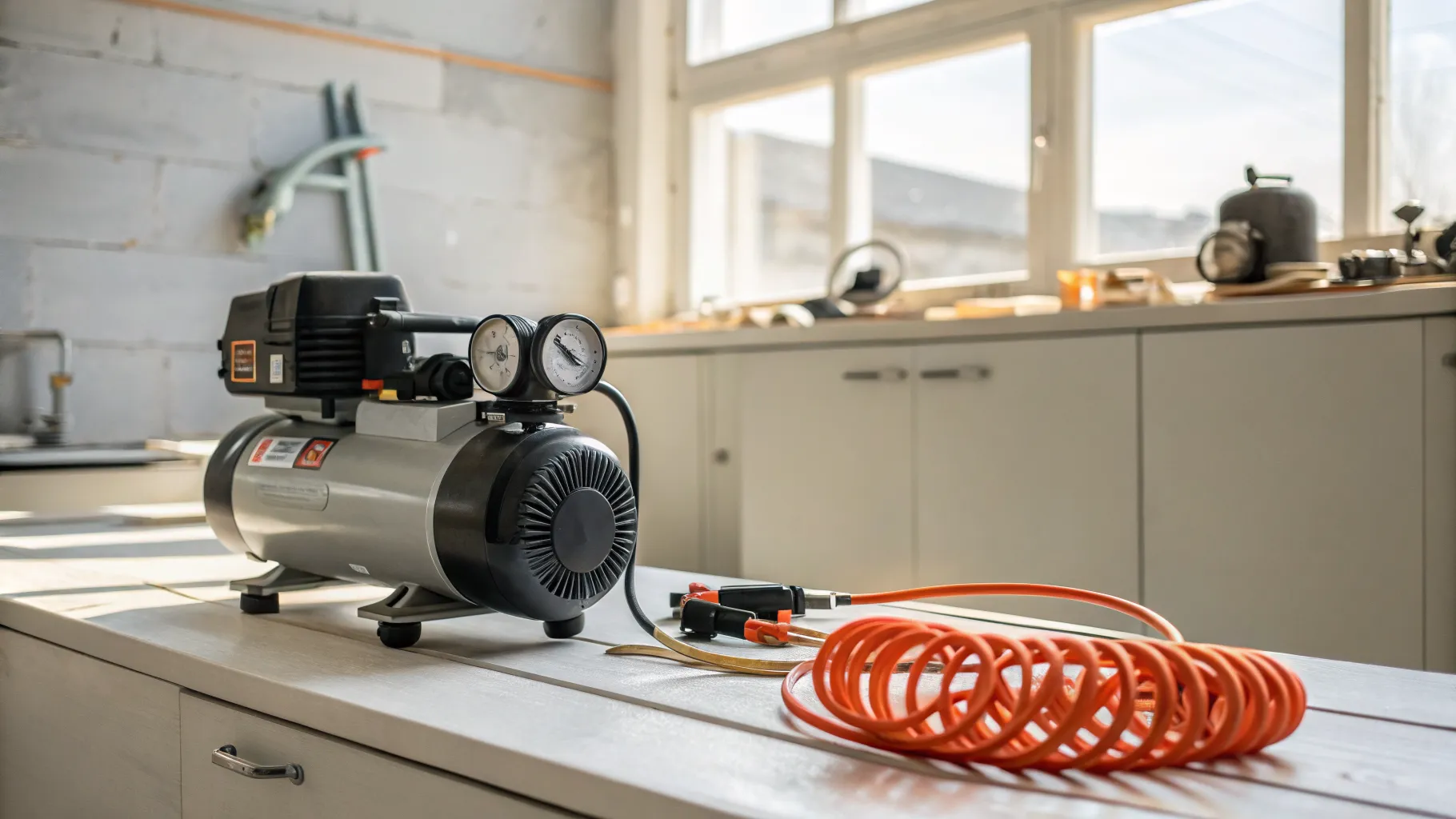
Best Portable Air Compressors: Picks by Job (2026)
Real portable air compressor picks by job, from tire inflation to framing, with the CFM at 90 PSI, tank size, and noise specs that actually decide it.
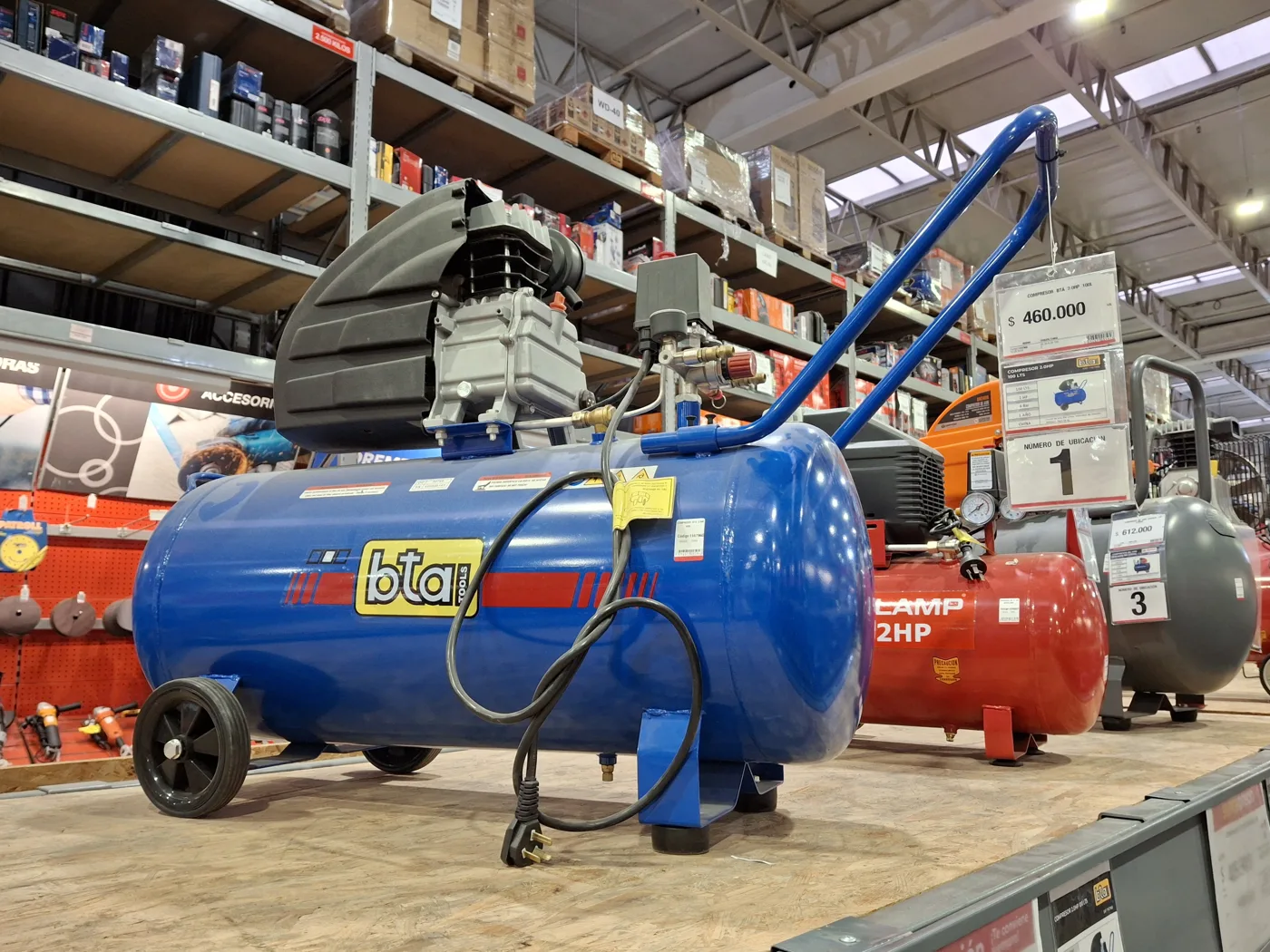
CFM Explained: How to Choose a High CFM Air Compressor for Your Tools
How to read CFM ratings and pick a high CFM air compressor: the 90 PSI standard, SCFM, a tool chart, and when you need 10, 20 or 50 CFM.
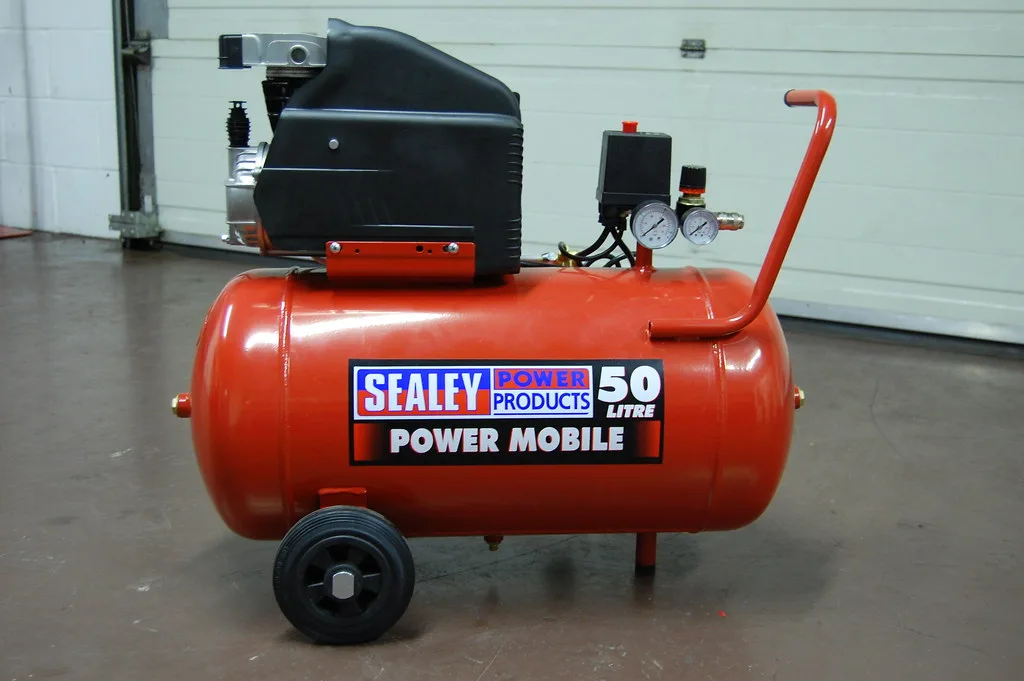
Best 30 Gallon Air Compressors for Workshops
The best 30 gallon air compressor picks for a home workshop, compared on CFM, max PSI, single-stage pumps and 120V wiring so you match the unit to your tools.