Air Hose Size & Pressure Drop Calculator: Will Your Hose Choke the Tool?
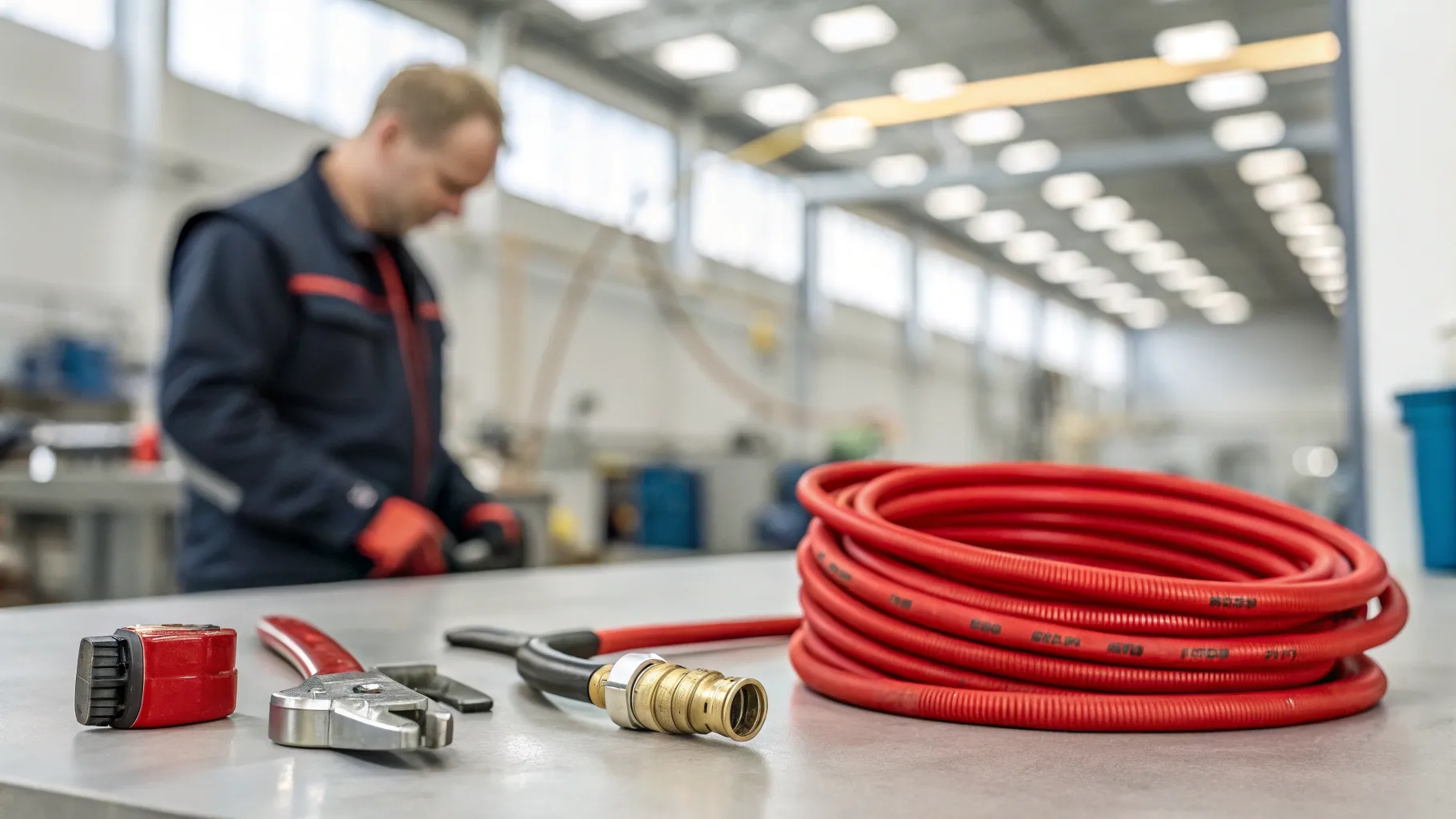
Your compressor can be the right size and still leave a tool gasping, because a long or narrow hose bleeds pressure on the way to the tool. Enter your hose length, its inside diameter and your tool's air draw, and we'll estimate the pressure you actually have at the coupler. The hose bore matters far more than its length: dropping from 3/8\" to 1/4\" can cut your usable pressure dramatically.
Estimate the pressure drop down your hose
Pressure drop rises with the square of airflow and falls steeply as the bore widens, so airflow-hungry tools (sanders, grinders, spray guns) suffer most on a thin hose. If the figure above looks bad, the cheapest fix is almost always a wider hose, not a bigger compressor.
More from Air Compressor Mag
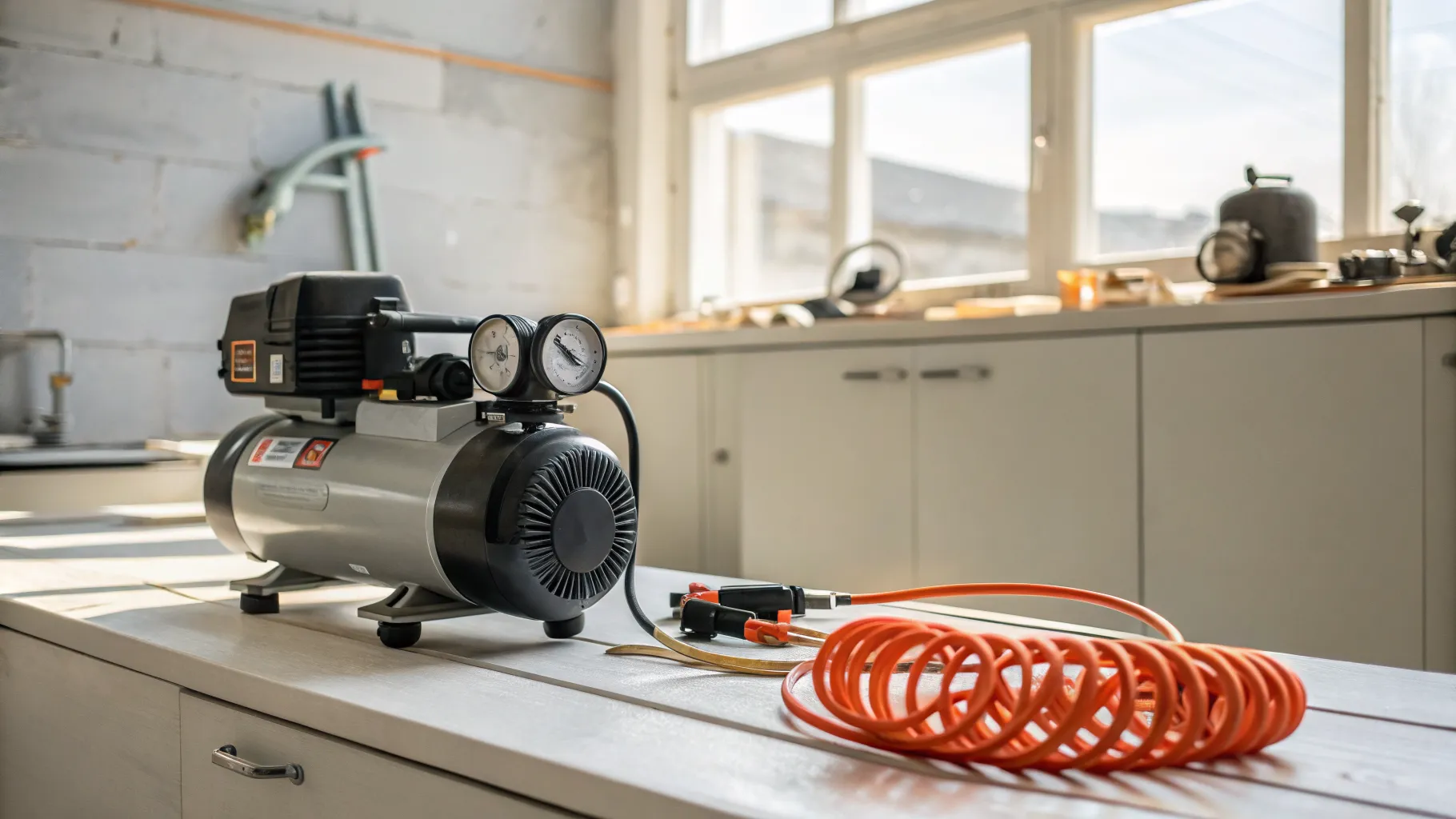
Best Portable Air Compressors: Picks by Job (2026)
Real portable air compressor picks by job, from tire inflation to framing, with the CFM at 90 PSI, tank size, and noise specs that actually decide it.
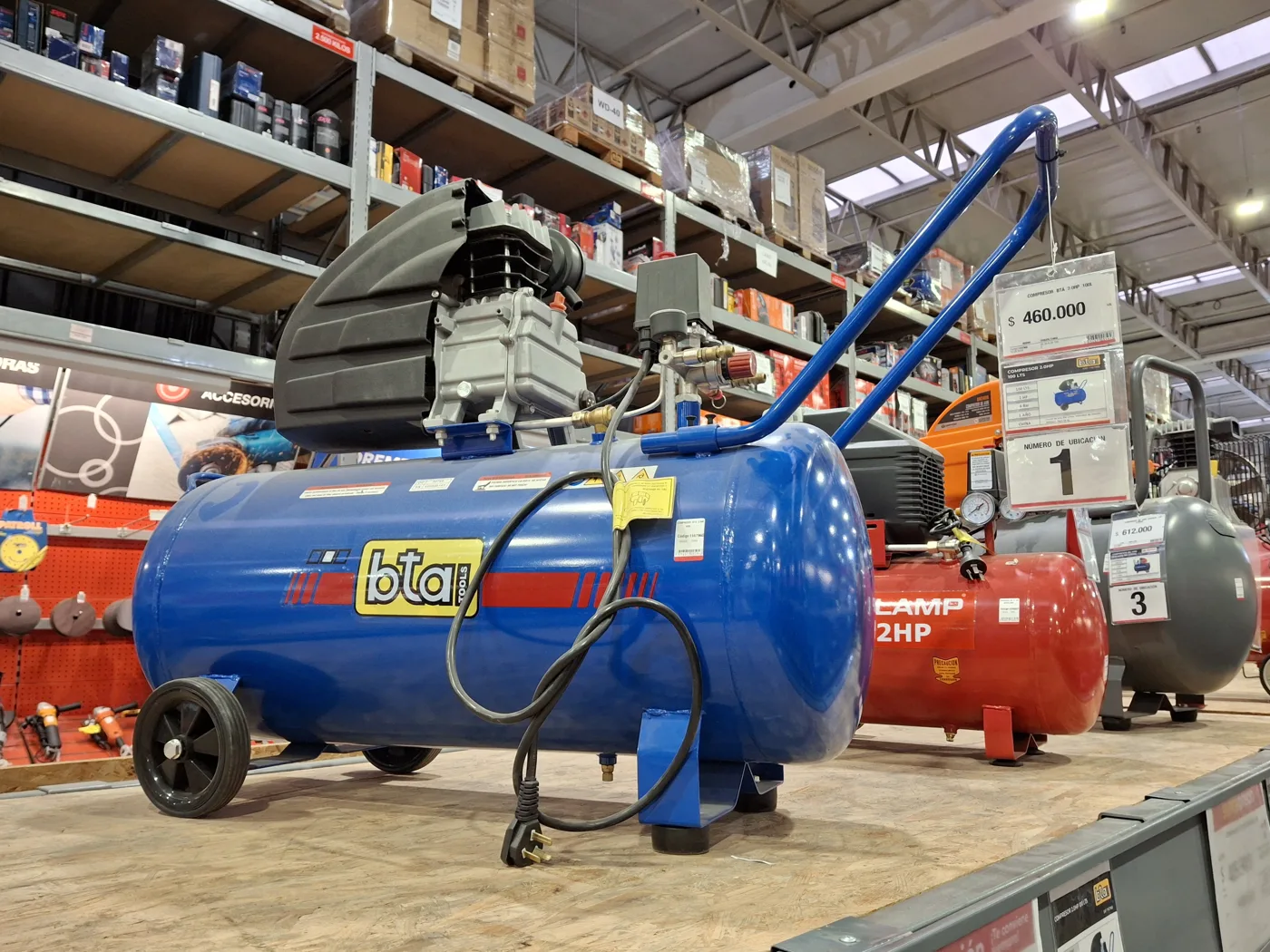
CFM Explained: How to Choose a High CFM Air Compressor for Your Tools
How to read CFM ratings and pick a high CFM air compressor: the 90 PSI standard, SCFM, a tool chart, and when you need 10, 20 or 50 CFM.
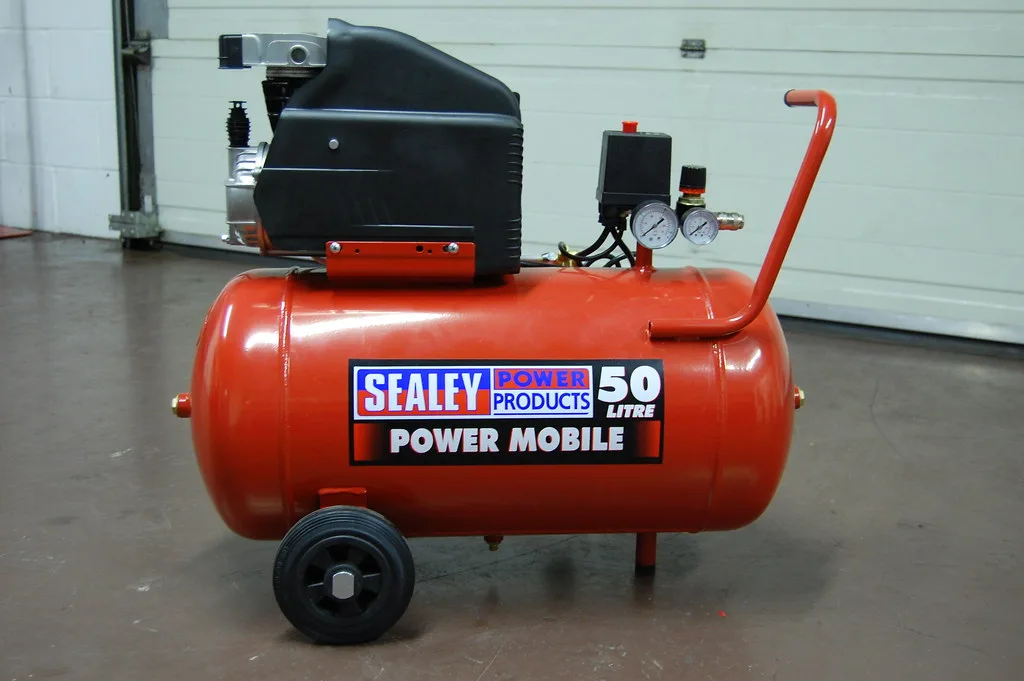
Best 30 Gallon Air Compressors for Workshops
The best 30 gallon air compressor picks for a home workshop, compared on CFM, max PSI, single-stage pumps and 120V wiring so you match the unit to your tools.