Air Dryer for a Compressor: Which Type You Need
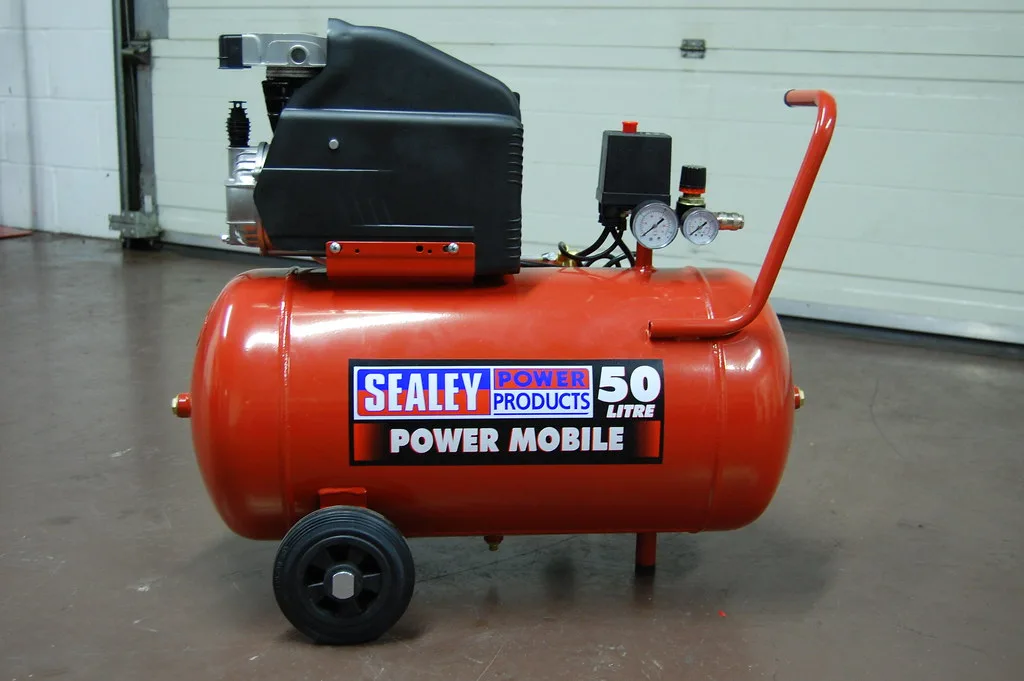
An air dryer for a compressor solves the one problem every compressed air system has: water. The air your pump squeezes is full of water vapor, and the moment that air cools in the tank and lines, the vapor turns back into liquid. That water rusts your tank and tools, spits into air tools, wrecks paint and finishing jobs, and in cold weather can freeze and block a line. A dryer pulls that moisture out before it reaches the tool. This guide explains the main types of air dryer, what dew point actually means, and how to pick the right one for how you use your compressor.
Why you need to dry compressed air at all
Compressing air concentrates its moisture. A tank draining a puddle of water every time you open the petcock is normal, and it is exactly the water you do not want reaching your tools. Liquid water in a pneumatic system causes corrosion, washes lubricant out of air tools, promotes bacteria growth, and leads to sluggish or failed controls. For anyone spraying paint, blasting, running a plasma cutter, or doing any finishing work, even a little moisture ruins results. Drying the air is the fix.
Dew point: the number that matters
Every dryer is rated by the pressure dew point (PDP) it can reach. Dew point is simply the temperature at which water starts to condense out of the air: the lower the dew point, the drier the air. When you compare dryers, you are really comparing how low a dew point each one delivers. A general shop needs a dew point comfortably above freezing; a critical or cold-weather application needs one well below it.
The four ways to remove moisture
Aftercoolers (the first line of defense)
An aftercooler sits right at the compressor outlet and cools the hot, freshly compressed air. That cooling condenses out the majority of the water, which then drains away before the air even reaches the tank. An aftercooler is not a full dryer, but it does the heavy lifting, removing the bulk of the moisture, and it makes whatever dryer comes after it work far more easily. Many larger compressors have one built in.
Refrigerated dryers (the everyday choice)
A refrigerated dryer is the most common type and the right answer for most workshops. It works like a small refrigerator, chilling the compressed air to around 38°F (3°C) so the moisture condenses and drains off. That gives you clean, dry air for air tools, general shop use, and most painting. Its one limit is temperature: it cannot go below freezing, or it would ice up internally, so it delivers a dew point of roughly 38°F and no lower. It is reliable, cost-effective, and low-maintenance.
Desiccant dryers (for very dry air)
When you need air drier than a refrigerated dryer can give, a desiccant dryer is the answer. Instead of chilling the air, it passes it through beads of desiccant that adsorb the moisture. Most run as twin towers: one tower dries the air while the other purges and regenerates, then they swap. Desiccant dryers reach extremely low dew points, down to -40°F and beyond, which is what you need for critical manufacturing, laboratories, medical air, sensitive coatings, or any air line exposed to freezing outdoor temperatures. The trade-off is higher cost and some compressed air lost to the purge cycle.
Membrane dryers (compact and point-of-use)
A membrane dryer pushes the air through a bundle of semi-permeable hollow fibers that let water vapor escape while the dry air passes through. They are compact, quiet, need no electricity, and reach low dew points, which makes them handy for point-of-use drying on smaller flows. They also lose some air to purge and suit lower-volume applications rather than a whole shop.
Do not forget the separator and filters
Before you spend on a dryer, know that a water separator and coalescing filters handle bulk liquid water and can be enough on a small home compressor used for nailing and inflation. Our air compressor water separator guide covers those. Draining your tank daily also removes a surprising amount of water. A dryer is what you add when a separator alone is not keeping the air dry enough for the work you do.
How to choose the right dryer
Match the dryer to three things:
- Your required dew point. Air tools, general use and most painting are fine with a refrigerated dryer at 38°F. Anything needing genuinely dry air, or any line that sees sub-freezing temperatures, needs a desiccant dryer.
- Your airflow (CFM) and pressure. A dryer must be rated for the flow your compressor delivers at your working pressure, or it will bottleneck the system.
- Your environment. A dryer, and especially its condensate drain, must not sit anywhere that freezes if it is a refrigerated unit.
For most home and small-shop users, the practical setup is an aftercooler or a long cooling line, a water separator, and a refrigerated dryer if you spray or finish. Reserve desiccant drying for genuinely critical or cold applications. The Atlas Copco guide to choosing a dryer is a solid technical reference if you want to go deeper.
Frequently asked questions
Do I really need an air dryer for my compressor? It depends on the work. For occasional nailing, inflation, and basic air tools, a water separator and draining the tank daily are often enough. But if you paint, blast, run a plasma cutter, or do any finishing, or if your lines run somewhere cold, water will ruin results and corrode tools, and a dryer is worth it.
What is the difference between a refrigerated and a desiccant dryer? A refrigerated dryer chills the air to about 38°F (3°C) to condense out moisture, which suits general shop use and most painting. A desiccant dryer adsorbs moisture with beads and reaches much lower dew points, down to -40°F and beyond, for critical applications or air lines exposed to freezing temperatures. Desiccant costs more and loses some air to purging.
What is dew point on an air dryer? Dew point is the temperature at which water begins to condense out of the compressed air. The lower the dew point, the drier the air. A refrigerated dryer gives a dew point around 38°F, while a desiccant dryer can reach -40°F or lower. You match the dryer’s dew point to how dry your application needs the air to be.
Is an aftercooler the same as a dryer? No. An aftercooler cools the hot air leaving the compressor and condenses out the majority of the water, but it does not reach a low dew point on its own. It is the first stage that removes bulk moisture and makes a downstream dryer far more effective. Many larger compressors include one.
Will a water separator dry the air enough? A water separator and coalescing filters remove bulk liquid water and are often enough for a small home compressor doing basic tasks. They do not lower the dew point, though, so they cannot deliver the genuinely dry air that painting, finishing, or cold-line work needs. For that, add a dryer.
Can I use a refrigerated dryer in a cold garage? Be careful. A refrigerated dryer and its condensate drain must not be somewhere that drops below freezing, or ice can form and block or damage it. If your air lines or workspace regularly go below freezing, a desiccant dryer, which reaches a far lower dew point, is the safer choice.
More from Air Compressor Mag

Best Portable Air Compressors: Picks by Job (2026)
Real portable air compressor picks by job, from tire inflation to framing, with the CFM at 90 PSI, tank size, and noise specs that actually decide it.
CFM Explained: How to Choose a High CFM Air Compressor for Your Tools
How to read CFM ratings and pick a high CFM air compressor: the 90 PSI standard, SCFM, a tool chart, and when you need 10, 20 or 50 CFM.
Best 30 Gallon Air Compressors for Workshops
The best 30 gallon air compressor picks for a home workshop, compared on CFM, max PSI, single-stage pumps and 120V wiring so you match the unit to your tools.