Air Compressor Duty Cycle Calculator: Is Yours Overworked?
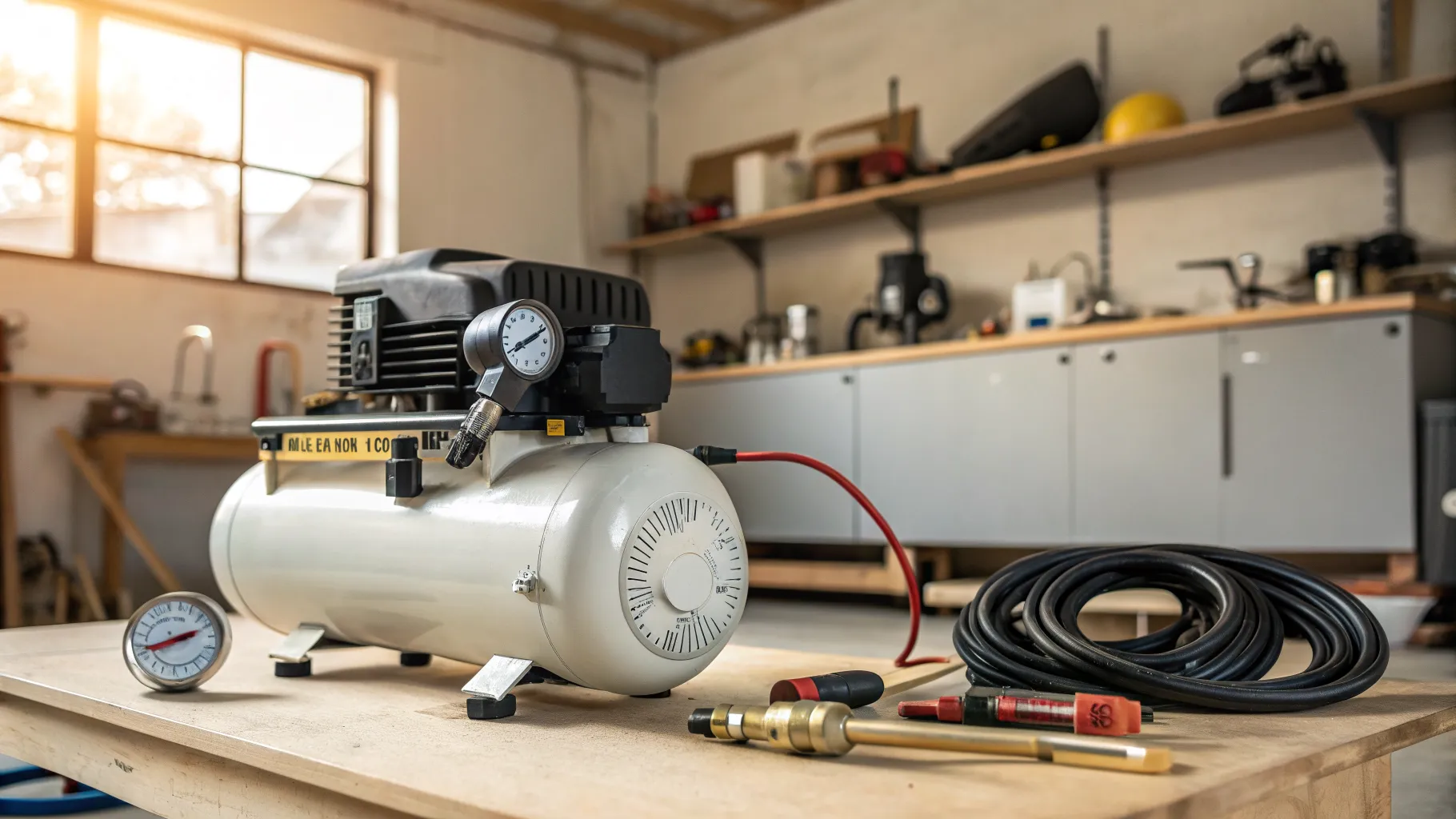
Duty cycle is the share of the time your compressor's pump is running. A compressor rated at 50% duty is built to rest as long as it runs; push it harder for long spells and it overheats, wears its rings and valves early, and trips its thermal overload. Enter your compressor's output, its rated duty cycle and how you actually use your tools, and this calculator shows the duty cycle you are asking for, whether it is inside the rating, and how often the motor will start each hour.
Your compressor
How you use your tools
"Time in use" is the share of a typical working spell the trigger is actually pulled. A nailer fired every few seconds might be 10%; a sander held on most of the time could be 80% or more. Leave a row's CFM at 0 to skip it.
How the duty cycle calculation works
Each tool's average air draw is its CFM multiplied by the fraction of time it is in use. Add those up and you have your average demand. Divide that by what the compressor delivers and you get the duty cycle: a 5.5 CFM compressor feeding an average demand of 2.1 CFM runs about 38% of the time. If average demand is higher than the compressor's output, the pump never catches up: it runs nonstop and tank pressure keeps falling until the tool stalls.
The minimum CFM figure in the result is the output that would bring your workload down to the rated duty cycle: average demand divided by the rating. For a 50% compressor, that means double your average demand.
Cycles per hour and short cycling
The tank and pressure switch settle how often the motor starts. The air stored between cut-in and cut-out is the tank volume in cubic feet (gallons times 0.134) times the pressure band, divided by 14.7. The pump stays off while your tools drain that air at the average demand rate, then runs while it refills at its output minus your demand. A small tank or a narrow pressure band gives frequent, short cycles, and every start puts a surge through the motor and starter. Many manufacturers list a maximum number of starts per hour in the manual; if your result is above it, a bigger tank or an add-on receiver is the usual fix.
Reading the result honestly
Duty ratings are not standardized across brands. Some quote a percentage over a set period, such as minutes of running per 10 minutes, so check how your manual defines it. Real output also drops as tank pressure climbs toward cut-out and as the pump wears, so treat a result close to the limit as over it. If you are well inside the rating but the compressor still runs constantly, look for leaks: listen at fittings and couplers with the tools idle, or run a pump-up test.
More from Air Compressor Mag
Best Portable Air Compressors: Picks by Job (2026)
Real portable air compressor picks by job, from tire inflation to framing, with the CFM at 90 PSI, tank size, and noise specs that actually decide it.
CFM Explained: How to Choose a High CFM Air Compressor for Your Tools
How to read CFM ratings and pick a high CFM air compressor: the 90 PSI standard, SCFM, a tool chart, and when you need 10, 20 or 50 CFM.
Best 30 Gallon Air Compressors for Workshops
The best 30 gallon air compressor picks for a home workshop, compared on CFM, max PSI, single-stage pumps and 120V wiring so you match the unit to your tools.