Air Compressor Motor Guide: Types, Failures and Replacement
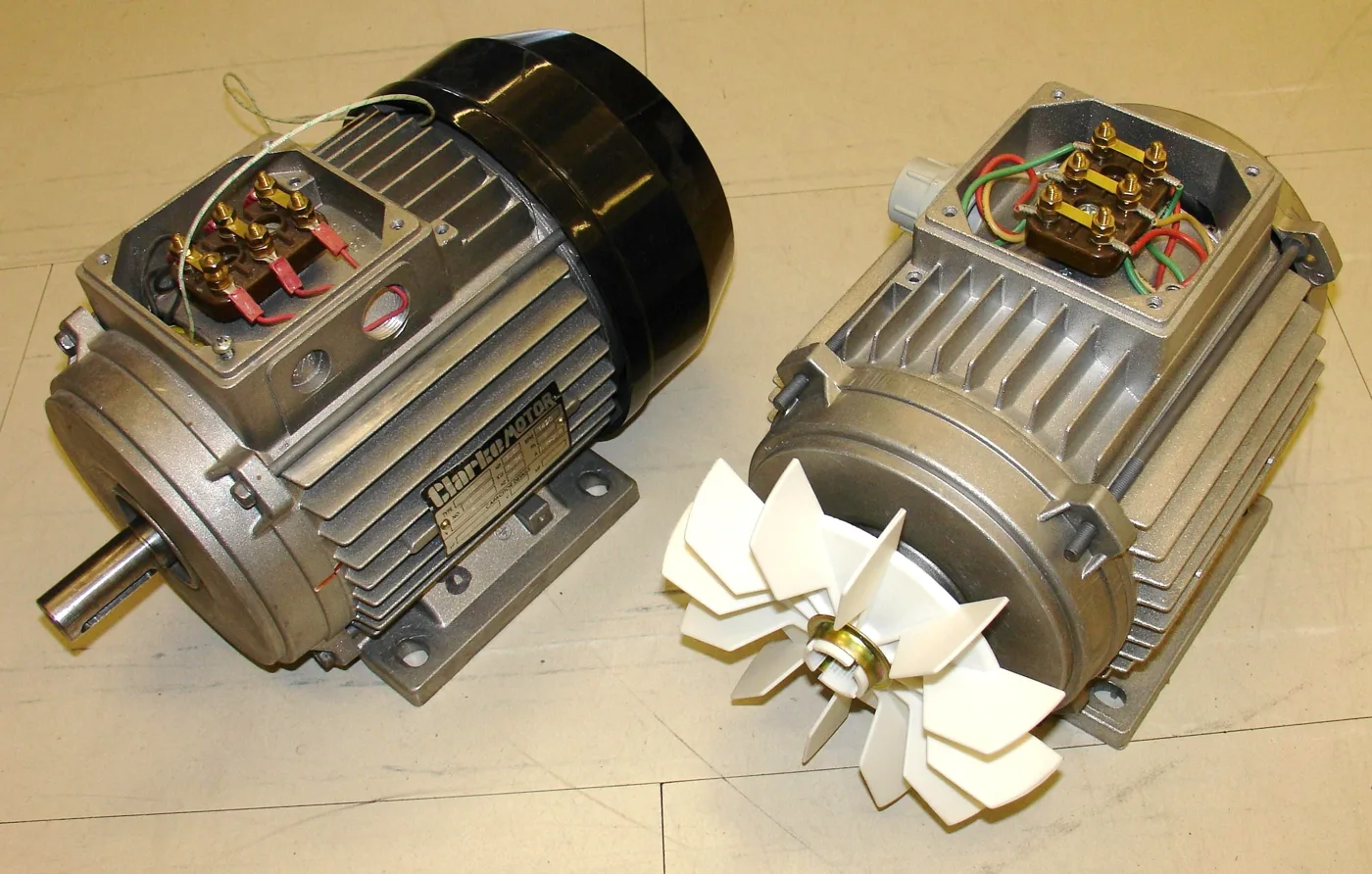
The air compressor motor is the part that turns electricity into the spinning force that drives the pump, and when it stops doing that, the whole machine is dead weight. The good news is that most motor problems are not the motor itself. They are a capacitor, a switch, or a wiring fault, and those are cheap and fixable. This guide walks through the motor types you will run into, the failures that actually happen, how to tell a bad capacitor from a bad motor, and when a replacement makes more sense than a repair.
A safety note up front: an air compressor motor runs on high voltage and its capacitors can hold a dangerous charge even when unplugged. Always disconnect power, and discharge the capacitor safely, before touching anything inside the electrical box.
Air compressor motor types
Most compressors you will meet use one of a few motor designs, and knowing which you have shapes every repair decision.
- Single-phase induction motors power the vast majority of home, shop, and small commercial compressors that run on standard household or light-duty power. They are simple, quiet, and long-lived, but they cannot start under load on their own, so they rely on a capacitor and a starting switch to get moving.
- Three-phase induction motors run larger industrial compressors on three-phase power. They start smoothly without capacitors and tend to be more efficient and reliable, but they need three-phase service that most homes and small shops do not have.
- Universal (brushed) motors show up in small, portable, oil-free compressors. They are light and cheap, spin fast, and are loud, and their brushes wear out. They are generally not rebuilt; on a small unit the motor and pump are often replaced together.
For anything but a small portable, you are almost certainly dealing with a single-phase induction motor, which is where most troubleshooting lives.
How a single-phase motor starts
Understanding the starting circuit explains most failures. A single-phase induction motor cannot generate starting torque by itself, so it uses a second winding, the start winding, energized through a start capacitor to create the phase shift that gets the rotor turning. Once the motor reaches about three-quarters of full speed, a centrifugal switch (or on some designs a potential relay) disconnects the start winding and capacitor, and the motor runs on its main winding alone. Some motors also keep a run capacitor in the circuit continuously to improve efficiency and torque.
That sequence, capacitor plus switch, is the single most common source of “the motor won’t start” complaints, and it is almost always cheaper to fix than the motor.
Why air compressor motors fail
The failures you will actually see, in rough order of frequency:
- Failed start capacitor. The number one cause of a motor that hums but will not spin, or trips the breaker. Capacitors fail from heat, age, or short cycling. A bulged top, leaking case, or a reading far off its rated microfarads confirms it.
- Stuck centrifugal switch or potential relay. If the switch contacts weld closed, the start capacitor stays in the circuit and overheats and fails, sometimes taking the capacitor with it repeatedly. If the switch fails open, the motor never gets a start pulse and just hums.
- Overheating and thermal trips. Rapid on-off cycling, a clogged pump, low voltage from a long or undersized extension cord, or a blocked cooling fan all make the motor run hot and trip its thermal overload. A motor that runs a while, then shuts off, then restarts once cool, is overheating, not dying.
- Wrong capacitor rating. A replacement capacitor with too low a rating cannot make enough torque; one rated too high can overheat and burn the windings. Match the microfarad and voltage values.
- Worn windings or bearings. True motor death: burnt-smelling windings, a shorted winding that trips instantly, or seized, screeching bearings. This is the minority of cases, but it is the expensive one.
Diagnosing a motor that won’t start
Work from cheap and likely to expensive and rare:
- It’s completely dead: check power, the outlet, the cord, and the pressure switch first. A tripped thermal overload or a bad pressure switch mimics a dead motor.
- It hums but doesn’t spin, or trips the breaker: suspect the start capacitor first, then the centrifugal switch. This is the classic capacitor signature. Give the pulley a careful spin by hand (power off) as a diagnostic clue only, never to force-start a live motor.
- It starts, runs, then cuts out and restarts later: that is thermal overload from overheating. Look at cycling frequency, voltage, cooling, and whether the pump is dragging.
- It smells burnt or trips instantly every time: likely a shorted winding. At that point the motor itself is the problem.
A multimeter that can read capacitance and continuity turns most of this from guesswork into a five-minute check.
Repair or replace?
The math usually favors repair on anything but the smallest units:
- Repair when the fault is a capacitor, switch, relay, pressure switch, or wiring. These parts are inexpensive and swapping them is within reach of a careful DIYer with the power disconnected.
- Replace the motor when the windings are burnt or shorted or the bearings are gone, and the motor is a standard, available size on a compressor worth keeping.
- Replace the whole compressor when it is a small oil-free portable where the motor and pump are one sealed assembly, or when a new motor costs a large fraction of a new machine.
Before buying a replacement, record the motor’s horsepower, voltage, RPM, frame size, shaft diameter, and rotation direction from the nameplate, and match all of them. For the electrical background, the U.S. Department of Energy’s guidance on motors is a useful reference, and OSHA’s lockout/tagout rules cover working safely on powered equipment.
For related maintenance, see our guides to air compressor parts explained and the air compressor regulator guide.
Frequently asked questions
Why does my air compressor motor hum but not start? A humming motor that will not spin almost always points to a failed start capacitor or a stuck centrifugal switch. The motor is getting power but cannot generate starting torque. Test the capacitor first, as it is the cheapest and most common culprit, after confirming the pressure switch and power are good.
What is the most common air compressor motor failure? A failed start capacitor is the most common failure. Capacitors degrade from heat, age, and short cycling, and a bad one leaves the motor humming, tripping the breaker, or refusing to start. It is also one of the cheapest parts to replace.
Can I replace an air compressor motor myself? Swapping a capacitor, switch, or pressure switch is within reach of a careful DIYer who disconnects power and discharges the capacitor first. Replacing the whole motor is doable but requires matching the nameplate specs exactly and correct wiring. If you are unsure about high-voltage work, hire an electrician.
Why does my compressor motor keep overheating and shutting off? Thermal shutdowns come from the motor running too hot: rapid on-off cycling, low voltage from a long or undersized extension cord, a blocked cooling fan, or a pump that is dragging. The thermal overload is protecting the motor, so fix the cause rather than defeating the switch.
How do I know if the capacitor or the motor is bad? Use a multimeter with a capacitance setting. A capacitor reading far from its rated microfarads, or a bulged or leaking case, means the capacitor is bad. If the capacitor and switch test good but the motor trips instantly or smells burnt, the windings are likely the problem.
Do all air compressor motors use a capacitor? No. Single-phase induction motors, the most common type on home and shop compressors, use a start and sometimes a run capacitor. Three-phase industrial motors start without capacitors, and small universal motors in portable oil-free units use brushes instead.
More from Air Compressor Mag
Best Portable Air Compressors: Picks by Job (2026)
Real portable air compressor picks by job, from tire inflation to framing, with the CFM at 90 PSI, tank size, and noise specs that actually decide it.
CFM Explained: How to Choose a High CFM Air Compressor for Your Tools
How to read CFM ratings and pick a high CFM air compressor: the 90 PSI standard, SCFM, a tool chart, and when you need 10, 20 or 50 CFM.
Best 30 Gallon Air Compressors for Workshops
The best 30 gallon air compressor picks for a home workshop, compared on CFM, max PSI, single-stage pumps and 120V wiring so you match the unit to your tools.