Air Tool CFM Requirements Chart: Average vs Under Load
Most air tools need between 3 and 6 CFM at 90 PSI by their manufacturer’s average rating, and between 8 and 22 CFM by the same manufacturer’s under load rating. That gap is the reason every air tool CFM requirements chart online disagrees with every other one, and it is the reason people buy compressors that cannot keep up.
An Ingersoll Rand 231C impact wrench is published at 4.2 CFM average air consumption and 22 CFM under load. Both numbers are correct. Only one of them tells you what compressor to buy.
The two numbers, and which one to size on
Manufacturers of professional air tools publish two consumption figures, and the naming is inconsistent across brands:
- Average air consumption. What the tool draws over a realistic duty cycle, including the time your finger is off the trigger. This is the number that gets copied into most online charts, usually with no label.
- Air consumption at load, sometimes “actual air consumption”. What the tool draws while it is genuinely working. This is the peak the compressor and the hose have to survive.
If you size a compressor on the average figure and then use the tool continuously, the tank empties, the pump cannot refill it, pressure sags, and the tool feels gutless. That is not a faulty tool. It is a correctly specified tool on an undersized compressor.
The practical rule: size on the load figure for continuous work, size on the average figure plus a margin for intermittent work, and never size below the average figure at all.
The chart, from named manufacturer specifications
Every figure below is a published specification for the named model, not a category estimate. Where a manufacturer publishes both numbers, both are shown.
| Tool | Model cited | Average CFM @ 90 PSI | Under load CFM |
|---|---|---|---|
| 1/2” impact wrench | Ingersoll Rand 231C | 4.2 | 22 |
| 3/8” air ratchet | Chicago Pneumatic CP828 | 3.75 | 15 |
| 1/4” angle die grinder | Chicago Pneumatic CP875 | 5.5 | 22 |
| 2” cut-off tool / angle grinder | Chicago Pneumatic CP7500D | 4 | 8 |
| .401” air hammer | Chicago Pneumatic CP7110 | 3.38 | 14 |
| Long barrel air hammer | Sunex heavy-duty long barrel | 5.5 | not published |
| 3” random orbital sander | Astro Pneumatic 3057A | 3.5 | not published |
| Mini random orbital sander | Ingersoll Rand 3128XPA | not published | 18.1 |
| 18ga brad nailer | DeWalt DWFP12231 | 2.8 SCFM | not published |
| 21° framing nailer | Bostitch F21PL | 0.075 CFM per shot | 8.7 CFM free air at 100 nails/min, 80 PSI |
| HVLP gravity spray gun | DeVilbiss FinishLine FLG-670 | 13 CFM at 23 PSI | not applicable |
Three things in that table are worth pausing on, because they are where charts go wrong.
Sanders are the hidden monster. A mini orbital sander looks like a small tool and it is published at 18.1 CFM under load, close to a 1/2” impact wrench. The difference is duty cycle: nobody runs an impact wrench for eleven minutes without stopping, and everybody runs a sander that way. Sanding is the application that most often exposes an undersized compressor.
Nailers are not rated in CFM at all. They are rated per shot, because they fire and stop. Bostitch publishes the F21PL at 0.075 CFM per shot, and separately notes it needs 8.7 CFM of free air to sustain 100 nails a minute at 80 PSI. A chart that lists a framing nailer as “2 to 4 CFM” has silently invented a firing rate. Work out your own: shots per minute multiplied by CFM per shot.
Spray guns are rated at their own pressure, not 90 PSI. The DeVilbiss FinishLine FLG-670 is published at 13 CFM at 23 PSI. You cannot compare that to a 90 PSI figure, because CFM and pressure trade against each other. HVLP guns move a lot of air at low pressure, which is precisely how they work, and they are among the most demanding tools in a home shop despite the low pressure on the gauge.
Turning a tool’s CFM into a compressor size
Take the tool’s requirement, then apply a margin. The standard shop convention is 1.5x, and it exists for real reasons: rated compressor output is measured under laboratory conditions, output falls as ambient temperature rises and as altitude increases, and hose and fitting restriction costs you flow before the air reaches the tool.
So for continuous work with the die grinder above, at 22 CFM under load, you are looking for a compressor rated around 33 CFM at 90 PSI. That is a serious two-stage machine, not a pancake unit, which is the honest answer people rarely get.
Duty cycle is what decides which figure you start from:
- Continuous tools (sanders, die grinders, sandblasters, spray guns): size on the under-load figure, apply 1.5x. There is no meaningful off-time for the tank to recover.
- Intermittent tools (impact wrenches, ratchets, air hammers): size on the average figure, apply 1.5x, and use tank volume to absorb the peaks.
- Burst tools (nailers, blow guns, tire inflators): calculate from shots or seconds per minute. Almost any compressor will run these.
The tank does the work in the intermittent case. A large tank at high pressure is stored energy, and it lets a modest pump serve a tool that briefly draws far more than the pump produces, provided the peaks are short and the gaps are long. It cannot help you at all with a sander. Our tank size guide covers how much buffer you actually get.
Running more than one tool
Add the requirements. Do not average them, and do not assume two people will politely take turns.
Two mechanics on impact wrenches at 22 CFM each under load is 44 CFM, then 1.5x, then you are into shop compressor territory. This is where the calculation usually reveals that the plan was never realistic on a single-phase machine, and it is much better to discover that before buying.
Where the online charts get it wrong
If you have been comparing charts and finding contradictions, here is why:
- They mix average and load figures in the same table without labelling either, so a 4 CFM impact wrench sits next to a 15 CFM one and both are “correct”.
- They give category ranges rather than models. “Impact wrench: 4 to 5 CFM” is meaningless when the same manufacturer publishes 4.2 and 22 for the same tool.
- They ignore inlet pressure. A figure at 23 PSI and a figure at 90 PSI are not comparable quantities.
- They invent duty cycles for burst tools so nailers can be listed in CFM.
- They copy each other. Numbers propagate between sites without any of them tracing back to a spec sheet.
The fix, whenever you are sizing for a specific tool: find the tool’s own manual or the manufacturer’s product page, and read both consumption figures off it. Every chart, including this one, is a starting point. Your tool’s spec sheet is the authority.
What to do next
- List every tool you will actually run, and mark each as continuous, intermittent or burst.
- Look up each one’s published figures, not a category estimate.
- Take the largest continuous requirement, or the sum if tools run together.
- Multiply by 1.5.
- Compare against the compressor’s CFM at 90 PSI, not its horsepower or its tank size.
Our guide to what size air compressor you need walks through that arithmetic with worked examples, and how CFM is actually measured explains why rated output and delivered output differ. If you are still deciding which tools to buy, our pneumatic tool overview covers what each one is genuinely for.
Frequently asked questions
How many CFM do I need to run air tools? Most hand tools are published between 3 and 6 CFM at 90 PSI average, and between 8 and 22 CFM under load. Size on the under-load figure for anything you run continuously, such as a sander or die grinder, and multiply by 1.5 to allow for hose loss, temperature and rated-versus-delivered output.
Why do air tool CFM charts disagree with each other? Because manufacturers publish two figures, average air consumption and consumption under load, and most charts mix them without saying which is which. Ingersoll Rand publishes its 231C impact wrench at 4.2 CFM average and 22 CFM under load, so both a “4 CFM” and a “22 CFM” chart entry can be technically accurate.
How much CFM does a 1/2 inch impact wrench need? The Ingersoll Rand 231C is published at 4.2 CFM average air consumption and 22 CFM under load, both at 90 PSI. Because impact wrenches are used in short bursts, most people can run one from a compressor sized on the average figure plus a margin, provided the tank is large enough to absorb the peaks.
What CFM does an air sander need? More than people expect. Ingersoll Rand publishes the 3128XPA mini random orbital sander at 18.1 CFM under load, and Astro Pneumatic’s 3057A 3-inch orbital at 3.5 CFM average. Sanders are the tool that most often exposes an undersized compressor, because they run continuously with no recovery time.
Why are nail guns rated per shot instead of in CFM? Because they fire and stop rather than running continuously, so a continuous flow figure would be meaningless without a firing rate. Bostitch rates the F21PL framing nailer at 0.075 CFM per shot and notes it needs 8.7 CFM of free air to sustain 100 nails a minute at 80 PSI.
Does a bigger tank mean I need less CFM? For intermittent tools, effectively yes: the tank stores air and covers short peaks that exceed pump output. For continuous tools it makes almost no difference, because once the stored air is spent you are limited by what the pump produces, and a sander will empty any tank you can fit in a garage.
More from Air Compressor Mag
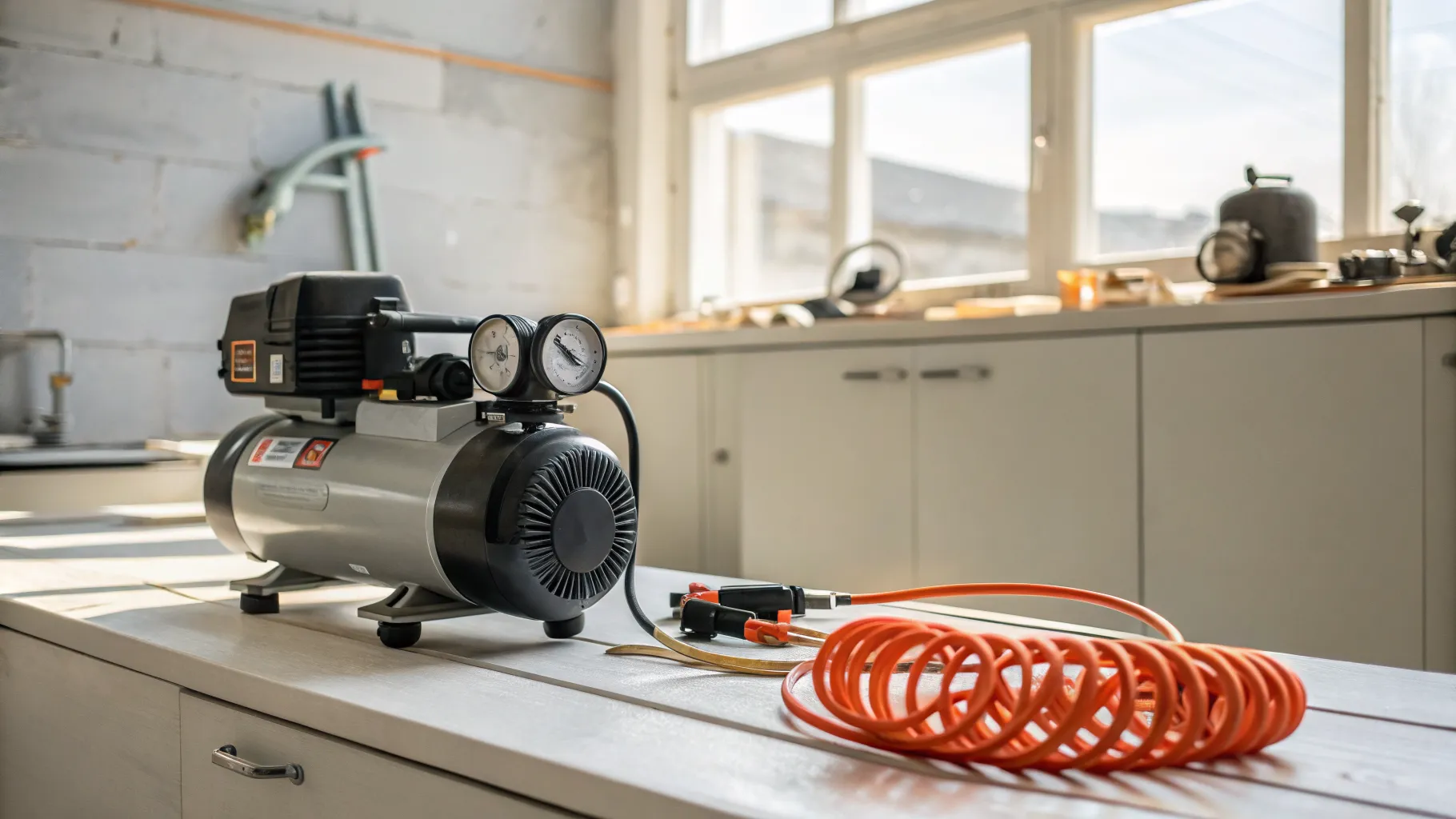
Best Portable Air Compressors: Picks by Job (2026)
Real portable air compressor picks by job, from tire inflation to framing, with the CFM at 90 PSI, tank size, and noise specs that actually decide it.
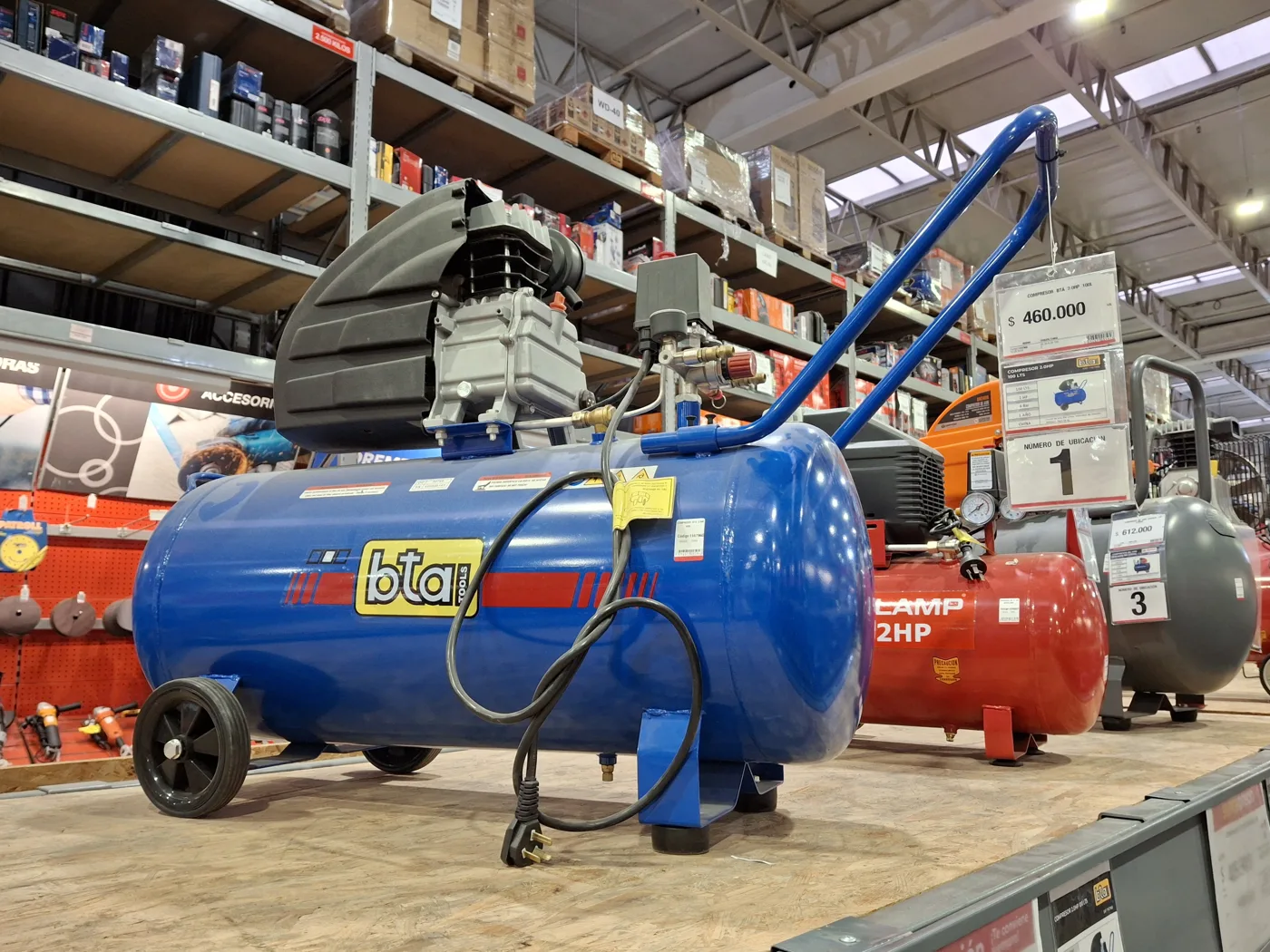
CFM Explained: How to Choose a High CFM Air Compressor for Your Tools
How to read CFM ratings and pick a high CFM air compressor: the 90 PSI standard, SCFM, a tool chart, and when you need 10, 20 or 50 CFM.
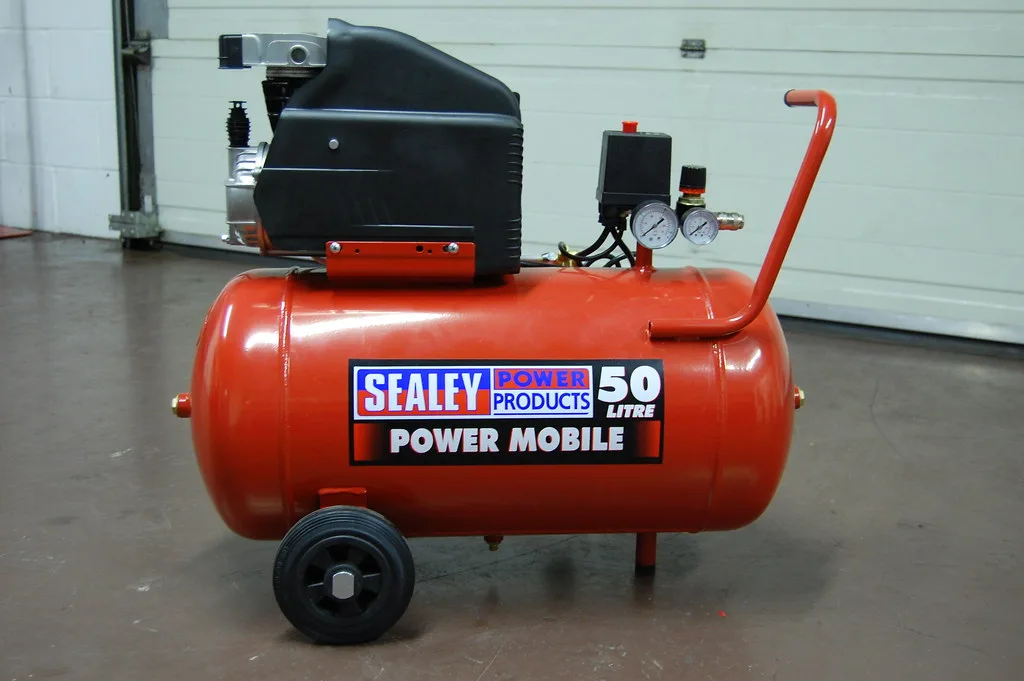
Best 30 Gallon Air Compressors for Workshops
The best 30 gallon air compressor picks for a home workshop, compared on CFM, max PSI, single-stage pumps and 120V wiring so you match the unit to your tools.