What Is an Air Compressor Used For
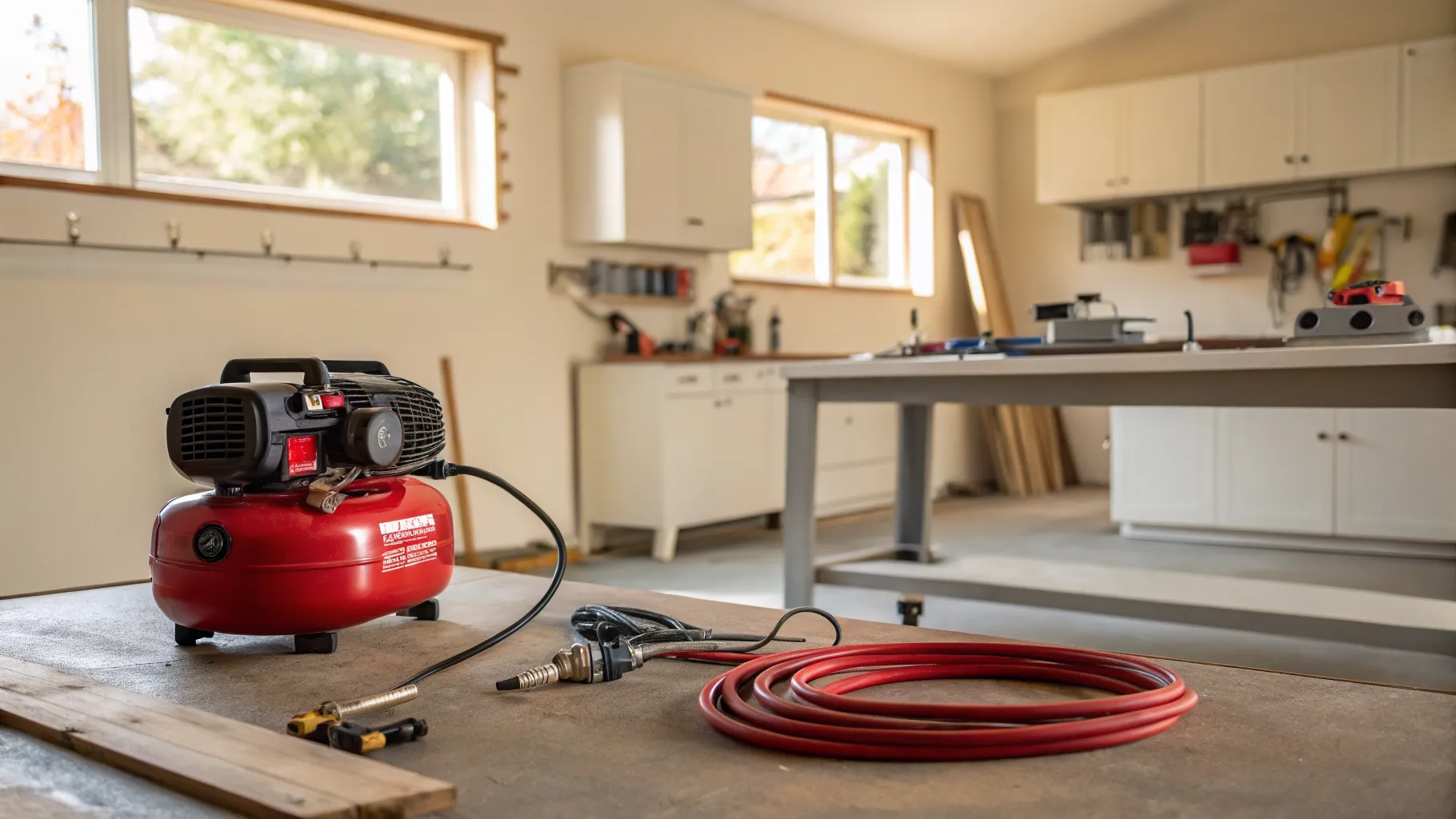
An air compressor does not really power anything by itself. It takes electricity, or in some cases a gas engine, and uses it to force air into a steel or aluminum tank above normal atmospheric pressure. That pressurized air is stored energy. When you pull the trigger on a nail gun, an impact wrench, or a blow gun, the compressor releases that stored air in a controlled burst, and the air does the actual work. The tool is just a valve and a mechanism; the compressed air is the fuel.
That one idea explains everything else on this page. Once you see compressed air as a fuel you store and spend, the real question stops being “what is an air compressor used for” and becomes “how fast does my job spend air, and can my compressor keep up.” Some jobs sip air in short bursts. Others drink it continuously. Matching the two is the whole game, and it is the part most articles skip.
So this guide sorts the uses by how much air they demand, names a real compressor that fits each tier, and gives you the airflow numbers (CFM) so you can self-diagnose what you actually need before you spend a dollar.
The one number that decides everything: CFM
Air tools are rated two ways. PSI is pressure, and almost every air tool runs at 90 PSI, so pressure is rarely the deciding factor for a home or shop user. The number that matters is CFM, cubic feet per minute, which is how much air the tool eats. You will usually see it written as SCFM (standard CFM), which is just CFM measured under standardized conditions so brands can be compared fairly. Tools are typically rated at 90 PSI.
Two rules cover most mistakes people make:
- Tank size is your buffer, CFM is your sustained capacity. A big tank lets you run a thirsty tool for a short time before the pump has to catch up. But once the tank empties faster than the pump refills it, tank size stops helping. Continuous tools need real CFM, not just a big tank.
- For continuous-use tools, multiply the published CFM by about 1.3 to 1.5x. A sander rated at 6 CFM in a chart will pull closer to 8 or 9 in real continuous use. To run two tools at once, add their CFM together. The Compressed Air and Gas Institute (CAGI) duty-cycle guidance is the reason every experienced buyer over-buys airflow.
Keep those two rules in mind as we go through the actual jobs.
A) Household and DIY: low CFM, 1 to 6 gallons, 120V
This is the tier most people start in. A pancake (round, flat tank) or hotdog (single cylinder) compressor in the 1 to 6 gallon range, running on a normal 120V outlet, covers a surprising amount.
Inflation. This is the most common reason a household buys a compressor, and it asks almost nothing of the machine. Car and truck tires, bike and motorcycle tires, sports balls, air mattresses, pool floats, wheelbarrow and lawn-mower tires. Topping off a car tire to 35 PSI takes trivial airflow; any pancake handles it and you never visit a gas-station air pump again.
Air nailers and staplers. Trim, baseboards, crown molding, fencing, deck building, picture framing, upholstery. Nailers are intermittent, meaning they fire in short bursts and then pause, so they sip air despite the bang. A brad nailer needs only about 0.3 CFM, and even a framing nailer is around 2.2 to 2.5 CFM in intermittent use. This is why a small 6-gallon pancake runs a nail gun all day.
Blow gun and dusting. Clearing sawdust off a project before you finish it, blowing dust out of a PC or electronics, cleaning a lawn-mower deck, refrigerator coils and motor compartments, drying a car after a wash, clearing leaves out of gutters. A blow gun pulls roughly 2 to 4 CFM on average.
HVLP paint spraying. Furniture, cabinets, fences, small auto touch-ups. This is where the DIY tier gets demanding. A real HVLP spray gun wants 8 to 12 CFM and runs continuously, so a small pancake usually cannot keep up for a full project.
Airbrushing. Models, crafts, cake decorating, cosmetics. Tiny airflow, often run off a small dedicated airbrush compressor.
Seasonal and utility jobs. Winterizing sprinkler and irrigation lines with the blow-out method, winterizing RV and boat water lines, clearing pool plumbing. These are underrated reasons to own a compressor in much of the US. Important: keep pressure low for sprinkler blow-out, around 40 to 50 PSI, because higher pressure can crack fittings and PVC.
A real example for this tier: the California Air Tools 8010A is an 8-gallon, 1.0 HP, oil-free unit rated 3.10 CFM at 40 PSI and 2.20 CFM at 90 PSI, running on 110V. Its headline feature is noise: about 60 dBA, which is quiet enough to run indoors near people. For pure inflation and light nailing on a tighter budget, the Husky 3-gallon (1/3 HP, 120 PSI, 1.0 SCFM at 40 PSI) is enough, but it is genuinely light-duty and will struggle with anything beyond brad and finish nailing plus inflation.
If you are weighing whether you even need more than this tier, our guide on what size air compressor do I need walks through the decision by job.
B) Automotive and garage: mid CFM, 8 to 30 gallons
This is where the jump in air demand happens, and where a lot of people get burned because their pancake cannot do garage work.
Typical tools and their continuous CFM at 90 PSI:
| Tool | Avg CFM | Continuous CFM |
|---|---|---|
| 3/8” air ratchet | 3 to 4 | 4 to 5 |
| 3/8” impact wrench | 3 to 4 | 5 to 6 |
| 1/2” impact wrench | 4 to 6 | 7 to 8 |
| Die grinder | 4 to 6 | 5 to 7 |
| Orbital / DA sander | 6 to 9 | 8 to 12 |
| HVLP spray gun | 8 to 12 | 10 to 15 |
Lug nuts and suspension work with an impact wrench, an air ratchet for tight spots, a die grinder or cut-off tool, and a dual-action (DA) sander for bodywork and knocking down primer. Add tire seating and inflation, brake-line bleeding, media or sandblasting rust off panels, and spray-painting body panels.
Notice the pattern. An impact wrench is intermittent (a few seconds to crack a bolt, then nothing), so a mid-size compressor handles it. A DA sander or a spray gun runs continuously, so it is the real CFM hog and the reason garage users move up to 20 to 30 gallons. If your compressor pump runs nonstop while you sand, you have not broken it; the tool’s demand simply exceeds the pump’s output. The fix is more CFM, not a bigger tank.
C) Trade and construction: jobsite pancakes up to towable units
On a jobsite, the workhorse is still a 6-gallon pancake, because framing crews and finish carpenters mostly run nailers, which are intermittent and air-cheap.
- Framing nailers for house framing, subfloor, and sheathing.
- Roofing nailers for shingles.
- Siding and flooring nailers.
- HVAC and plumbing trades use compressed air for pressure-testing lines and purging systems.
Two real examples define this tier. The DeWalt DWFP55126 is a 6-gallon, 165 PSI pancake rated 2.6 SCFM at 90 PSI, oil-free, around 75.5 dBA, and it is the default trim-and-roofing jobsite pick. The Craftsman CMEC6150 is a close equivalent: 6-gallon, 150 PSI, 2.6 SCFM at 90 PSI, oil-free, about 78.5 dBA and roughly 30 pounds.
Here is the payoff on tank math. A 6-gallon pancake at 150 to 175 PSI stores plenty for intermittent nailing, but it does not have the sustained airflow for continuous-demand tools like sanders, grinders, cut-off tools, or a sandblaster. Hand it a DA sander and the pump cycles constantly and falls behind. That is by design; a framing pancake was never meant to feed a continuous tool.
D) Industrial and commercial: rotary screw, 240V or 3-phase
At the top end the machine changes entirely. Instead of a piston pumping into a tank on demand, an industrial site runs a rotary screw compressor sized from 5 to 100-plus HP, often on 240V or three-phase power, with tanks from 60 gallons to several hundred.
What these run:
- Assembly and production lines, automation and pneumatic actuators.
- Pneumatic conveying and material handling.
- Large-scale sandblasting and industrial paint booths.
- Packaging machinery, food and beverage bottling, dry cleaning.
- Dental and medical air, and some refrigeration and HVAC systems.
Production sandblasting alone wants 18 to 35 CFM, and industrial blasting can run 50 to 100 CFM, which is why this is rotary-screw territory. Brands like Quincy and Ingersoll Rand dominate here. Most readers will never need this tier, but it explains why “air compressor” covers everything from a 30-pound pancake to a machine the size of a refrigerator.
So what can you actually use an air compressor for: the short answer
If you have wondered what do you use an air compressor for and whether it is worth buying, here is the honest cut. If your real use is occasional tire inflation plus a nail gun for trim and DIY projects, a 6-gallon oil-free pancake does everything and you are done. If you work on cars, paint, or sand, you need 20-plus gallons and real CFM, and you should buy for the thirstiest continuous tool you own. If you run a shop or production line, you are buying a rotary screw on its own circuit.
To pin the exact specs to your tools, run the numbers through our air compressor size calculator, and if you are buying for a workshop, see our picks for the best air compressor for home and garage.
A few buying realities that change the answer
Oil vs oil-free. Oil-free pumps are maintenance-free and fine for DIY and jobsite use; they are louder and wear faster. Oil-lubricated pumps run quieter and last longer, which is why shop compressors are usually oil-lubed. If you go oil-lubed, our notes on air compressor oil cover what type to use and how often to change it.
120V vs 240V. A standard 120V compressor will run an impact wrench up to 1/2 inch and most DIY and jobsite tools. Once you want large continuous tools or a bigger pump, you move to a 240V circuit. This is a wiring decision, not just a compressor choice.
Tankless and on-demand. You can use an air compressor without a tank. Tankless or receiverless units deliver air on demand and work well for tire inflation, HVLP, and intermittent tasks. For impacts, grinders, sanders, and anything continuous, you still want a tank as a buffer.
Noise. If the compressor lives in a garage attached to the house, or you run it indoors, dBA matters. The California Air Tools 8010A at about 60 dBA is the common pick for quiet indoor work; most pancakes run 75 to 80 dBA, which is loud enough to want hearing protection.
Frequently asked questions
What can I actually do with an air compressor at home? Inflate every tire, ball, and float in the house, run a nail gun for trim and DIY carpentry, blow sawdust and dust off projects and electronics, spray paint with an HVLP gun, and winterize sprinkler or RV lines. For most homeowners the value is inflation plus nailing, both of which even a small 6-gallon pancake handles easily.
Can you run air tools off a pancake compressor? Yes for intermittent tools: nailers, staplers, a blow gun, and tire inflation all work fine on a 6-gallon pancake. No for continuous-demand tools: sanders, grinders, cut-off tools, and sandblasters will outrun the pump, so it cycles constantly and cannot keep pressure. Those need a larger compressor with higher CFM.
Why does my compressor keep running when I sand? Because a DA or orbital sander pulls air continuously, often 8 to 12 CFM, which is more than a small pump can produce. The tank empties faster than it refills, so the motor never gets to shut off. Nothing is broken; the tool’s airflow demand simply exceeds the compressor’s output. The fix is more CFM, not a bigger tank.
Will a 120V compressor run my impact wrench? For a 3/8 inch or 1/2 inch impact wrench, yes, because impacts are intermittent and a 120V compressor with adequate CFM keeps up in short bursts. Larger 3/4 inch impacts and continuous tools generally push you to a 240V compressor with more airflow.
What is the difference between SCFM and CFM? CFM is raw airflow. SCFM is CFM measured under standardized conditions so different brands can be compared honestly, and air tools are usually rated at 90 PSI. When matching a tool to a compressor, compare the tool’s SCFM requirement at 90 PSI to the compressor’s SCFM output at 90 PSI.
What PSI should I use for tires, nail guns, and blowing out sprinklers? Car tires run roughly 30 to 35 PSI (check the door-jamb sticker, not the tire). Nail guns typically run 70 to 120 PSI depending on the tool. For blowing out sprinkler and irrigation lines, keep pressure low, around 40 to 50 PSI, to avoid cracking fittings and pipe.
Sources
More from Air Compressor Mag
Best Portable Air Compressors: Picks by Job (2026)
Real portable air compressor picks by job, from tire inflation to framing, with the CFM at 90 PSI, tank size, and noise specs that actually decide it.
CFM Explained: How to Choose a High CFM Air Compressor for Your Tools
How to read CFM ratings and pick a high CFM air compressor: the 90 PSI standard, SCFM, a tool chart, and when you need 10, 20 or 50 CFM.
Best 30 Gallon Air Compressors for Workshops
The best 30 gallon air compressor picks for a home workshop, compared on CFM, max PSI, single-stage pumps and 120V wiring so you match the unit to your tools.