Air Receiver Tank Size Calculator: Gallons for Your CFM
A bigger tank does not make more air. What it does is store air so the compressor can cover a short spike in demand, or run fewer start and stop cycles. This calculator sizes the receiver both ways with the standard formula used for compressed air systems: the pressure band you allow the tank to drop through matters as much as the gallons.
Size your air receiver
How the calculation works
Every figure comes from one relationship: a tank of volume V cubic feet releases V × (P1 − P2) ÷ Pa cubic feet of free air as its pressure falls from P1 to P2, where Pa is atmospheric pressure in PSIA. There are 7.48 US gallons in a cubic foot.
- Demand spike: the tank has to supply the shortfall between what the tools use and what the compressor makes, for as long as the spike lasts. V = t × (C − S) × Pa ÷ (P1 − P2).
- Limiting starts: with start/stop control, a compressor cycles most often when demand sits at half its output. At that worst case, one full cycle takes 4 × V × (P1 − P2) ÷ (Pa × Q) minutes, so the smallest tank that keeps you under your start limit is V = Pa × Q × (60 ÷ starts per hour) ÷ (4 × (P1 − P2)).
Two things follow. Doubling the pressure band halves the tank you need, which is why a compressor that cuts out at 175 PSI gets far more usable air from the same tank than one stopping at 125 PSI, when both feed tools that need 100 PSI. And if your tools need 90 PSI at the nozzle, set the lowest usable pressure a little above 90 so the regulator and hose losses still leave enough.
Reading the result
The calculator also points you to the next common tank size up. Receivers are sold in steps such as 20, 30, 60, 80, 120, 200 and 240 gallons, and a size above the minimum is fine: a larger tank only costs floor space and a longer first fill. If the spike result is huge, the better fix is usually more compressor output, not more storage, because a tank cannot help once a high demand runs on for longer than it can bridge. For continuous jobs, match compressor CFM to the tool first with our air compressor size calculator, then check pump-up time with the fill time calculator.
Any receiver you add must carry a rated working pressure above your compressor's cut-out setting and have its own safety valve and drain. Drain it regularly; the condensate calculator shows how much water collects.
More from Air Compressor Mag
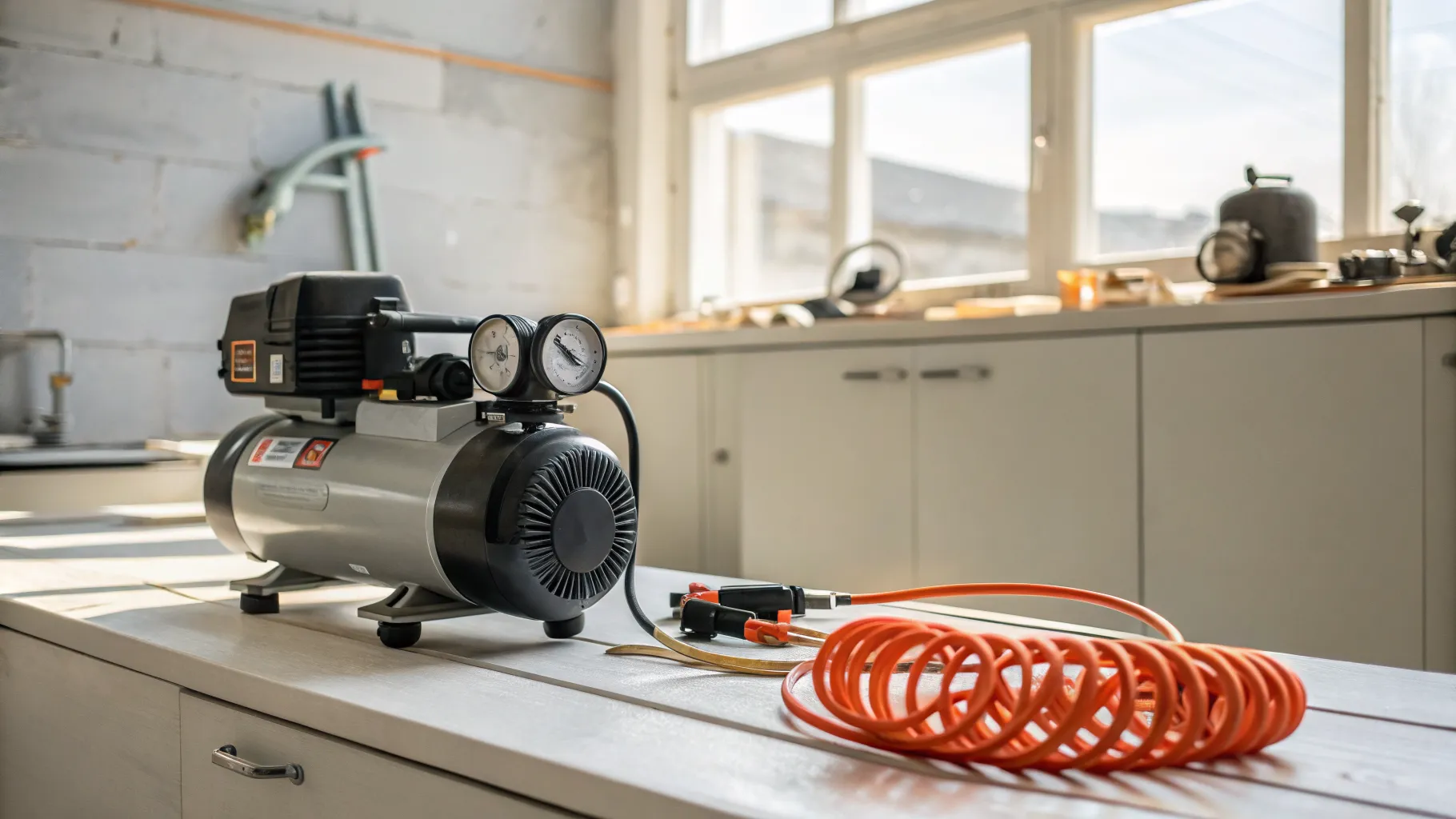
Best Portable Air Compressors: Picks by Job (2026)
Real portable air compressor picks by job, from tire inflation to framing, with the CFM at 90 PSI, tank size, and noise specs that actually decide it.
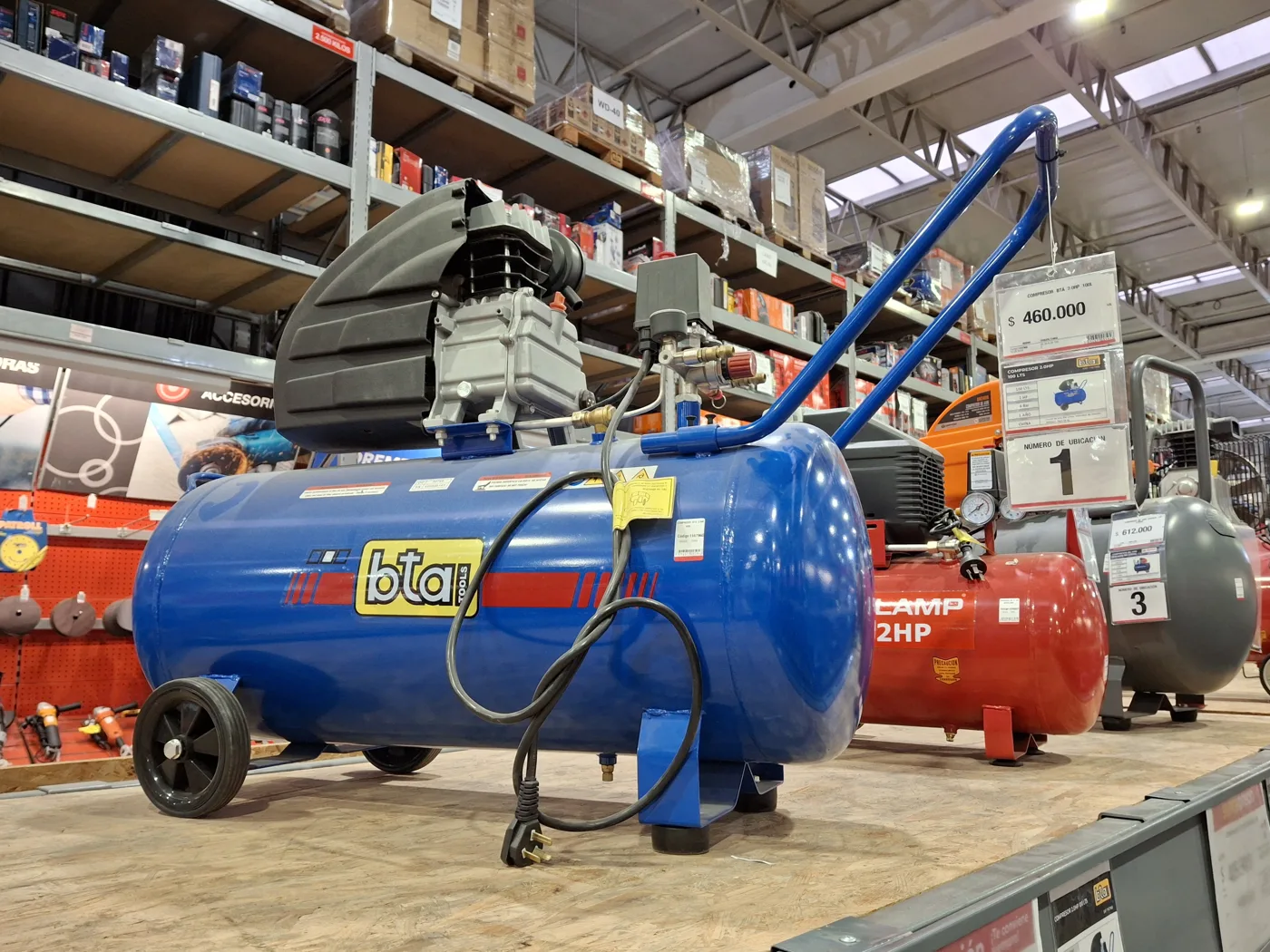
CFM Explained: How to Choose a High CFM Air Compressor for Your Tools
How to read CFM ratings and pick a high CFM air compressor: the 90 PSI standard, SCFM, a tool chart, and when you need 10, 20 or 50 CFM.
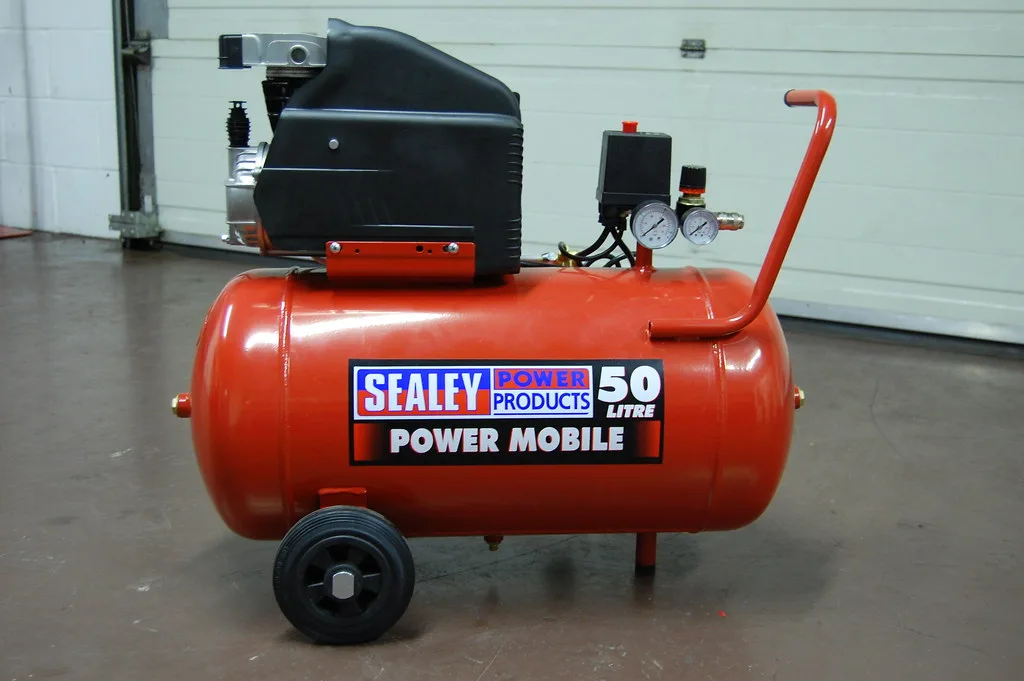
Best 30 Gallon Air Compressors for Workshops
The best 30 gallon air compressor picks for a home workshop, compared on CFM, max PSI, single-stage pumps and 120V wiring so you match the unit to your tools.