Air Compressor for Laser Cutting: What You Need to Know
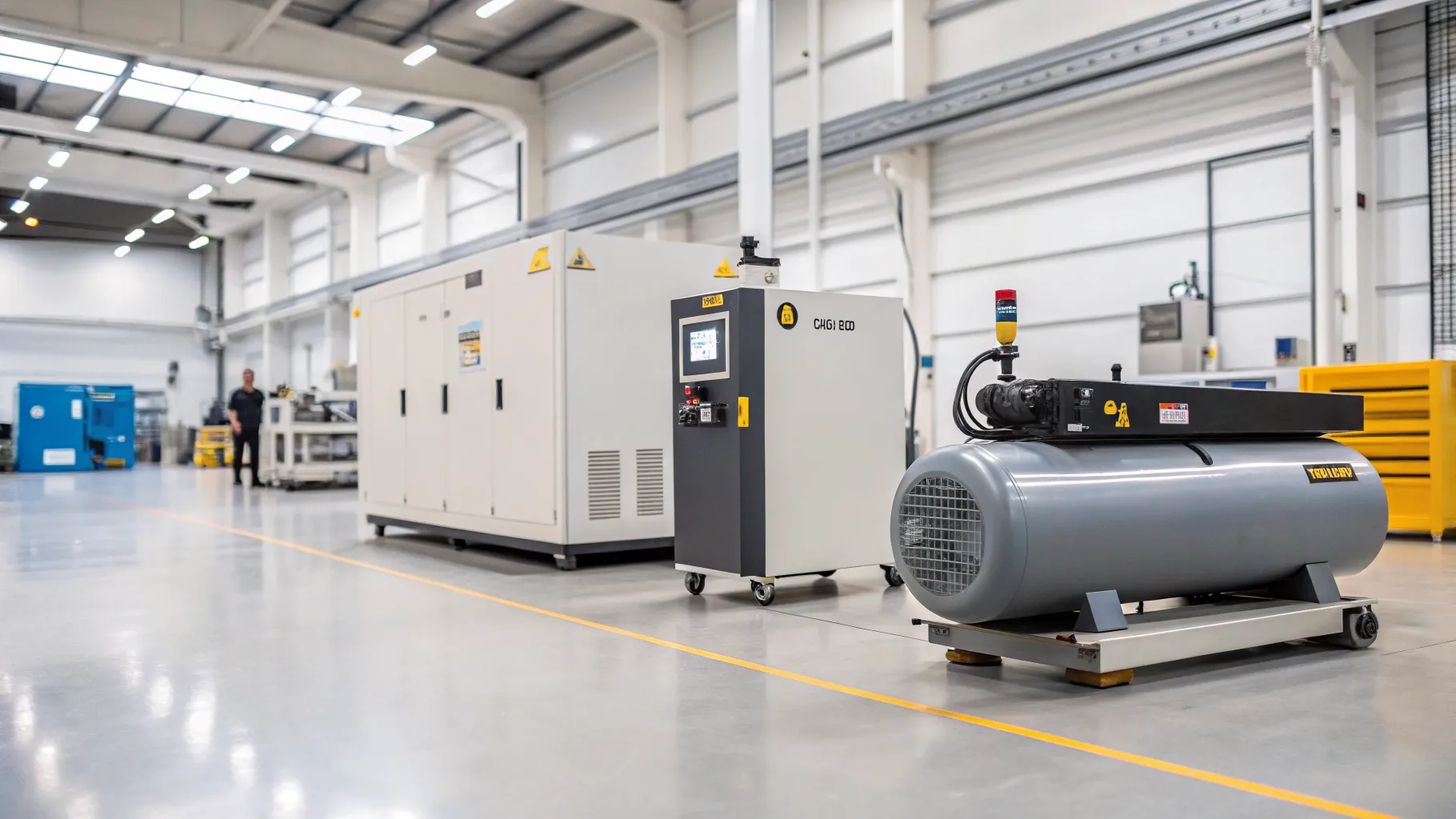
Running an air compressor for laser cutting is not like running one for a nail gun. The air does not just power a tool; it blows molten metal out of the cut and protects the lens, which means it has to arrive at the head at the right pressure, in enough volume, and bone dry. Get any of those three wrong and you get rough edges, dross, and a fogged or damaged optic. Here is what the job actually demands.
Why a laser needs compressed air at all
In air-assist cutting, a jet of gas blasts through the nozzle alongside the beam. It clears the melt from the kerf and shields the cutting lens from spatter and fumes. Many shops use bottled nitrogen or oxygen as the assist gas, but clean, dry compressed air is a cheaper, always-available alternative that works well on a lot of materials, especially thinner stainless and aluminum. That is the appeal: a good compressor pays for itself against a steady bottled-gas bill.
The catch is that the laser is unforgiving about air quality in a way a pneumatic tool never is.
Pressure: higher than you think
Air-assist cutting heads typically want high pressure at the nozzle, commonly in the range of 145 to 230 PSI (about 10 to 16 bar) depending on the material and nozzle. That is well above the 90 to 175 PSI most general-purpose compressors top out at.
The number that matters is pressure at the compressor outlet, and it has to be higher than the pressure you want at the nozzle, because you lose pressure across the regulator, the dryer, the filters, the fittings, and the supply line. For most laser air-assist setups, you are looking at a compressor rated for roughly 220 to 230 PSI maximum outlet pressure so there is headroom after those losses. A standard 175 PSI shop compressor usually will not cut it.
Flow: match it to the nozzle and duty cycle
Pressure gets the cut started; flow keeps it going. A cutting head consumes roughly 7 to 21 CFM during air-assist cutting for typical nozzles, but a larger nozzle at high pressure can pull far more, up toward 80 to 90 CFM on a big 2.0mm nozzle at 10 bar.
As a rough guide:
- Small desktop and hobby cutters may need only a few CFM.
- Mid-size industrial fiber machines commonly need 8 to 12 CFM or more.
- High-power production lasers can need much higher continuous flow.
Crucially, you also have to feed any air dryer in the system, which consumes some of the output itself. If your machine needs a given flow, size the compressor to deliver more than that at the working pressure so the dryer’s consumption does not starve the head. Our what size air compressor do I need guide and the air compressor size calculator help you work the numbers for your nozzle.
Air quality is the part people skip
This is where most failed setups go wrong. Laser cutting needs clean, dry, oil-free air, and the standard everyone references is ISO 8573-1, which classifies compressed air by oil content, particulate size, and moisture. High-power fiber lasers commonly call for very tight classes: essentially no oil, sub-micron particulate filtration, and a pressure dew point around -40 degrees F or lower to stop the air condensing as it expands at the nozzle.
Three things make that happen:
- A dryer. A refrigerated dryer handles many setups; high-power or quality-critical machines often need a desiccant dryer to reach the very low dew point. Moisture at the lens is a fast route to damage.
- Filtration. A line of coalescing and particulate filters strips oil mist and fine particles down to sub-micron levels before the air reaches the head.
- The right compressor type. Any oil that gets past filtration ends up on your optics, so oil contamination is the enemy.
You can read the official standard summary on the ISO site, and manufacturer resources like Chicago Pneumatic’s laser cutting pages go deeper on class selection.
Oil-free or oil-injected?
For continuous, high-duty laser work, an oil-free rotary screw compressor is the standard choice. Screw compressors deliver large, stable flow with low noise and vibration, which suits a machine cutting all day. Oil-free designs remove the oil-contamination risk at the source rather than relying entirely on filters to catch it, which is why they are treated as the gold standard for multi-laser shops with strict quality needs.
The trade-off is upfront cost: oil-free screw machines cost more to buy than oil-injected equivalents. For a hobby or light-duty cutter, a quality oil-injected reciprocating compressor with thorough drying and filtration can work, as long as you stay on top of maintenance. For production cutting, the oil-free screw usually wins on reliability and running cost over its life. If you are weighing types more broadly, our how to choose an air compressor guide covers the basics.
Matching the compressor to your laser
Power scales with the laser. As a rough orientation, small CO2 and low-wattage fiber cutters pair with modest compressors, mid-range fiber lasers need several horsepower of continuous-duty screw, and high-power industrial fiber machines need substantially more, plus the drying and filtration to match. Always check your laser manufacturer’s spec sheet first: it will state the required pressure, flow, and air-quality class, and that spec is what you size to, not a generic rule of thumb.
Frequently asked questions
What pressure does an air compressor need for laser cutting? Air-assist heads commonly want 145 to 230 PSI at the nozzle depending on material and nozzle size. Because you lose pressure across the dryer, filters, regulator, and lines, the compressor itself usually needs to be rated for around 220 to 230 PSI maximum outlet pressure, which is higher than a standard shop compressor provides.
Can I use a regular shop air compressor for a laser cutter? Often not, for two reasons. Most general-purpose compressors do not reach the high pressure air-assist needs, and they do not deliver the clean, dry, oil-free air a laser requires. A small hobby cutter may manage with a good compressor plus proper drying and filtration, but industrial cutting needs a high-pressure, oil-free system.
Do I need an air dryer for laser cutting? Yes. Moisture in the air condenses as it expands at the nozzle and can damage the lens and ruin cut quality. A refrigerated dryer suits many setups, while high-power or quality-critical machines need a desiccant dryer to hit a very low pressure dew point.
Is air assist as good as nitrogen for laser cutting? For many materials, especially thinner stainless and aluminum, clean dry compressed air gives good results at a far lower running cost than bottled nitrogen. For oxidation-free cuts on certain materials and thicknesses, nitrogen still has the edge. Air assist is best seen as a cost-effective option for a large share of jobs, not a universal replacement.
Should I buy an oil-free compressor for laser cutting? For continuous production cutting, yes, an oil-free rotary screw compressor is the standard choice because it removes the oil-contamination risk that damages optics. Oil-injected machines can work for light-duty use with rigorous filtration and maintenance, but oil-free is the safer long-term choice for serious cutting.
More from Air Compressor Mag
Best Portable Air Compressors: Picks by Job (2026)
Real portable air compressor picks by job, from tire inflation to framing, with the CFM at 90 PSI, tank size, and noise specs that actually decide it.
CFM Explained: How to Choose a High CFM Air Compressor for Your Tools
How to read CFM ratings and pick a high CFM air compressor: the 90 PSI standard, SCFM, a tool chart, and when you need 10, 20 or 50 CFM.
Best 30 Gallon Air Compressors for Workshops
The best 30 gallon air compressor picks for a home workshop, compared on CFM, max PSI, single-stage pumps and 120V wiring so you match the unit to your tools.