Air Compressor Relief Valve and Unloader Valve Guide
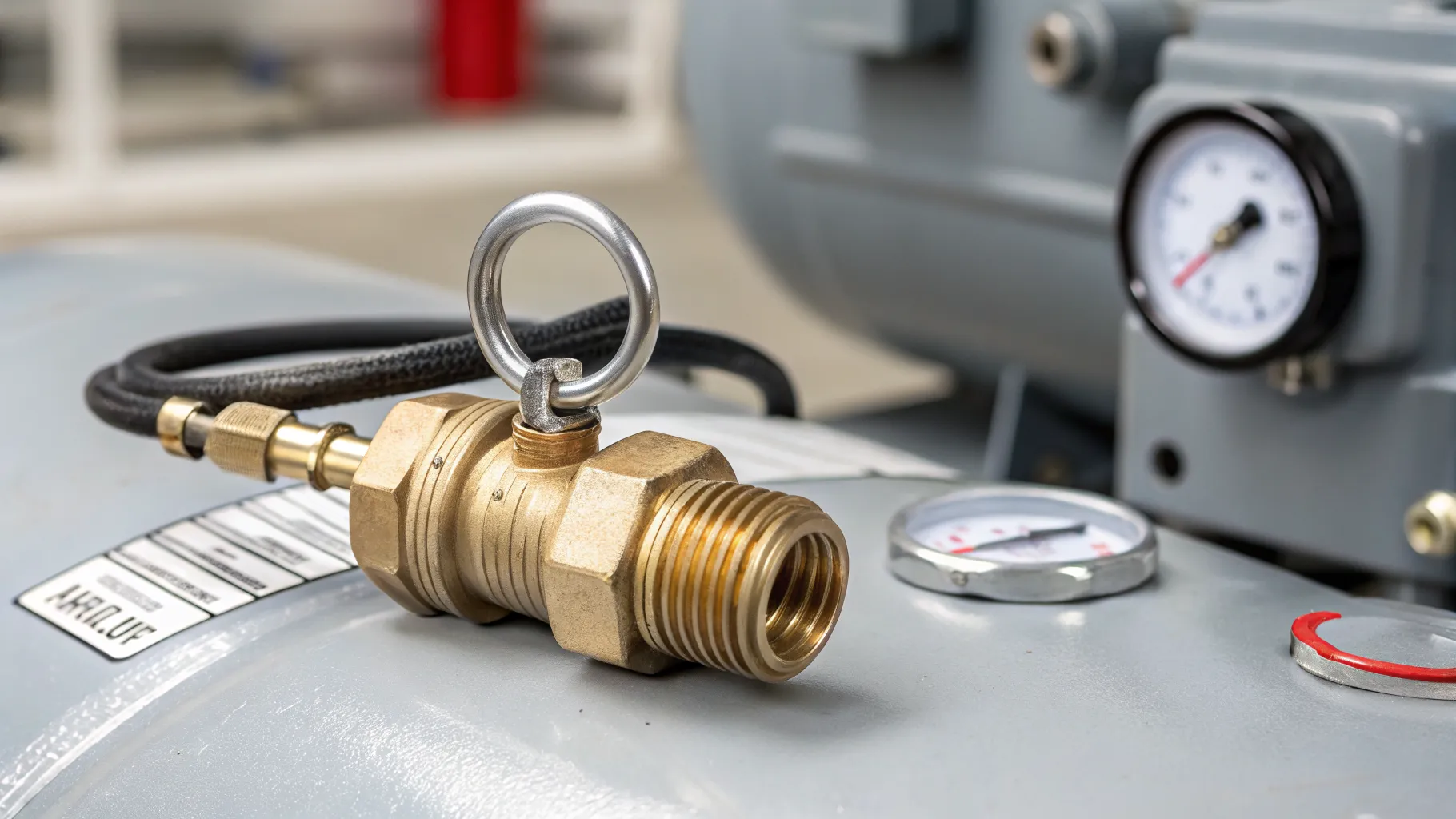
The single biggest source of confusion in this corner of the machine is that three small parts get called the same thing. The air compressor relief valve, the unloader valve, and the check valve sit within inches of each other, they all hiss at some point in the cycle, and people swap their names freely. They do completely different jobs, and the most common “my relief valve keeps leaking” complaint is usually not the relief valve at all. Get the three straight and you can diagnose most of what goes wrong here in a few minutes. Drain the tank to zero PSI and unplug the compressor before you touch any of them.
The three valves, and why people confuse them
Here is the hard separation to keep in your head. One of these is a safety device. The other two are there for convenience and motor longevity.
| Valve | What it is | What it does |
|---|---|---|
| Pressure relief valve (safety, “pop-off”) | A spring-loaded brass valve with a pull ring | Vents the tank to atmosphere if pressure ever exceeds its set point. A last line of defense. |
| Unloader valve | A small valve usually built into or bolted onto the pressure switch | Bleeds the trapped air in the pump head and discharge line at shut-off so the motor restarts unloaded |
| Check valve | A one-way valve between the pump and the tank | Lets air into the tank, blocks tank air from draining back through the pump when it stops |
The relief valve is the only one of the three that protects you. The unloader and the check valve work as a pair: the check valve holds tank pressure back, and the unloader dumps the little bit of air left on the pump side of that check valve. When the check valve fails, it can hold the unloader open and produce a steady leak that gets blamed on the relief valve or the unloader. More on that below, because it is the most-missed fault in the whole system.
How the air compressor safety relief valve works
The pressure relief valve is a spring holding a disc against a seat. Tank pressure pushes up on the disc; the spring pushes down. As long as the spring wins, the valve stays shut. When tank pressure climbs past the spring force, which is the valve’s factory-set pressure, the disc lifts and air vents out hard until pressure drops enough for the spring to reseat it.
That set pressure is fixed at the factory and sits at or below the tank’s Maximum Allowable Working Pressure (MAWP). As a rule of thumb it is set roughly 20 to 25 PSI above the compressor’s cut-out pressure, so in normal running it never opens. It only fires if the pressure switch fails to cut the motor out and the tank keeps filling past where it should have stopped. In other words, a relief valve that vents is telling you something else already broke. VMAC’s guide to compressor pressure relief valves walks through the mechanism and testing in detail.
Two hard rules on the safety relief valve, no exceptions:
- Never adjust it. It is a safety-critical part with a fixed set point. There is no legitimate reason to change it in the field.
- Never cap, plug, or wire shut a valve that is venting. If it is popping off, fix the cause; do not silence the symptom. A blocked relief valve on an overpressurized tank is how pressure vessels rupture.
What the regulations actually require
A homeowner’s garage compressor is not OSHA-regulated, but the engineering standard behind the rules is the right safety baseline for any tank. OSHA’s air receiver standard, 29 CFR 1910.169, spells out the principles plainly: every air receiver must carry a readily visible pressure gauge and one or more spring-loaded safety valves, sized so the receiver pressure cannot exceed MAWP by more than 10 percent. It also states that no valve of any type may be placed between the air receiver and its safety valve, so never install a shutoff that could isolate the relief valve from the tank. The standard requires a drain at the lowest point of the tank too, which is the same maintenance our tank draining guide covers.
The construction side is governed by the ASME Boiler and Pressure Vessel Code, Section VIII. An ASME-rated relief valve is stamped with “ASME,” “UV,” and “NB” markings and is sized to discharge the full output of the compressor it protects. When you replace one, that stamp is what you are looking for.
How the air compressor unloader valve works
When the pressure switch hits cut-out and cuts the motor, the unloader valve opens and vents the small slug of air trapped in the pump head and the discharge line. That is the short “psssh” you hear a second after the motor stops on a healthy machine. It matters because an electric motor has very little starting torque; if the next start has to push the piston against trapped head pressure, the motor stalls, draws a big amp spike, and trips its thermal overload or the breaker. The unloader makes sure every restart begins against zero head pressure.
On most consumer and prosumer compressors the unloader is built into or bolted onto the pressure switch, fed by a thin tube or pipe from the check valve. On large industrial units it is a separate pilot-controlled valve. Either way it is not an adjustment point and not a safety device. Quincy has a clear writeup on the unloader valve’s purpose if you want the manufacturer’s wording.
The muffler on the unloader port
That blow-down “psssh” can be loud. A small screw-in discharge muffler, sometimes called a silencer, fits the unloader vent port to soften it, and many switches and valves ship with one already fitted. If your compressor suddenly got noticeably louder right at shut-off, check the muffler: they blow out or clog. A missing or split air compressor muffler is a five-minute, low-cost fix, and it is purely about noise, not performance.
Troubleshooting by symptom
Three symptoms cover almost every call about these valves. Match yours, then act.
The relief valve keeps venting or popping off
The single most common cause is not the relief valve at all: the pressure switch failed to cut out, so the tank kept filling past cut-out until the relief valve did exactly its job. Test it. Drain the tank, refill, and watch the gauge; if the motor does not stop at the rated cut-out PSI, the switch is the problem, not the valve. As a quick check, flip the pressure switch lever to OFF while it is running; if the motor keeps going, the contacts have welded and the switch needs replacing. Our pressure switch guide covers testing and replacement.
If cut-out is correct and the valve still weeps or pops:
- Debris under the seat. Rust, carbon, or pipe scale caught between the disc and seat causes a small continuous leak. Pulling the ring a few times sometimes clears it; if it keeps leaking after snapping shut, replace it.
- A weak or failed spring. If cut-out is right and the valve still opens early, the spring has tired out. Replace the valve with an identically rated one.
Motor hums, stalls, or trips the breaker on restart
This is the classic stuck or failed unloader. The motor is being forced to restart against trapped head pressure, so it stalls and trips the thermal overload or breaker. The giveaway: listen at shut-off. A healthy machine gives that brief hiss; no hiss means the unloader is not venting. There is a clean confirming test, the same one in our air compressor repair pillar: drain the tank fully and start the unit empty. If it starts fine empty but hums or trips once there is pressure, the unloader or check valve is the cause, not the motor or capacitor. Fix it by cleaning the small brass screen or fiber filter in the unloader port, or replacing the unloader. Replacement unloaders are inexpensive and bolt onto the pressure switch.
Continuous hiss from the pressure-switch area while the tank holds pressure
This is the most-missed fault in the system, so read it carefully. A steady leak from around the pressure switch or unloader port, while the tank still holds its pressure, is usually a failed check valve, not a bad unloader and not a bad relief valve. With the check valve leaking, tank air bleeds back toward the pump and holds the unloader open, so air hisses out continuously. The fix is a new check valve, a cheap threaded part in the line between the pump and the tank. People replace unloaders and relief valves for weeks chasing this before they check the part that is actually causing it. Fix My Compressor documents the same root cause.
How to test the safety relief valve
Test the relief valve at least once a year; the owner or operator is responsible for this under most valve and compressor manuals. It takes a minute.
- Run the compressor up to a moderate pressure. About 50 PSI in the tank is enough; you do not need a full tank.
- With the machine on, pull the ring on the relief valve.
- Air should exhaust forcefully while you hold it open, then snap fully shut with no lingering hiss the instant you let go.
- Look it over: it should not be corroded, and the vent holes must be clear.
Replace the valve if it leaks after snapping shut, fails to exhaust when you pull the ring, or shows corrosion. Use an identically rated ASME-stamped replacement.
Picking a replacement relief valve
The one rule that trips people up: match the replacement to the original valve and tank rating, not to your cut-out pressure. A valve rated below your tank’s MAWP defeats the point; one set far above it will not protect the tank. Look for the ASME, UV, and NB stamps, the correct PSI rating, and the right thread (1/4 inch NPT is the common size on portable and prosumer units).
Real, mainstream US replacement parts to give you a sense of the landscape:
| Valve | Rating | Notes |
|---|---|---|
| DeWALT DXCM136-0077 | 1/4 in., 175 PSI, ASME | Sold at Tractor Supply and AutoZone; common factory replacement |
| DeWALT D20114 | 1/4 in., 175 PSI, ASME | Factory replacement part |
| DeWALT N022549 / 5140229-06 | 225 PSI | For two-stage units (D55146, D55167, D55168, DXCM271) |
| Control Devices AX Series | 1/4 in. NPT, 150 PSI, ~58 SCFM, ASME/UV/NB | Stainless spring, +/-3% set accuracy |
Generic 1/4 inch ASME brass relief valves are widely available at common ratings (50, 100, 125, 140, 150 PSI) and remain inexpensive commodity parts; check current price at your usual store. Whatever you buy, confirm the PSI stamp matches your tank’s rating before fitting it. If you are shopping the whole machine rather than a part, start with our portable compressor picks.
Frequently asked questions
What is the difference between a relief valve and an unloader valve? The pressure relief valve is a safety device: it vents the tank if pressure exceeds its set point, and it has a pull ring. The unloader valve is a convenience and longevity device: it bleeds trapped head pressure at shut-off so the motor restarts unloaded. They are not interchangeable, and only the relief valve protects you.
Why does my air compressor relief valve keep releasing air? Most often the pressure switch failed to cut out, so the tank overpressurized and the relief valve did its job; test whether the motor stops at rated cut-out. If cut-out is correct, suspect debris under the valve seat or a weak spring, and replace the valve if it keeps leaking after snapping shut.
Can I adjust the pressure relief valve? No. The set pressure is fixed at the factory at or below the tank’s rating. Never adjust it, and never cap, plug, or wire shut a valve that is venting. If it is popping off, find and fix the cause, which is usually a failed pressure switch.
Why does my compressor hum and trip the breaker when it restarts? That is the classic stuck unloader: the motor is restarting against trapped head pressure. Listen for the brief hiss at shut-off; no hiss means the unloader is not venting. Clean or replace the unloader. Confirm by draining the tank and starting it empty; if it only struggles under pressure, it is a valve.
My compressor leaks air from the pressure switch when it shuts off. Why? Usually a failed check valve, not a bad unloader or relief valve. The check valve lets tank air bleed back and hold the unloader open, so air hisses out continuously while the tank still has pressure. Replace the check valve, a cheap threaded part between the pump and tank.
How often should I test the safety relief valve, and how? At least once a year. With about 50 PSI in the tank and the machine running, pull the ring: air should exhaust hard, then snap fully shut with no lingering hiss when you let go. Replace it if it leaks after closing, fails to vent when pulled, or is corroded.
What PSI relief valve do I need for a replacement? Match it to your tank’s rating and the original valve, not to your cut-out pressure. Use an ASME-stamped valve (look for ASME, UV, and NB markings) with the correct PSI rating and thread, commonly 1/4 inch NPT on portable units.
What is the muffler on the unloader for, and why did my compressor get louder? The small screw-in muffler softens the loud blow-down when the unloader vents at shut-off. If your compressor suddenly got louder right as it stops, the muffler has likely blown out or clogged. It is a cheap, quick replacement and affects noise only, not performance.
More from Air Compressor Mag
Best Portable Air Compressors: Picks by Job (2026)
Real portable air compressor picks by job, from tire inflation to framing, with the CFM at 90 PSI, tank size, and noise specs that actually decide it.
CFM Explained: How to Choose a High CFM Air Compressor for Your Tools
How to read CFM ratings and pick a high CFM air compressor: the 90 PSI standard, SCFM, a tool chart, and when you need 10, 20 or 50 CFM.
Best 30 Gallon Air Compressors for Workshops
The best 30 gallon air compressor picks for a home workshop, compared on CFM, max PSI, single-stage pumps and 120V wiring so you match the unit to your tools.