Air Compressor Water Separator and Moisture Filter Guide
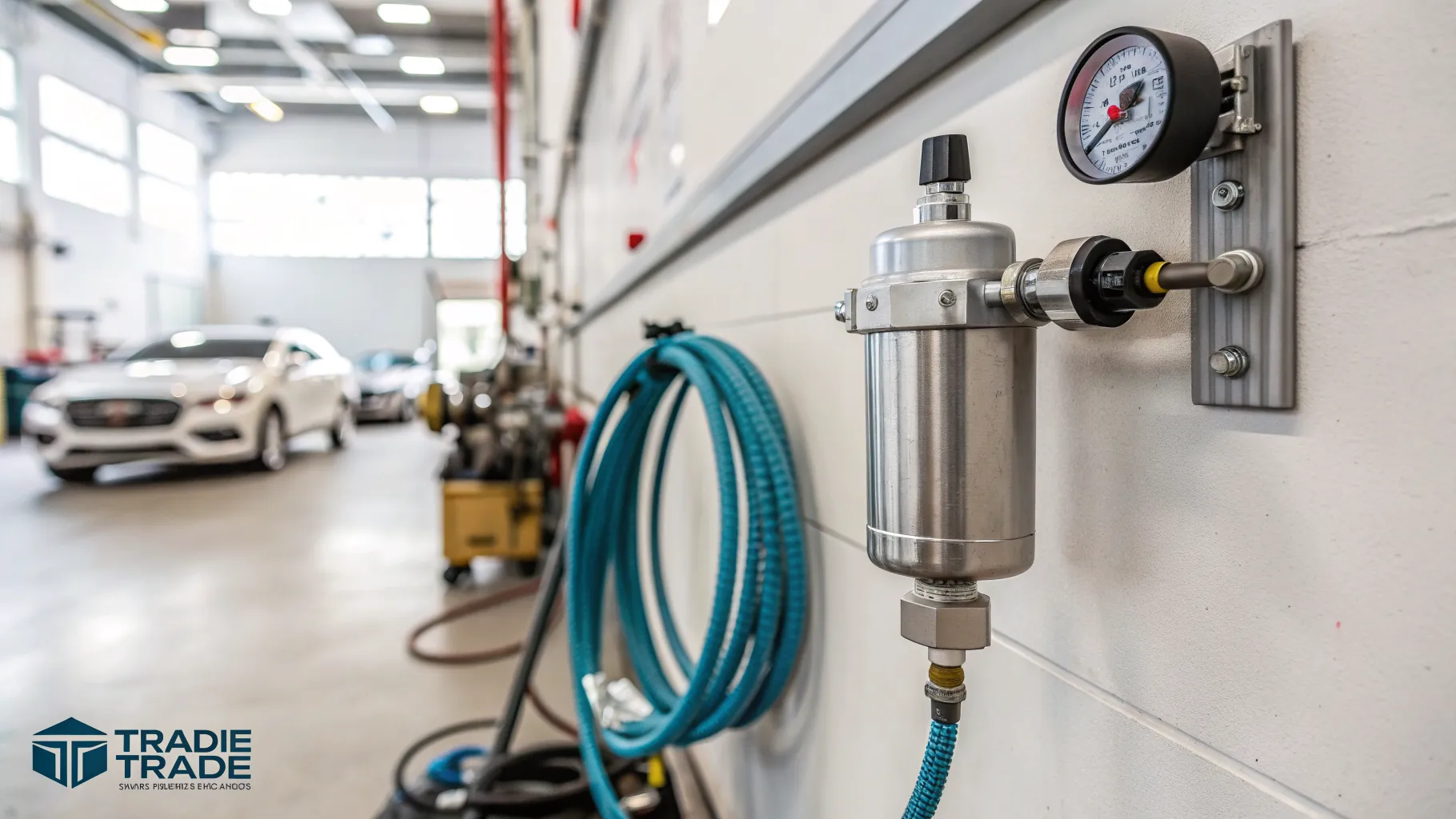
An air compressor water separator is the cheapest insurance you can buy against ruined paint jobs, rusty tanks, and seized air tools. Every compressor makes water: as it squeezes air, the moisture in that air condenses into liquid, and without something to catch it, that water travels straight down your lines into whatever you are running. This guide explains how a water separator works, how it differs from an air dryer, where to install one, and how to actually keep your compressed air dry.
Why your compressor makes water
Air always holds some water vapor. When your compressor pressurizes that air, and when the hot compressed air then cools in the tank and lines, the vapor condenses into liquid water. That is why you find water when you drain the tank, and why a humid summer day produces far more of it. Left alone, that moisture rusts your tank from the inside, spits water through your spray gun, and shortens the life of air tools that need clean, dry air and a film of oil, not water.
An air compressor water separator, sometimes called a moisture trap, is the first line of defense against all of that.
How an air compressor water separator works
A water separator removes liquid water from the compressed air stream using physics rather than absorption. Most units are cyclonic: the air is forced to spin, and centrifugal force throws the heavier water droplets outward against the bowl wall, where they run down and collect at the bottom to be drained off. Baffles, wire mesh, and changes in air direction and speed do the same job of knocking droplets out of the flow.
A well-chosen, correctly sized separator removes roughly 80 to 90 percent of the liquid water. The important limit is that it only catches liquid water and larger droplets. It does not remove the water vapor still suspended in the air, which can condense further downstream as the air keeps cooling. That distinction is the whole reason air dryers exist.
Water separator vs air dryer
People use these terms loosely, but they do different jobs.
- A water separator (moisture trap) intercepts and drains liquid water that has already condensed. It is simple, cheap, needs no power, and handles the bulk of the water in a typical garage or shop setup.
- A refrigerated air dryer chills the compressed air to around 38 to 40 degrees Fahrenheit so the vapor condenses out, then reheats it. This tackles the vapor a separator leaves behind and delivers consistently drier air for demanding work.
- A desiccant dryer passes air through a material like silica gel that absorbs the remaining vapor, producing the driest air of all. It is used where you need very dry air, such as fine finishing or plasma cutting.
For most home and small-shop users, a water separator plus regular tank draining is enough. Add a dryer when you spray paint regularly, run sensitive tools, or work in a humid climate. Even if you install a dryer, you still want a separator upstream, because dryers are not built to handle a slug of liquid water. Our air compressor filter guide covers how separators, particulate filters, and coalescing filters stack together.
Where to install a water separator
Placement matters more than most people realize, and it comes down to temperature. A separator works on liquid water, so it should sit where the air has already cooled enough for water to condense out.
- Give the air room to cool first. Mounting a separator right at the hot compressor outlet is a common mistake, because the air is still hot and much of the water is still vapor. Let the air travel through some line, or through an aftercooler, so it cools and the water condenses before it reaches the separator.
- Use a point-of-use trap. The most reliable setup adds a second separator and filter-regulator right at the tool or spray gun. This catches any moisture that condenses along the run and protects that specific component.
- Drop legs help. Running your hard line with slight downward slopes and vertical drop legs lets water collect at low points you can drain, instead of pooling in the hose.
If you are plumbing a permanent shop air line, plan the separator and filter locations into the layout from the start.
Keeping your air lines dry: the full routine
A separator is one part of a system. To actually get dry air, combine a few habits.
- Drain the tank often. Water pools in the tank first, so draining it is the single most important thing you can do. See our guides on how to drain an air compressor and the drain valve.
- Let hot air cool before it hits your tools. More line length or an aftercooler means more water drops out before the separator.
- Run a separator, then a filter, then a regulator in that order at the point of use, so water is removed before the air is metered to the tool.
- Add a dryer for demanding work such as automotive painting or plasma cutting.
- Empty the separator bowl or fit an automatic drain so it does not overflow back into the line.
Frequently asked questions
What does an air compressor water separator do? It removes liquid water from your compressed air using centrifugal force and baffles, collecting it in a bowl you drain off. This protects air tools, spray guns, and your tank from the moisture every compressor produces, catching around 80 to 90 percent of the liquid water.
Where should I install a water separator on my air compressor? Install it downstream of the compressor where the air has cooled enough for water to condense, not right at the hot outlet. A point-of-use separator and filter-regulator at the tool or spray gun is the most effective spot, and adding drop legs in a hard line helps too.
Do I need both a water separator and an air dryer? For most garage use, a water separator plus frequent tank draining is enough. If you spray paint, run sensitive tools, or work in a humid climate, add a dryer for the vapor a separator cannot remove. Keep a separator upstream of any dryer to catch liquid water first.
What is the difference between a water separator and a moisture trap? They are the same thing. Both names describe a device that removes liquid water from compressed air. It is distinct from an air dryer, which removes water vapor that has not yet condensed.
Why is there still water in my air lines after fitting a separator? A separator only catches liquid water, not vapor, so vapor can condense further down the line as the air cools. Fit a point-of-use separator at the tool, add line length or an aftercooler so air cools sooner, and for very dry air add a refrigerated or desiccant dryer.
How often should I drain the water separator bowl? Empty it whenever it approaches full, which in humid conditions can be during a single session. An automatic drain removes the guesswork, and you should still drain the tank itself regularly since that is where most water collects.
Where to go next
Pair this with our air compressor filter guide and make tank draining a habit with how to drain an air compressor. For the physics of moisture in compressed air, Atlas Copco’s moisture trap explainer is a solid technical reference.
More from Air Compressor Mag
Best Portable Air Compressors: Picks by Job (2026)
Real portable air compressor picks by job, from tire inflation to framing, with the CFM at 90 PSI, tank size, and noise specs that actually decide it.
CFM Explained: How to Choose a High CFM Air Compressor for Your Tools
How to read CFM ratings and pick a high CFM air compressor: the 90 PSI standard, SCFM, a tool chart, and when you need 10, 20 or 50 CFM.
Best 30 Gallon Air Compressors for Workshops
The best 30 gallon air compressor picks for a home workshop, compared on CFM, max PSI, single-stage pumps and 120V wiring so you match the unit to your tools.