Belt Drive vs Direct Drive Air Compressor: Which Is Better?
The choice between a belt drive air compressor and a direct drive model is really a choice about how the motor connects to the pump, and that one detail ripples out into noise, maintenance, how long the unit lasts, and what you pay up front. Neither type is universally better. A belt drive is quieter and built to run for years of hard use; a direct drive is lighter, simpler, and cheaper to buy. The right pick depends almost entirely on whether the compressor sits in one spot doing serious work or gets carried from job to job. Here is how they actually differ and which one fits your shop.
The quick answer
Buy a belt drive if the compressor lives in a garage or shop, runs often, and you want it quiet and long-lived, for example a stationary 60-gallon unit feeding air tools all day. Buy a direct drive if you need something light and portable, use it in shorter bursts, and want the lowest purchase price, like a job-site or trim compressor. Most contractor and hobby portables are direct drive; most serious stationary units are belt drive, and that pattern exists for good reasons.
How each one works
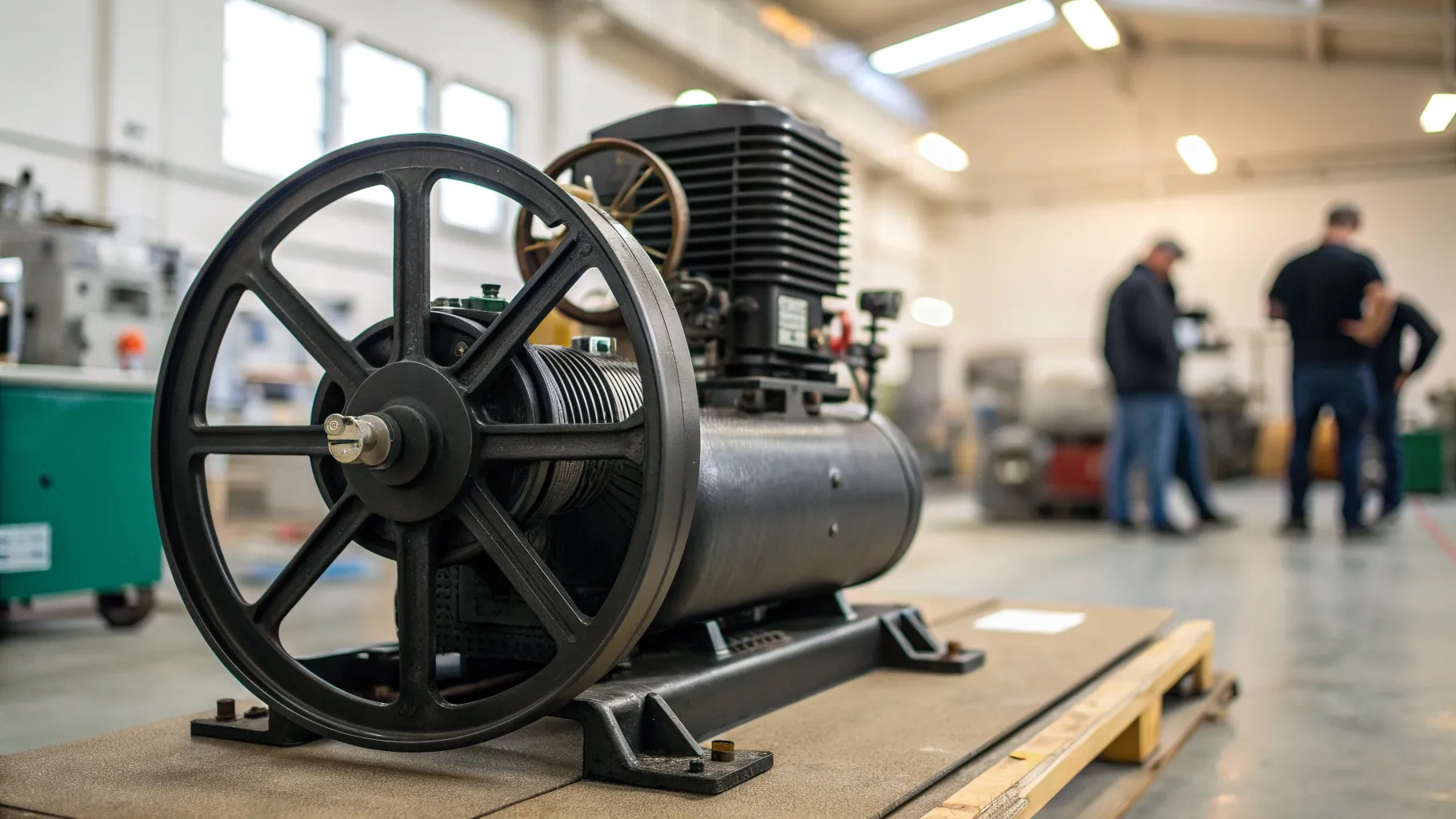
In a belt drive compressor, the electric motor spins a pulley, a V-belt loops over to a second pulley on the pump, and that turns the pump. The belt and the pulley sizes act as a gear ratio, so the pump can turn slower than the motor.
In a direct drive compressor, the pump is coupled straight to the motor shaft, so the pump turns at motor speed with no belt in between. Fewer moving parts, more compact, but no gearing in the middle.
That single difference, a belt and pulleys versus a direct coupling, drives every practical trade-off below.
Noise
Belt drive wins here, and it is not close. Because the pump turns more slowly and the belt absorbs some vibration, a well-maintained belt drive runs noticeably smoother and quieter. Direct drive units spin the pump at full motor speed and transmit more vibration, so they are louder and less pleasant in an enclosed space.
If the compressor shares a garage, basement, or any room where noise matters, belt drive is the more livable choice. For the quietest options overall, our guide to the best quiet air compressors covers the models that go further still.
Maintenance
Direct drive wins on simplicity. With no belt or pulleys, there is less to wear out and adjust, which is part of why direct drive dominates portable and oil-free designs meant to be low-fuss.
Belt drive asks a little more of you: belts stretch and eventually need tensioning or replacing, and pulleys must stay aligned. None of that is difficult, but it is regular upkeep. The upside is that a belt drive pump is usually oil-lubricated and serviceable, so with routine care, including the right air compressor oil and draining the tank, it keeps running for a very long time. Both types still need the tank drained and the intake filter kept clean; see our maintenance basics for the wider checklist.
Lifespan and duty cycle
This is where belt drive earns its keep. Running the pump slower means it runs cooler and with less wear, so belt drive units are generally built for a higher duty cycle: longer run times and continuous use without overheating. That is exactly what a stationary shop compressor feeding grinders, sanders, and impact wrenches needs.
Direct drive units, especially the compact oil-free type, are built for intermittent duty: nailing off a deck, airing tires, running a brad nailer in bursts. Push one to run continuously all day and it will run hot and wear faster. Match the drive type to your duty cycle and both will last; mismatch it and the compressor becomes the bottleneck.
Cost
Direct drive is usually cheaper to buy, which is a big part of why budget and portable compressors use it. Belt drive costs more up front but can pay back over years of heavy use through lower wear and a serviceable, rebuildable pump. One caveat on direct drive: because everything is integrated, a serious pump or motor failure can be more expensive to fix than swapping a belt, so the low sticker price is not the whole story if the unit works hard.
Which should you buy?
Line the drive type up against how you will actually use the compressor:
- Stationary shop or garage, frequent or all-day use, air tools: belt drive. Quieter, cooler-running, and built to last, especially on tank sizes like a 60-gallon unit.
- Portable, job-site, intermittent bursts, lowest price: direct drive. Lighter to carry and cheaper to buy, ideal for finish work and around the house. See the best portable air compressors.
Get the sizing right first, though. CFM and tank size decide whether the compressor can run your tools at all, and drive type only decides how pleasantly and how long it does so. Our guide on how to choose an air compressor walks through matching CFM to your tools. For a deeper look at how compressor types are classified, the U.S. Department of Energy’s compressed air systems resources are a solid reference.
Frequently asked questions
Is a belt drive or direct drive air compressor better? Neither is better for every job. Belt drive is quieter, runs cooler, and lasts longer under heavy or continuous use, which suits stationary shop compressors. Direct drive is lighter, simpler, and cheaper, which suits portable, intermittent use. Match the drive type to how often and how hard you will run it.
Why are belt drive air compressors quieter? Because the belt and pulley system lets the pump turn slower than the motor and absorbs some vibration, a belt drive runs more smoothly. Direct drive couples the pump straight to the motor, so it spins faster and transmits more vibration and noise, making it louder in enclosed spaces.
Do belt drive air compressors need more maintenance? Slightly. The belt needs occasional tensioning or replacement and the pulleys must stay aligned, which direct drive units avoid entirely. In exchange, belt drive pumps are usually oil-lubricated and serviceable, so with routine care they last a long time. Both types still need the tank drained and the filter kept clean.
Which type of air compressor lasts longer? Belt drive units generally last longer under heavy use because the pump runs slower and cooler, giving them a higher duty cycle for continuous work. Direct drive units are built for intermittent duty and can wear faster if pushed to run continuously all day.
Are portable air compressors belt drive or direct drive? Most portable and oil-free compressors are direct drive, because it is lighter, more compact, and cheaper. Belt drive is more common on larger stationary units where quiet operation and long life matter more than portability.
Is a direct drive air compressor cheaper? Usually yes, both because direct drive uses fewer parts and because it is favored for budget and portable models. Keep in mind that a major pump or motor failure on an integrated direct drive unit can cost more to repair than replacing a belt on a belt drive compressor.
More from Air Compressor Mag
Best Portable Air Compressors: Picks by Job (2026)
Real portable air compressor picks by job, from tire inflation to framing, with the CFM at 90 PSI, tank size, and noise specs that actually decide it.
CFM Explained: How to Choose a High CFM Air Compressor for Your Tools
How to read CFM ratings and pick a high CFM air compressor: the 90 PSI standard, SCFM, a tool chart, and when you need 10, 20 or 50 CFM.
Best 30 Gallon Air Compressors for Workshops
The best 30 gallon air compressor picks for a home workshop, compared on CFM, max PSI, single-stage pumps and 120V wiring so you match the unit to your tools.