Best Quiet Air Compressors for Home and Workshop (2026)
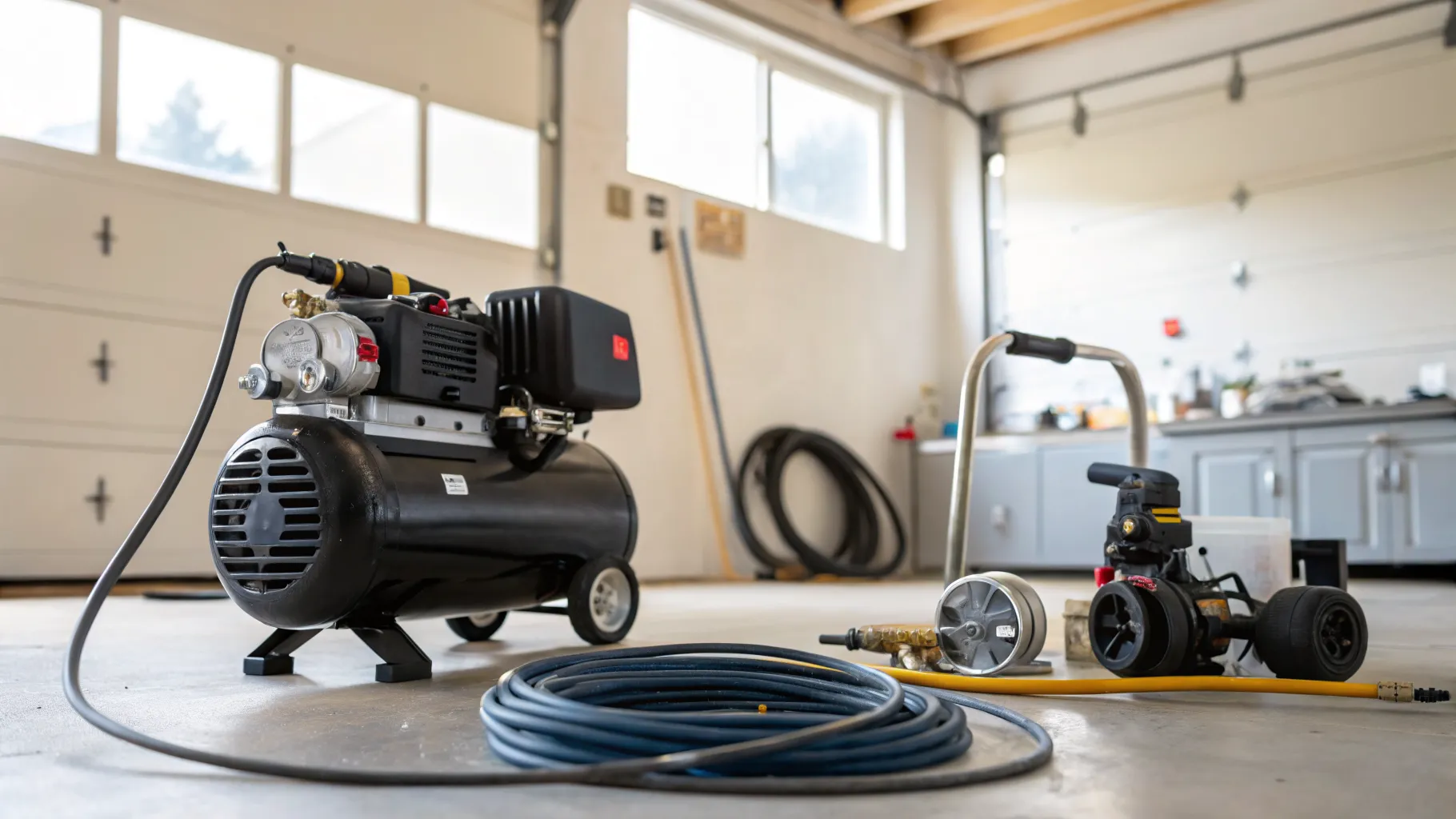
A quiet air compressor changes how you work: you can run a brad nailer in a finished basement, air up tires in an attached garage at night, or spend a full day in the shop without the headache a standard pancake unit gives you. The trick is knowing that “quiet” is a measured number, not a marketing word. This guide ranks the best quiet air compressors of 2026 by their real decibel rating and, just as important, by CFM at 90 PSI, so you get one that is both calm and actually able to feed your tools.
We name only models confirmed as current with their manufacturers in 2026, and we leave prices out because they move constantly. Check the current price at the retailer when you are ready to buy.
What “quiet” actually means in decibels
Decibels are logarithmic, so small numbers matter more than they look. A traditional oil-free compressor often runs 80 dB or higher, loud enough to be fatiguing and, over time, harmful to your hearing. A genuine quiet compressor lives in the 50 to 65 dB band: roughly the level of a normal conversation. The difference between 80 dB and 60 dB is not “a bit quieter,” it is dramatically quieter to the ear.
Two things make these units quiet: a low-RPM induction motor that spins far slower than the universal motors in cheap compressors, and oil-free dual-piston pumps designed for smooth running. That low-RPM design also tends to last longer, which is a nice bonus.
The catch: quiet compressors are almost all single-stage, oil-free units with modest output. They are superb for nailing, inflation, blow-off and light air tools. They are not the choice for a thirsty die grinder or a continuous-duty sander. For that, see what size air compressor do I need.
Best ultra-quiet pick: Metabo HPT EC28M
At a rated 59 dB, the Metabo HPT EC28M is the quietest mainstream model here. It is a 1-gallon, oil-free unit putting out about 1.3 CFM, so it is built for the lightest duty: brad and finish nailing, inflation and small blow-off jobs in a space where silence matters most, like a nursery remodel or an apartment. Do not expect it to keep up with anything that runs continuously. As a near-silent trim compressor, though, it is hard to beat.
Best overall quiet pick: Makita MAC210Q Quiet Series
The Makita MAC210Q hits 60 dB while offering more usable air than the tiny units: a 1 HP motor, a 2-gallon tank and roughly 2.0 CFM at 90 PSI from an oil-free pump. That output covers brad and finish nailers comfortably and handles framing nailers in bursts. Makita’s Quiet Series reputation is well earned, and the balance of low noise, real airflow and portability makes this the all-rounder most home users should look at first.
Best quiet pick with the most air: California Air Tools 8010
California Air Tools pioneered the ultra-quiet category, and the 8010 is its workhorse. It runs at 60 dB, pairs a 1 HP low-RPM motor with an 8-gallon steel tank, and delivers about 2.2 CFM at 90 PSI. The larger tank means longer run before the motor cycles back on, which suits longer nailing sessions and intermittent air-tool work better than the 1 and 2-gallon units. If you want quiet plus the most capable single-stage output on this list, this is the pick.
Best near-silent compact: California Air Tools 1P1060S
For the absolute lowest noise in a grab-and-go size, the California Air Tools 1P1060S is rated around 56 dB, among the quietest figures you will find. It is a small 1-gallon unit, so airflow is limited and it is best thought of as a portable trim and inflation compressor you can run almost anywhere without disturbing anyone. Choose it when quiet and portability outrank capacity.
Step-up option: California Air Tools 4710 and larger
If you want the quiet-compressor experience with a bit more tank and airflow than the 8010, California Air Tools makes larger ultra-quiet models such as the 4710 (rated around 60 dB) and bigger steel-tank units. These keep the same low-RPM, oil-free formula while giving you more reserve air for tools that draw harder. They cost more and weigh more, so only step up if your tool list needs it.
How to choose between them
- Match CFM to your thirstiest tool, then check noise. A whisper-quiet compressor that cannot feed your tool is useless. Find the tool’s CFM at 90 PSI requirement, add margin, and pick a unit that clears it.
- For trim and inflation only, the 1-gallon units (EC28M, 1P1060S) are the quietest and most portable.
- For an all-round home and workshop unit, the Makita MAC210Q or California Air Tools 8010 give the best balance of low noise and real airflow.
- For longer sessions, favor the bigger tank (the 8010 or a larger California Air Tools model) so the motor cycles less often.
- Wear hearing protection anyway around any sustained tool noise; even a 60 dB compressor plus an impact tool adds up. OSHA’s occupational noise guidance explains safe exposure levels.
For picks aimed at the two-car garage specifically, see our best air compressor for a home garage guide, and to size any compressor to your tools use our air compressor size calculator.
Frequently asked questions
What is the quietest air compressor you can buy? Among current mainstream models, the Metabo HPT EC28M at 59 dB and the California Air Tools 1P1060S at around 56 dB are the quietest. Both are small 1-gallon units, so they trade airflow for near-silence and suit trim nailing and inflation rather than heavy air tools.
How many decibels is a quiet air compressor? A genuine quiet air compressor runs between about 50 and 65 dB, roughly the level of a normal conversation. Standard oil-free compressors often exceed 80 dB. Because decibels are logarithmic, dropping from 80 dB to 60 dB is a very large reduction in perceived loudness, not a minor one.
Are quiet air compressors powerful enough for air tools? For light tools, yes. Quiet compressors easily run brad and finish nailers, inflation and blow-off, and can handle framing nailers in bursts. They are single-stage, oil-free units with modest CFM, so they are not suited to continuous-duty tools like die grinders or large sanders. Match CFM at 90 PSI to your tool before buying.
Why are some air compressors so much quieter than others? Quiet compressors use low-RPM induction motors that spin far slower than the universal motors in cheap compressors, paired with smooth-running oil-free dual-piston pumps. The slower motor produces much less noise and vibration, and tends to last longer, which is why brands like California Air Tools and Makita’s Quiet Series stay near 60 dB.
Is a quiet air compressor worth it? If you work in an attached garage, a finished basement, indoors, or anywhere noise is a problem, yes. The drop from 80-plus dB to around 60 dB makes the tool comfortable to run for long periods and far easier on your hearing. If you only use it briefly outdoors, the premium may matter less.
More from Air Compressor Mag
Best Portable Air Compressors: Picks by Job (2026)
Real portable air compressor picks by job, from tire inflation to framing, with the CFM at 90 PSI, tank size, and noise specs that actually decide it.
CFM Explained: How to Choose a High CFM Air Compressor for Your Tools
How to read CFM ratings and pick a high CFM air compressor: the 90 PSI standard, SCFM, a tool chart, and when you need 10, 20 or 50 CFM.
Best 30 Gallon Air Compressors for Workshops
The best 30 gallon air compressor picks for a home workshop, compared on CFM, max PSI, single-stage pumps and 120V wiring so you match the unit to your tools.