Best Truck-Mounted and Service Truck Air Compressors
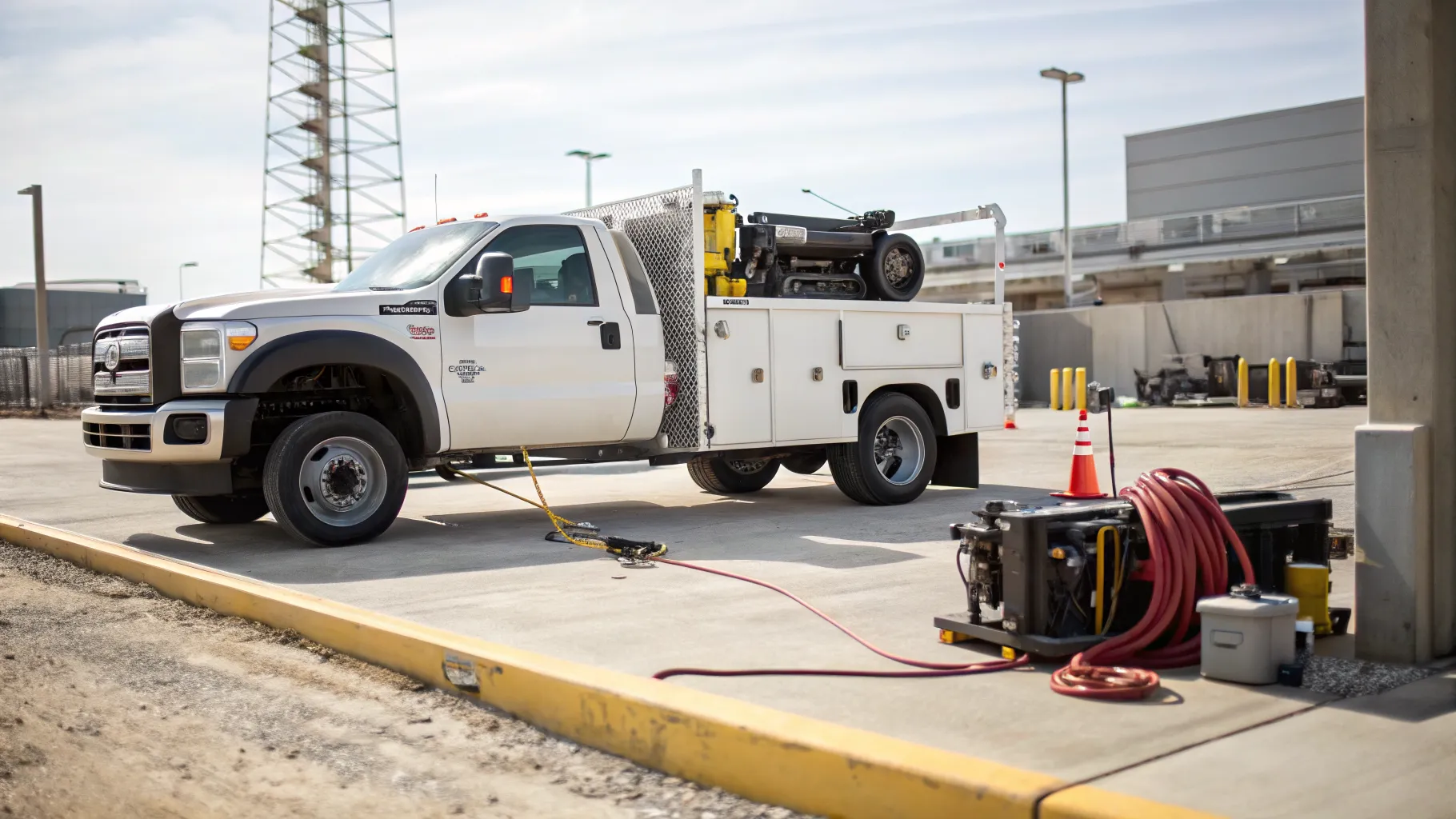
Best Truck-Mounted and Service Truck Air Compressors
Choosing a truck air compressor is less about one “best” model and more about matching the right system type to how you work. A mobile mechanic running impact wrenches needs something very different from a utility crew driving pneumatic tampers all day. This guide breaks down the main types of truck-mounted and service truck air compressors, what each does well, and the brands that lead the market, so you can spec the setup that fits your truck and your trade.
If you are new to sizing, start with our guide on what size air compressor you need and the how to choose an air compressor walkthrough, then come back here for the mobile side.
How truck air compressor systems differ
Every mobile system trades off three things: how much air it makes (CFM), how much room and weight it adds to the truck, and how it gets its power. There are four main ways to drive a compressor on a work truck.
Underhood air compressors
An underhood air compressor mounts in the engine compartment and runs off the truck’s engine. Because it tucks into space that is already there, it frees up the entire bed or service body for tools and storage, and it keeps weight down. For fleet managers and operators tight on space, this is usually the smartest layout. The trade-off is that installation is more involved and it ties the air system to the truck’s engine running.
PTO-driven air compressors
A PTO (power take-off) air compressor draws power from the transmission or engine through a PTO port, which lets it deliver high, sustained CFM for demanding jobs. If you run air tools continuously, sandblasting, heavy impact work, or multiple tools at once, a PTO system has the duty cycle to keep up where smaller units would struggle. It does require a compatible PTO provision on the truck.
Hydraulic-driven air compressors
A hydraulic-driven compressor runs off the truck’s hydraulic system, which is ideal on service trucks that already have a crane or hydraulics on board. It packs a lot of air into a compact, reliable package and shares an existing power source, making it popular on mechanic and utility service trucks.
Engine-driven (deck-mount) and gas/diesel units
A standalone gas or diesel engine-driven compressor bolts into the bed with its own motor, so it runs independently of the truck. These deliver strong output and are simple to add to almost any vehicle, at the cost of bed space, weight, and a second engine to maintain and fuel.
Tow-behind and trailer air compressors
Not every job calls for a permanently mounted unit. A tow-behind air compressor (also called an air compressor trailer or portable diesel compressor) rides on its own wheels and unhooks when you are done. These are the workhorses of construction sites, road crews, and rental fleets, putting out large volumes of air for jackhammers, breakers, and blasting. If you need serious CFM only some of the time, or want to move the air source between trucks, a towable unit is often the more flexible buy than a fixed install. Brands such as Doosan Portable Power (now under Bobcat), Atlas Copco, Sullair, and Chicago Pneumatic dominate this category.
The leading truck air compressor brands
A handful of manufacturers set the standard for mounted systems:
- VMAC is a leader in compact vehicle-mounted systems, well known for its UNDERHOOD line and for direct-transmission PTO units. It is the go-to when space and weight matter most.
- Boss Industries has a long track record across construction, utility, and field service, with a broad range of mounted reciprocating and rotary screw systems.
- Vanair builds robust mobile power solutions, including combination air, welding, and power units suited to heavy-duty mechanic and service trucks.
- IMT (Iowa Mold Tooling) and Stellar Industries are major names in service truck upfits, frequently pairing compressors with cranes and service bodies.
Any of these will serve a professional well; the right pick depends on your power source, the air volume you need, and how your truck is already built out.
How to choose the right system for your truck
Work through it in this order:
- Calculate your air demand. Add up the CFM of the tools you run at once, then size with headroom. Our air compressor size calculator helps here. Undersizing is the most common and most frustrating mistake.
- Pick the power source. Have hydraulics already? A hydraulic-driven unit is efficient. Need maximum sustained air? Look at PTO. Short on space? Underhood. Want independence from the truck? Engine-driven.
- Weigh space and payload. Every mounted system adds weight and may eat into bed or service-body room. Underhood and hydraulic units protect that space best.
- Match duty cycle to the work. Continuous-use trades need a compressor rated for it, not a unit that overheats after twenty minutes.
- Plan installation and service. Some systems are a straightforward bolt-in; others need professional upfitting. Factor in where you will get it serviced.
For the buying decision overall, the Occupational Safety and Health Administration publishes guidance on safe compressed-air use, which is worth reviewing before you put a high-output system to work. When you are ready to buy, check current price and availability through the manufacturer or an authorized upfitter rather than guessing on spec.
Frequently asked questions
What is the best type of air compressor for a service truck? It depends on your power source and air demand. Underhood units save space, hydraulic-driven units suit trucks with existing hydraulics, and PTO systems deliver the highest sustained CFM for continuous air-tool use. Match the type to how your truck is built and how much air you draw.
How much CFM do I need for a truck-mounted air compressor? Add up the CFM rating of every air tool you will run at the same time, then add headroom on top. An impact wrench needs far less than a continuous-duty tool like a grinder or sandblaster, so size for your heaviest realistic combination, not a single tool.
What is an underhood air compressor? It is a compressor mounted in the truck’s engine compartment that runs off the engine. Because it uses space that already exists, it leaves the bed and service body free for tools and keeps added weight low, which is why fleets favor it.
Is a tow-behind compressor better than a mounted one? For occasional high-volume jobs or sharing air among trucks, a tow-behind (trailer) compressor is more flexible and delivers big CFM. For everyday mobile work where you always need air on the truck, a mounted system is more convenient and protects your towing capacity.
Can I run continuous air tools from a truck air compressor? Only with a system rated for that duty cycle, typically PTO, hydraulic, or a larger engine-driven unit. Smaller units can overheat under constant load, so check the duty cycle and CFM at your working pressure before relying on it for continuous use.
Which brands make the best truck air compressors? VMAC, Boss Industries, Vanair, IMT, and Stellar are the leading names for mounted systems, while Doosan (Bobcat), Atlas Copco, Sullair, and Chicago Pneumatic lead the tow-behind market. The best choice comes down to your power source, CFM needs, and truck layout.
More from Air Compressor Mag
Best Portable Air Compressors: Picks by Job (2026)
Real portable air compressor picks by job, from tire inflation to framing, with the CFM at 90 PSI, tank size, and noise specs that actually decide it.
CFM Explained: How to Choose a High CFM Air Compressor for Your Tools
How to read CFM ratings and pick a high CFM air compressor: the 90 PSI standard, SCFM, a tool chart, and when you need 10, 20 or 50 CFM.
Best 30 Gallon Air Compressors for Workshops
The best 30 gallon air compressor picks for a home workshop, compared on CFM, max PSI, single-stage pumps and 120V wiring so you match the unit to your tools.