Piston Air Compressor vs Rotary Screw: Which Should You Buy?
Choosing between a piston air compressor and a rotary screw is really a choice about one number: duty cycle, or how long the machine can run before it needs to rest. Get that right and everything else, cost, noise, efficiency, follows. Get it wrong and you either overpay for capacity you never use or burn out a machine that was never built to run all day. This guide breaks down how the two types actually differ and which one fits the way you work.
How each type makes air
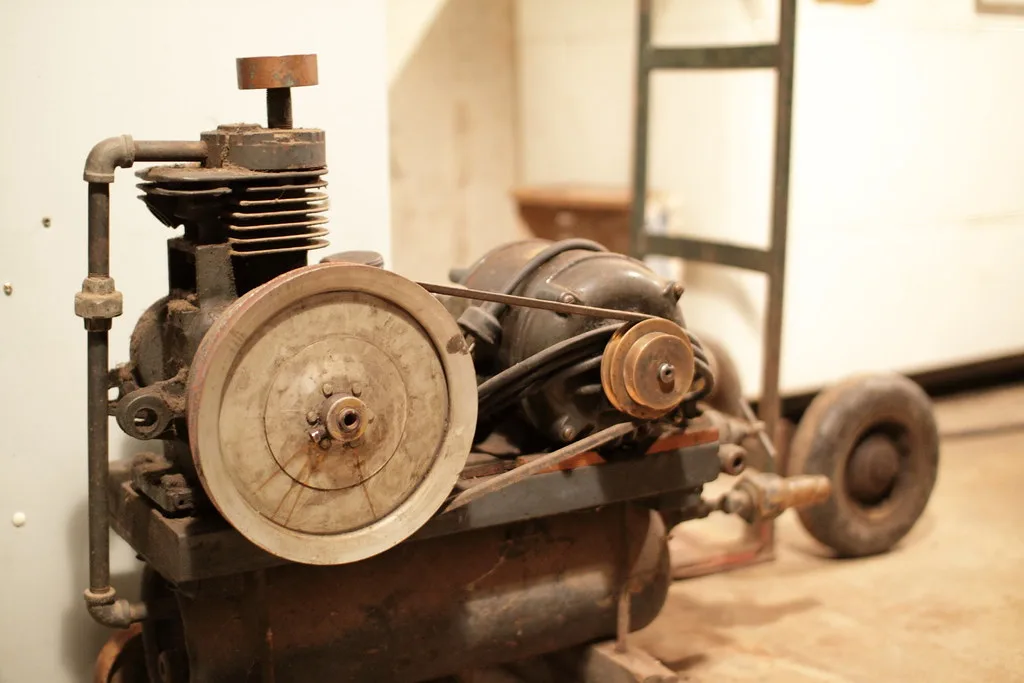
A piston air compressor, also called a reciprocating compressor, works like a car engine running in reverse. A piston moves down to pull air in through an intake valve, then back up to squeeze it against a closed outlet valve until the pressure is high enough to push it into the tank. It compresses air in pulses, one stroke at a time, and stores it in a receiver tank to smooth out the delivery.
A rotary screw compressor has no pistons. Two interlocking helical rotors spin in opposite directions, trapping air between their profiles and squeezing it down continuously as they turn. Because the process never stops to reset, the air comes out in a steady, smooth stream rather than pulses.
Duty cycle: the difference that decides everything
This is the heart of it. Most small piston compressors have a duty cycle of around 60 to 70 percent, and many practical setups are run closer to 50 percent, meaning they need to spend a good share of their time resting and refilling the tank to avoid overheating and premature wear. A rotary screw compressor is built for a 100 percent duty cycle and can run continuously all day without stopping.
That single fact drives the buying decision. If your air demand is intermittent, a nailer here, an impact wrench there, a bit of blow-down, a piston compressor has plenty of time to catch up between bursts. If you need air flowing constantly, running a sandblaster, a production line, or several tools at once for hours, a piston machine will be fighting its own limits while a screw compressor takes it in stride.
Cost, efficiency and sizing
Up front, piston compressors are cheaper to buy, which is why they dominate home shops and small garages. Over time, though, rotary screw units are more energy efficient and cheaper to run, delivering roughly 4 to 5 CFM per horsepower and wasting less energy on heat and pulsation. For a business running a compressor for hours every day, that efficiency gap can outweigh the higher purchase price.
Sizing works differently between the two, and this trips people up. Because a piston compressor cannot run continuously, it has to be sized larger for the same real-world output. A rule of thumb from the trade is that a 7.5 HP rotary screw will do the work of a 10 HP piston compressor, precisely because the screw runs all the time and the piston does not. So comparing the two on horsepower alone is misleading; compare them on the CFM you actually need at your working pressure. Our guide to what size air compressor you need and the sizing calculator will get you that number.
Noise, maintenance and life
Piston compressors are louder, producing a hammering, pulsing noise that is hard to ignore in a small space, while rotary screw units run at a lower, steadier hum. On maintenance, pistons are simpler and cheaper to service, with fewer specialized parts, which suits a DIY owner who wants to do their own upkeep. Our air compressor repair guide and oil guide cover the routine care either type needs. Rotary screws demand more disciplined servicing, but when maintained they are built for long, continuous industrial life.
So which should you buy?
Buy a piston air compressor if your air use is intermittent and your budget matters more than run time: home shops, hobby work, trim carpentry, tire and light automotive work, and small garages where the tank has time to recover between jobs. It is the right tool for most homeowners and small operators.
Buy a rotary screw if you need continuous air for hours at a time, run multiple tools at once, or your compressor is a production tool rather than an occasional helper. The higher price buys you a 100 percent duty cycle and lower running costs that pay back with heavy use. If that is you, start with our best rotary screw air compressor roundup. For the manufacturer’s view on the trade-offs, Atlas Copco’s piston vs screw comparison is a solid technical reference.
Frequently asked questions
What is the main difference between a piston and a rotary screw air compressor? The main difference is duty cycle. A piston (reciprocating) compressor typically runs at a 60 to 70 percent duty cycle and needs rest to cool and refill its tank, while a rotary screw runs at 100 percent duty cycle and can operate continuously. Pistons compress air in pulses; screws deliver a steady, continuous stream.
Is a rotary screw compressor better than a piston? Neither is universally better; they suit different needs. A rotary screw is better for continuous, high-demand use and is more energy efficient over time, but costs more. A piston compressor is better for intermittent use and is cheaper to buy and maintain, which is why it suits most home and small-shop users.
Do piston air compressors last as long as rotary screw? For intermittent use within their duty cycle, quality piston compressors last a long time and are easy to service. Rotary screw compressors are designed for continuous industrial run time and generally last longer under heavy daily use, where a piston machine would be pushed beyond its limits and wear out faster.
Why does a piston compressor need to be a higher horsepower than a screw? Because a piston compressor cannot run continuously, it has to be sized larger to deliver the same usable output. As a trade rule of thumb, a 7.5 HP rotary screw does the job of a 10 HP piston. Compare the two on the CFM you need at your working pressure, not on horsepower.
Which type is quieter, piston or rotary screw? Rotary screw compressors are quieter, running at a lower, steadier hum, while piston compressors produce a louder, pulsing hammer noise. In a small enclosed shop the difference is significant, and it is one reason screw units are favored where people work near the compressor all day.
More from Air Compressor Mag
Best Portable Air Compressors: Picks by Job (2026)
Real portable air compressor picks by job, from tire inflation to framing, with the CFM at 90 PSI, tank size, and noise specs that actually decide it.
CFM Explained: How to Choose a High CFM Air Compressor for Your Tools
How to read CFM ratings and pick a high CFM air compressor: the 90 PSI standard, SCFM, a tool chart, and when you need 10, 20 or 50 CFM.
Best 30 Gallon Air Compressors for Workshops
The best 30 gallon air compressor picks for a home workshop, compared on CFM, max PSI, single-stage pumps and 120V wiring so you match the unit to your tools.